Explore this page
What San Francisco is talking about. Pick a topic to filter what's shown below.
Catchouse Community Insights About Buying in San Francisco
What San Francisco is talking about. Pick a topic to filter what's shown below.
 Featured article
Selling a San Francisco condo takes more than choosing a list price. Buyers need to understand the home’s value, its condition, and what makes it compelling compared with other available properties. A strong listing plan brings those pieces together through preparation, pricing, presentation, and marketing.
I’m Lisa Vukovic, an Associate Broker with SERHANT., serving buyers and sellers throughout San Francisco. My experience includes luxury homes and condos, and my background as a certified interior designer helps me assess how a home can be presented to make its best features clear to buyers.
What should a San Francisco condo seller ask an agent?
**How will you recommend preparing the home?** The answer should be specific to your property. Some homes may benefit from paint, staging, lighting adjustments, or a more thoughtful furniture layout. Others may be ready to show with only a few changes. Preparation should support the property’s strengths and the likely buyer—not add work without a clear reason.
**How will you price and position it?** An agent should explain the comparable sales and the strategy behind the asking price. In San Francisco, a pricing plan should reflect the property type, location, condition, building context, and current competition.
**How will buyers first experience the listing?** Buyers often see a home online before deciding whether to visit. Photography, video, and clear written details should help them understand the space and what distinguishes it.
**How will you communicate during the sale?** Sellers deserve a clear plan for launch, showings, buyer feedback, offer review, and next steps. Ask how often the agent will update you and how they’ll help you evaluate offers.
A Russian Hill condo example
For one Russian Hill condo, we focused on fresh paint and thoughtful staging to bring the natural light and architectural details into focus. We paired that preparation with strategic pricing, professional photography and video, and a marketing plan built around the home’s appeal.
The condo sold for **$1,720,000**, which was **$525,000 over asking**, after **seven days on the market** and one preemptive offer. That is one property’s result, not a promise of what another home will achieve. Each sale depends on the property, the market, and the strategy behind it.
The larger lesson is that preparation should be intentional. Sellers don’t need to renovate everything. They need a clear assessment of what buyers are likely to notice, which improvements make sense, and how to present the home with care.
When I advise San Francisco condo sellers, I look at the property as a buyer would: What stands out? What may raise questions? What could be clarified through presentation or marketing? That perspective helps shape a plan that is specific to the home rather than copied from another listing. Then I use photography and cinematic videos to help tell the story of why they want to live there. What their lifestyle will be like when they live…


If you've felt like every San Francisco listing turns into a bidding war, it's not your imagination. The San Francisco Chronicle dug into the Compass data this week, and the numbers are eye-popping. (I spend my days in these offers, and even I did a double take.)
The story that says it all
A longtime broker was helping a buyer bid on a luxury condo in **Cow Hollow** last week. The asking price was $3.8 million, so they added half a million dollars. They lost to an offer for well over $5 million. The broker's take: "If you look at the recent comparable sales, you almost have to throw them out the window."
The numbers worth knowing
Why pricing has become a guessing game
Sellers have long "priced to entice," setting the asking price low to spark competition. This year, agents quoted in the article say some sellers have priced about a third below market value for "auction-style" sales. One agent put the challenge plainly: "We are pricing properties on aged data. And aged data in this market is three months."
Another broker: "We don't really know where value is, and so the safe thing to do is to price low and just see what happens."
My straight-talk take
Here's what I tell my clients:

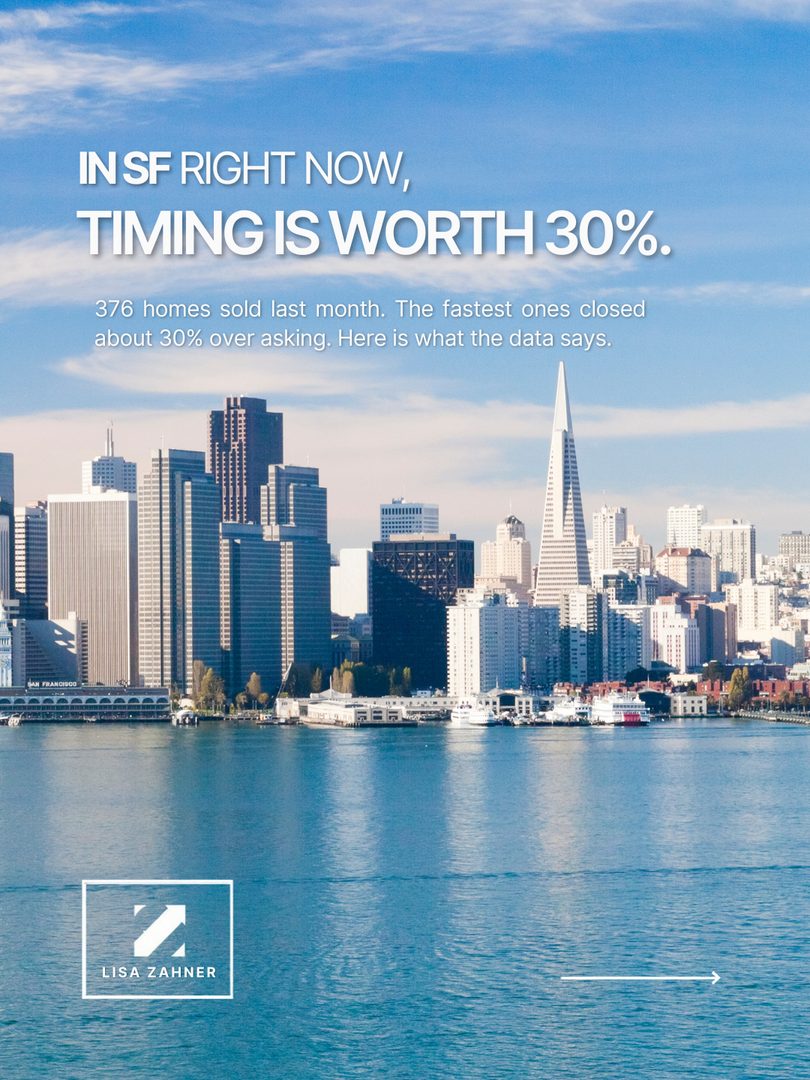
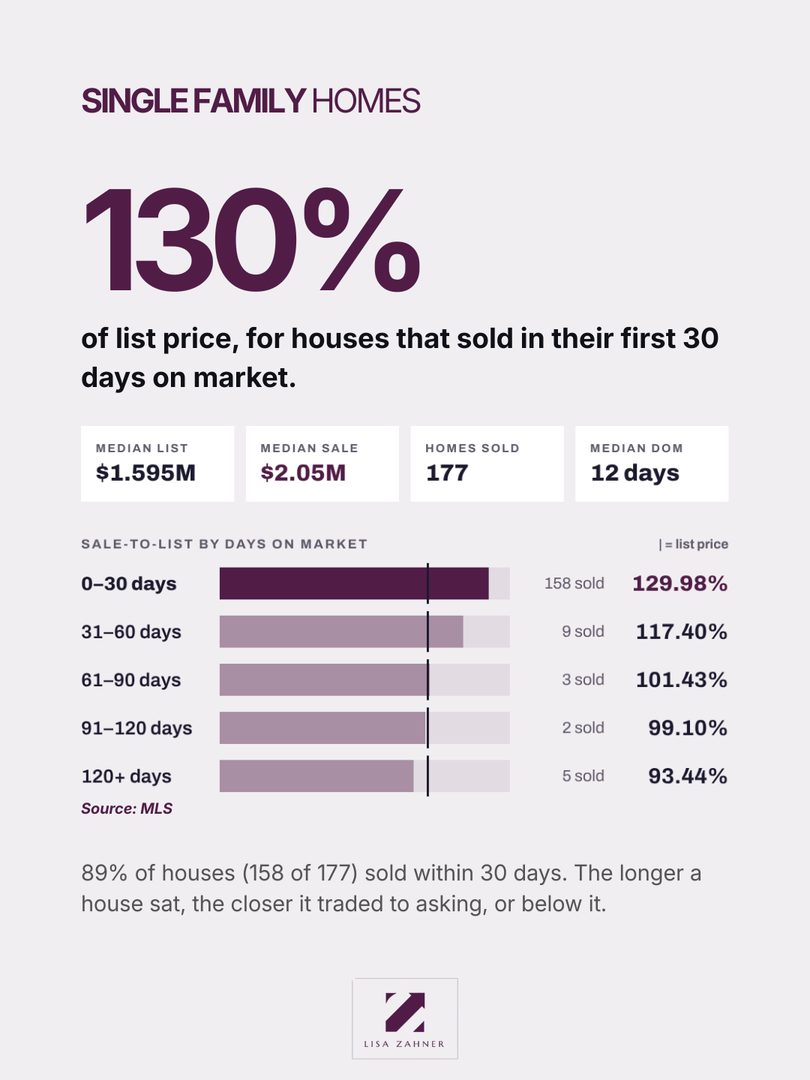
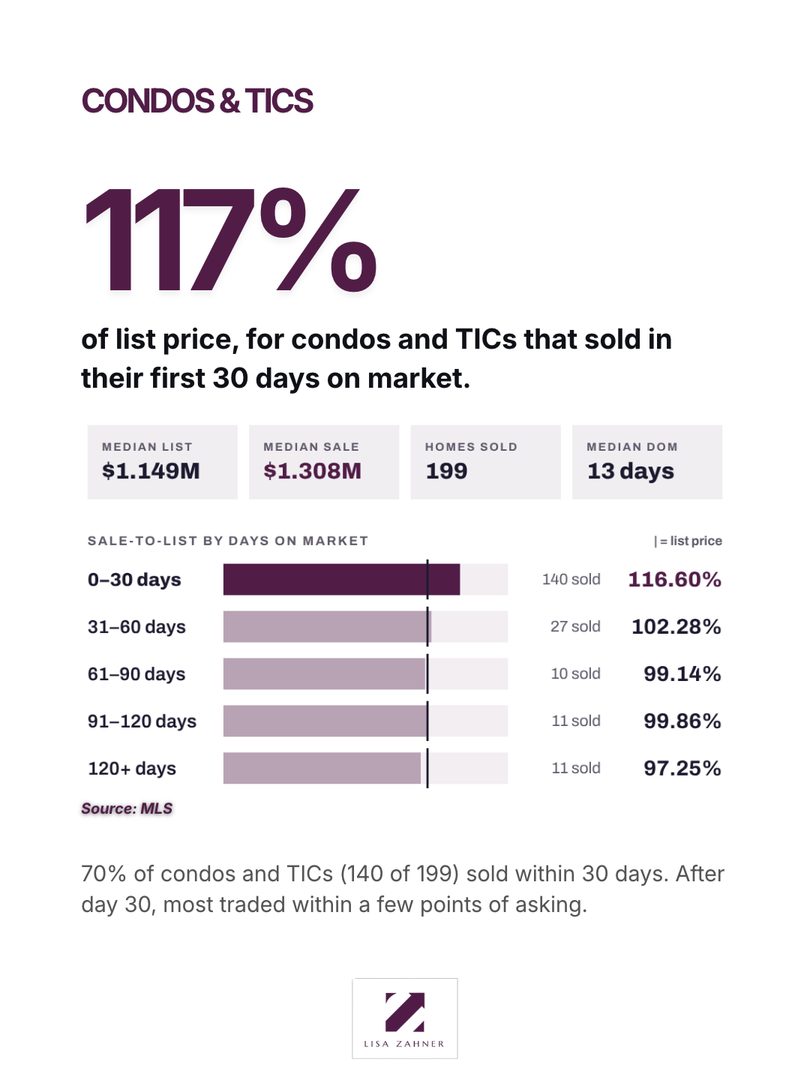
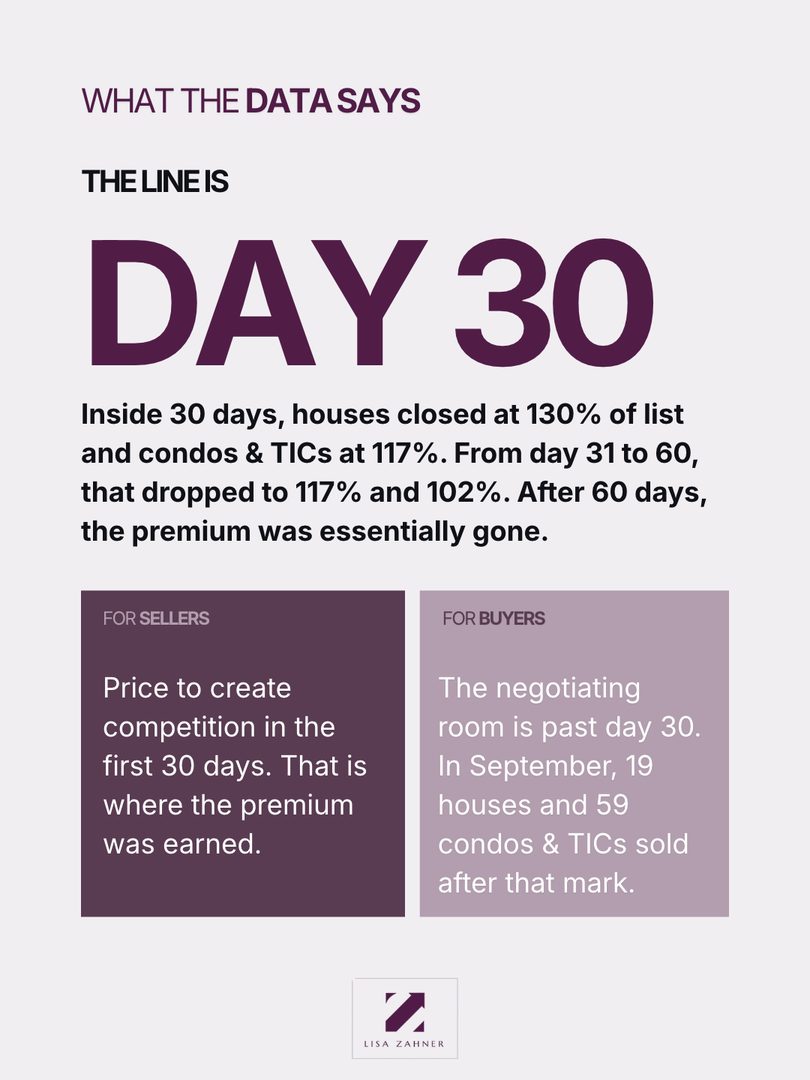

Day 30 is where the San Francisco market quietly changes its mind. I dug into September’s MLS numbers (376 sales citywide) and the pattern jumped right out. Houses that sold in their first month went for nearly 30% over asking. Condos and TICs went for about 17% over. Past day 60, that premium all but disappeared. Why the cliff? Two reasons: There are 28% fewer homes for sale than a year ago, so buyers pile onto the good ones fast. A new listing only gets one first impression. Priced well, it creates competition. Priced hopefully, it sits, and the leverage shifts to the buyer. Selling? Your pricing strategy in those first few weeks is the whole game. Buying? Look at the listings that have been around a while. 78 homes sold after day 30 last month. Nobody was hiding them; most buyers just weren’t looking.
Day 30 is where the San Francisco market quietly changes its mind. I dug into September’s MLS numbers (376 sales citywide) and the pattern jumped right out. Houses that sold in their first month went for nearly 30% over asking. Condos and TICs went for about 17% over. Past day 60, that premium all but disappeared. Why the cliff? Two reasons: There are 28% fewer homes for sale than a year ago, so buyers pile onto the good ones fast. A new listing only gets one first impression. Priced well, it creates competition. Priced hopefully, it sits, and the leverage shifts to the buyer. Selling? Your pricing strategy in those first few weeks is the whole game. Buying? Look at the listings that have been around a while. 78 homes sold after day 30 last month. Nobody was hiding them; most buyers just weren’t looking.

很多海外买家都会问同一个问题:"我不住在美国,也能在湾区买房吗?"答案是可以。美国一般不限制外国人购买住宅,加州目前也没有禁止外国人买住宅的规定。但从国外买房,在资金、贷款、产权和税务上,确实比本地买家多几道手续。这篇文章把海外买家需要了解的重点整理出来,帮你提前做好准备。
第一步:提前规划资金
海外买家最容易卡住的,往往不是找房,而是钱。
第二步:选择付款方式
全款购买最简单,流程快,在竞争激烈的湾区,全款的报价对卖家也更有吸引力。
贷款购买也可以,但要看你的身份:
建议在看房之前就先和贷款顾问聊,拿到预批信(pre-approval),这样出价时更有底气。
第三步:决定房产登记在谁名下
产权登记方式会影响以后的税务、继承和出售,常见的有:
没有一种方式适合所有人。我建议在签合同之前,先咨询熟悉跨境业务的律师和税务师。
第四步:了解持有和出售时的税
持有期间:加州的房产税基本税率是购买价格的1%,再加上地方的附加税,一般每年合计约1.1%到1.3%。如果出租,租金收入需要在美国报税,通常需要申请个人报税号码(ITIN)。
出售时:外国人卖房,买方要按规定先替你预扣一部分税款交给国税局,这叫FIRPTA预扣。一般是成交价的15%;如果成交价不超过100万美元,而且买家买来自住,比例可能降到10%或者免除。加州还有州税预扣,一般是成交价的3⅓%。这些预扣不是最终税额,报税后多退少补。
遗产税:很多海外买家不知道,非美国居民在美国的资产,遗产税免税额只有6万美元,远低于美国公民和居民。持有方式会影响这一点,这也是为什么要提前咨询税务师。
以上只是一般性的介绍,我不是律师或税务师,具体请以专业人士的意见为准。
第五步:人不在美国,也能买房
很多海外买家整个买房过程都不用来美国:
我在做经纪之前,做了五年施工主管,参与过住宅和商业项目。湾区很多老房子有地基、排水、屋顶、老旧电路和违建的问题。你人不在现场,我会特别帮你留意这些看照片看不出来的问题。
买房前的准备清单
有问题,欢迎用中文找我聊
每位海外买家的情况都不一样。如果你在考虑湾区买房,不管是自住、给孩子读书用,还是投资,我都很乐意用中文帮你理清预算、流程和注意事项,没有任何压力。
Sky Lin 林嘉源 | Mosaik Real Estate | DRE #02253259 | 微信:Skyhomes_realty
English version: A guide for international buyers in the Bay Area
International buyers often ask the same first question: "Can I buy a home in the Bay Area if I don't live in the U.S.?" The answer is yes. The U.S. generally does not restrict foreign buyers from purchasing homes, and California currently has no rule banning foreign buyers from buying residential property. But buying from abroad does add extra steps around money, financing, ownership, and taxes. Here is what international buyers should know.
1. Plan your funds early
Moving money is often the hardest part. For example, individuals in mainland China have an annual foreign exchange quota of USD 50,000, so large transfers take planning. Title companies and lenders may ask you to document where your funds came from, and lenders usually review recent bank statements and ask about large deposits. Gift funds from parents can usually be used with a gift letter and transfer records. Always call the escrow company to verify wiring instructions before sending money. Never rely on an email alone, because wire fraud is common.
2. Choose how to pay
Cash purchases are the simplest and can make your offer more competitive. Buyers working in the U.S. on a visa, such as an H-1B, can often qualify for conventional loans, depending on the lender. Buyers who live abroad…


"The price just dropped. Is this my chance?" It is one of the most common questions I get from first-time buyers in San Francisco. Sometimes a price cut is a real opportunity. Sometimes it is a warning sign. And sometimes asking the seller for help with your costs is worth more than a lower price. Here is how I help buyers tell the difference.
San Francisco is really two markets right now
Headlines talk about a buyer's market nationally. Redfin reported that sellers gave concessions in about 45% of U.S. home sales in August 2026. But the San Francisco metro was one of the lowest in the country, at about 19%.
Inside the city, houses and condos are behaving very differently. Compass data for September 2026 showed that most single-family houses still sold above asking, with very few price cuts. Condos are where buyers have more room: price reductions on condo listings rose sharply compared with a year earlier, and condos stay on the market longer.
What this means for first-time buyers: if you are shopping for a house, do not assume a reduced price means the seller will take less again. If you are shopping for a condo, you often have more room to negotiate on price, credits, or both.
Why was the price reduced?
Before getting excited about a lower price, find out why it happened. These are the questions I ask the listing agent and look for in the disclosures:
Before becoming an agent, I spent five years as a construction superintendent. When I walk a reduced-price home with buyers, I look closely at the things that are expensive to fix: cracks that point to settling, water stains, old electrical panels, and signs of unpermitted work. A $50,000 price cut is not a deal if the home needs $100,000 of work.
Price cut or seller credit: which helps you more?
Seller help usually comes as a credit at closing. You can use it toward your closing costs or to buy down your mortgage interest rate. For many first-time buyers, a credit can do more for your budget than the same amount off the price.
Here is a simple example on a $1.2 million condo with 20% down:

Owning rental property in San Francisco is a significant investment. Whether you own a single-family home, condominium, or multifamily building, choosing the right property management company can directly impact your rental income, operating expenses, tenant relationships, and long-term property value.
With numerous property management companies serving the Bay Area, landlords often begin their search by comparing monthly management fees. While cost is certainly important, the lowest-priced service isn't necessarily the best value.
An experienced property manager should do more than collect rent. They should help you navigate the local rental market, maintain your property, manage tenant relationships, and make informed decisions that protect your investment.
Here are seven important factors San Francisco landlords should consider before hiring a property management company.
1. Look for Experience in the San Francisco Rental Market
San Francisco is not an ordinary rental market.
Between local rent control regulations, just-cause eviction protections, housing requirements, and California landlord-tenant laws, managing rental property here requires specialized knowledge.
A company experienced in managing properties elsewhere in California may not necessarily understand the specific challenges facing San Francisco landlords.
Before hiring a property manager, ask:
For example, San Francisco's Rent Board Housing Inventory requires annual reporting for residential properties. For applicable rent-controlled units, landlords must have a current rent increase license before annual or banked increases can take effect.
A knowledgeable property manager should understand these requirements and help owners identify their applicable obligations.
Local experience is particularly important when managing older multifamily properties, condominiums, and long-term tenancies.
2. Understand Their Tenant Screening and Leasing Process
Tenant placement is one of the most important responsibilities of a property management company.
A good manager should have a clear and consistent process for advertising vacancies, evaluating applications, verifying applicant information, and preparing rental agreements.
Ask prospective managers how they approach:
A professional screening process should apply consistent, legally compliant criteria to all applicants.
Landlords should be cautious of companies that promise to eliminate all tenant-related risks. No screening procedure can guarantee that problems will never arise.
The goal is to reduce…

Talk to a San Francisco expert
Get answers from a local agent who actually knows these streets — schools, commute, the works.
 Lisa Vukovic
Selling a San Francisco Condo: What to Look for in a Listing AgentArticle
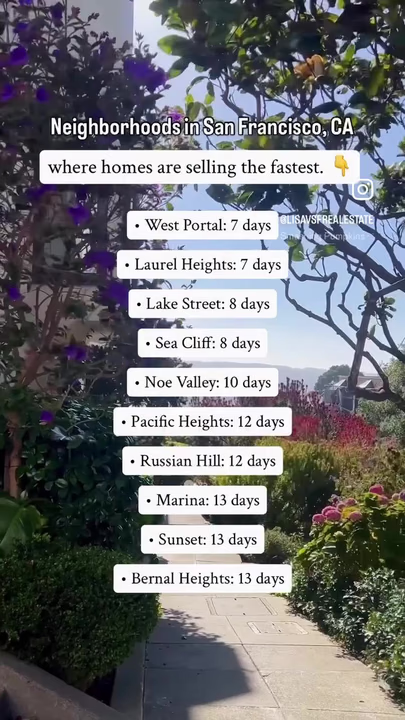 This is the Average Days on Market in the neighborhood for Single Family homes. In almost EVERY neighborhood they are selling in TWO WEEKS!
What does this mean for your home? Neighborhood numbers provide context, but your home’s condition, presentation, and asking price help shape your individual result.
Even within the same neighborhood, every home needs its own strategy. Thoughtful preparation, compelling marketing, and a price grounded in the closest comparable sales all work together to make your launch count.
As a real estate advisor and certified interior designer, I help sellers identify the details that deserve attention before we go to market—and bring out what makes their home special.
If you’re planning to sell in San Francisco and want distinctive representation, innovative marketing, and a clear plan from preparation through closing, let’s talk.
Send me a DM or connect through the link in my bio.
— Lisa Vukovic | SERHANT.
San Francisco real estate advisor representing discerning homeowners and buyers.Video
 Lisa Zahner
The Asking Price Is Now Just a Starting BidArticleDay 30 is where the San Francisco market quietly changes its mind.
I dug into September’s MLS numbers (376 sales citywide) and the pattern jumped right out. Houses that sold in their first month went for nearly 30% over asking. Condos and TICs went for about 17% over. Past day 60, that premium all but disappeared.
Why the cliff? Two reasons:
There are 28% fewer homes for sale than a year ago, so buyers pile onto the good ones fast.
A new listing only gets one first impression. Priced well, it creates competition. Priced hopefully, it sits, and the leverage shifts to the buyer.
Selling? Your pricing strategy in those first few weeks is the whole game.
Buying? Look at the listings that have been around a while. 78 homes sold after day 30 last month. Nobody was hiding them; most buyers just weren’t looking.Photo
 Sky Lin
 Gordon Lai
 Alexis Cuison- The Garcia Real Estate Group
 Showed a home in this neighborhood the other day, and had to stop by @missionbluesf ☕️
Loved the concept of this local cafe highlighting different SF vendors. Such a sweet way to support small businesses. Plenty of street parking, super friendly team, and quick service. Always fun finding cute local spots while out showing homes 🤍Video
 John D'Angelo
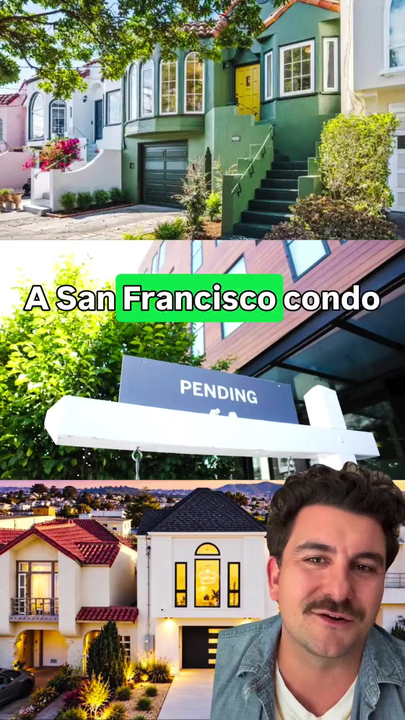 A $3.8M condo in Cow Hollow just sold for over $5 million. 🏙️
San Francisco’s housing market is officially out of control:
📈 Nearly 92% of single-family homes sold above asking in September, the highest on record
📈 The average home went for almost 30% over list, up from 13% a year ago
📈 Median price: nearly $2.6M, up from $1.9M last year
📉 Only 240 single-family homes were on the market at the end of September
The driver? The AI boom. Tech workers and investors with new money are fighting over a tiny supply, and sellers are pricing low on purpose to spark bidding wars. Even agents say they can’t tell what a fair price is anymore.
Meanwhile, with mortgage rates above 7%, most of the country is pulling back. SF is one of just six major U.S. metros where buyers outnumber sellers.
Thinking about buying or selling in San Francisco? Follow for more market updates. 👇
📲 628.284.9800
📧 JD@mosaikrealestate.com
🪪DRE 02239029
Would you bid in this market? Tell me in the comments.
#SanFrancisco #BayAreaRealEstate #SFHomes #HousingMarket #RealEstateNews
*Source: Compass and Redfin data via the S.F. Chronicle, Oct. 2026.*Video
 Evangeline Nguyen
Real Estate Agent · Fast Real Estate
License: 02210833
 Is Zillow Accurate? What Home Buyers Should Know
Zillow can be a helpful tool for browsing homes, but it shouldn’t be your only resource when buying or selling real estate.
Here are a few things to know:
1. You may not see every opportunity. Zillow is a third-party real estate platform, and depending on how a property is marketed and distributed, what you see may not represent everything available.
2. Requesting a tour doesn’t necessarily connect you with the listing agent. You may instead be connected with an agent participating in Zillow’s lead or referral programs. Buyers should always understand who they’re speaking with and who that person represents.
3. A Zestimate is not an appraisal or professional market analysis. Automated valuations can’t always account for condition, renovations, lot characteristics, views, or hyperlocal differences. This is especially important in the Bay Area, where values can vary significantly from one neighborhood or even street to another.
4. Real estate moves quickly. Listing status, pricing, offer activity, and other information can change quickly, so it’s important to verify the latest information when you’re seriously considering a property.
Zillow is great for browsing, but buying a home requires more than scrolling listings.
A real estate agent can help you understand your actual monthly payment, financing options, available assistance programs, property value, local market conditions, and how to structure a competitive offer.
For first-time buyers throughout the Bay Area and Northern California, my goal is to make that information accessible so you can make educated decisions with confidence.
Evangeline Nguyen, real estate agent
eXp Realty | DRE #02210833Video