
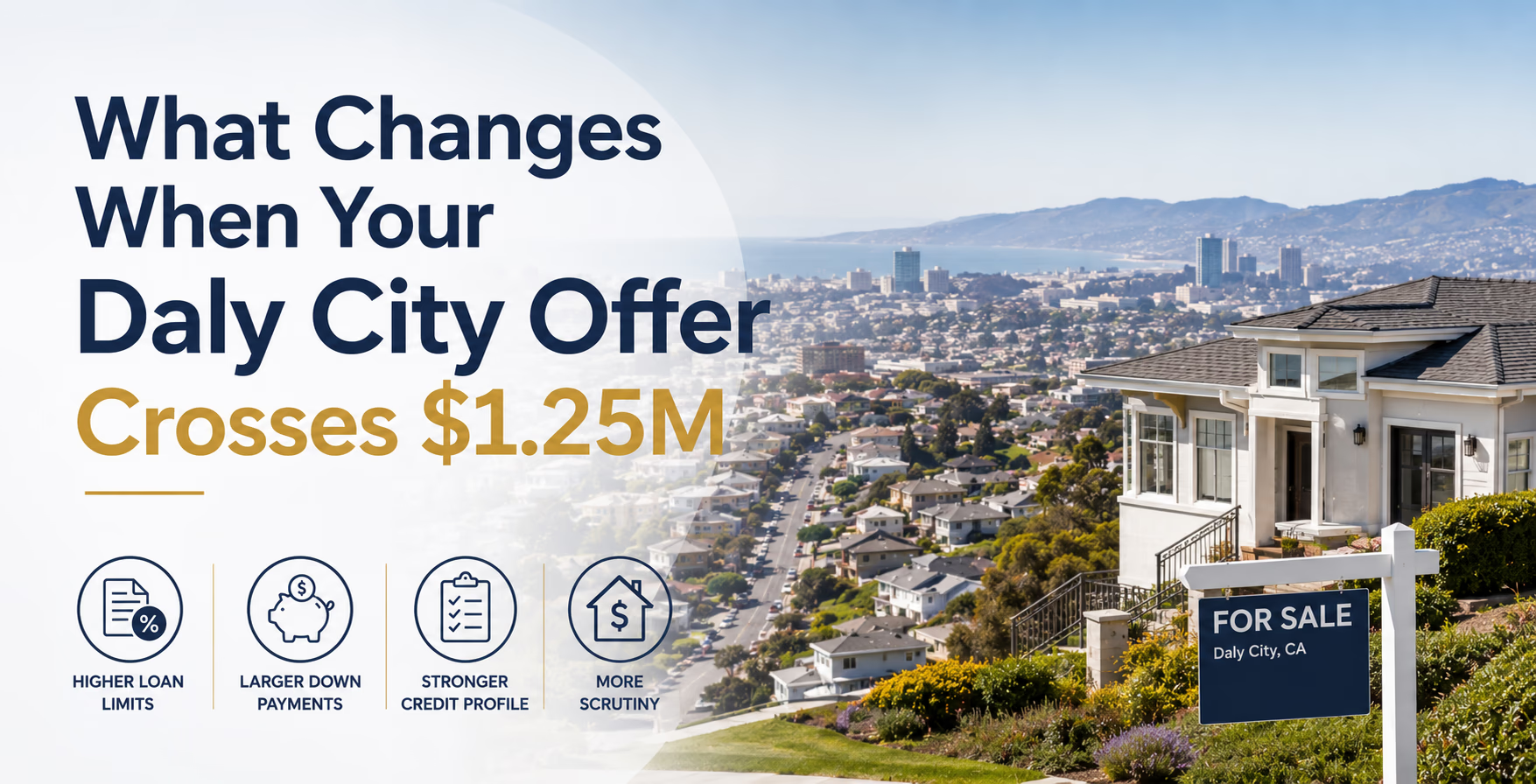
Short answer: Daly City homes above $1.25M trigger a jumbo loan instead of a conforming one, which changes the underwriting rules. Expect a higher credit score floor (700 to 720 minimum, 740 for the best rates), a tighter debt-to-income cap around 43%, and six to twelve months of cash reserves required on top of your down payment. There's no PMI, but two appraisals are common above the $1M to $1.5M range. Below the cap you stay in conforming-loan territory with looser standards.
If you're shopping the top end of Daly City, you've probably already done the obvious work. You've walked Westlake Palisades on a Sunday afternoon to see the views, scrolled the ocean-view listings on Skyline, and run the numbers on what a $1.5M single-family with a Pacific view actually costs to own. Most of the buyer guides will tell you about commute times to the Financial District, the mid-century housing stock, and the SamTrans line.
They're just not the part that decides whether your offer goes through.
I came into real estate from the mortgage side, after years on the underwriting end looking at why deals fell apart. The thing that surprised me when I switched seats is how often a buyer stepping into Daly City's top tier falls in love with a home in the wrong loan product, and nobody flags it until two weeks before closing. So this guide is a little different. Same neighborhoods, but read through the lens of the rules that actually decide what a jumbo buyer can buy here.
For buyers in this market, the loan-product question matters more than people expect. Daly City's citywide median sits in the $1.05M to $1.18M range, but the high-end neighborhoods (Westlake, Westlake Palisades, St. Francis Heights) push well above that. Westlake's median sale over the last twelve months was $1.28M, and Westlake Palisades ocean-view listings run from about $1.1M to $2.4M. That price band crosses straight through San Mateo County's conforming loan limit, and the second you cross, you are not in a conventional loan anymore. You are in jumbo, and jumbo brings four rules that quietly decide which Daly City homes you can actually close on.
Rule 1: At what price does a Daly City home become a jumbo loan?
For 2026, San Mateo County's conforming loan limit for a single-family home is $1.25M. That's the most generous conforming ceiling in the country, set because the FHFA classifies the county as high-cost. Below that line you're eligible for conventional financing with the Fannie Mae and Freddie Mac rule set. Above it you're in jumbo territory with a separate rule set, separate underwriting standards, and a different group of lenders.
For Daly City buyers, this matters because the line cuts straight through the upper end. Westlake's median sale price over the last twelve months was $1.28M, just past the cap. The ocean-view homes in Westlake Palisades regularly list from $1.5M to $2.4M, solidly jumbo. St. Francis Heights averages near the conforming line, with some sales just under and some well over. Hillside, with a median around $1.05M, mostly still fits conforming financing.
In practice, this means your first question is not "which neighborhood?" but "is the offer I'm writing conforming or jumbo?" Those are two different transactions, and the answer can change between two houses on the same street.
Rule 2: What do jumbo lenders actually look at?
This is where buyers stepping up from a conforming pre-approval get a surprise. Where conforming underwriting gives the borrower a fair amount of runway and watches the property closely, jumbo flips the priorities. The property side gets easier in some respects. The borrower side gets meaningfully tighter.
Credit score: most jumbo lenders want 700 to 720 minimum, with the best rates reserved for 740 or higher. For loans above $1.5M, the 740 floor is essentially universal. Debt-to-income ratio: lenders prefer 43% or lower, with top pricing for borrowers closer to 36%. Reserves: six to twelve months of full mortgage payments in liquid accounts after close, on top of your down payment.
That last one catches buyers off guard. For a $1.5M home with 20% down, the monthly carry once you stack principal, interest, taxes, and insurance is substantial. Six to twelve months of that in liquid reserves is real money sitting in the bank, not deployed into the deal. Some lenders will count stock and retirement accounts toward reserves at a discount, but you should have that conversation before you write the offer, not after.
Rule 3: How much down payment do you need on a Daly City jumbo?
The default assumption on jumbo is 20% down. At Daly City prices that means anywhere from $260K to $480K cash, depending on price point. The market has loosened in recent years though, and 10% down jumbo programs are widely available for borrowers with strong profiles. A handful of portfolio lenders will go to 5% down for buyers with 740+ credit and substantial reserves.
The catch is that lower down payments come with offsetting requirements. A 10% down jumbo will often require deeper reserves (closer to twelve months than six), a tighter DTI cap, and sometimes a slightly higher rate. The savings on the down payment can be smaller than they look once the rest of the structure adjusts. Run the actual numbers with a real jumbo lender before deciding which way to go, because the headline "10% down" can hide a structure that asks for more cash than the 20% version does.
Rule 4: Why does the appraisal matter more on a jumbo?
One genuine win on the jumbo side: there's no private mortgage insurance, regardless of how little you put down. A conforming loan with under 20% down would carry PMI every month until you reached the 20% equity threshold; jumbo skips it entirely. That offsets some of the rate spread on jumbo loans.
The tradeoff is the appraisal. Most California jumbo lenders require two independent appraisals on loans above the $1M to $1.5M range (the exact threshold is lender-specific), or at minimum an appraisal plus a desk review. If the two values differ, the lender uses the lower one, which protects against inflated comps. For Daly City's top tier, this is not a theoretical concern. Westlake Palisades ocean-view properties trade at premiums over interior Westlake homes that the comps don't always support cleanly. A view-driven $1.7M offer can come back with one appraisal at $1.7M and a second at $1.55M. If you aren't ready with cash to bridge the gap, restructure the offer, or walk, that gap will end the deal.
How this plays out by neighborhood
Westlake is the largest of the top-tier neighborhoods, with median sales just over the conforming line at $1.28M. Roughly half the housing stock can be financed conforming, half is just over into jumbo, and the dividing line runs through individual blocks. The 1940s and 1950s Doelger split-level tract homes dominate, with the better-condition and remodeled ones pushing into jumbo.
Westlake Palisades is the ocean-view tier, with listings from roughly $1.1M to $2.4M. Almost all of these will be jumbo. This is the neighborhood where the appraisal risk in Rule 4 actually shows up, and where I'd tell any buyer to keep the appraisal contingency intact unless the math works for them to bring cash if the appraisal disappoints.
St. Francis Heights sits right around the conforming cap, with mid-century stock similar to Westlake. Most transactions straddle the line, and the loan-product decision often comes down to which specific house won the bidding.
Hillside has the lowest median in the high-end set, around $1.05M, and most properties there still fit conforming financing. If you're jumbo-qualified but want a less competitive search, Hillside is worth a look.
What I'd tell you over coffee
The version of homebuying where you spend three weekends touring before talking to a lender is the version where you fall in love with a $1.5M Westlake Palisades home and find out in week four that your pre-approval was written for a conforming loan and your jumbo paperwork is still six weeks of underwriting away. The version that works is the other order. Figure out which loan product you're actually using, get a real jumbo pre-approval (not a conforming letter that says "up to $1.4M"), and let the four rules above tell you which Daly City homes are worth your weekend.
If you want help running the numbers before you start touring, or you have a conforming pre-approval and you're now shopping above the cap and not sure how the math actually works, that's the part of this work I find most useful. Reach out anytime.
Frequently asked questions
At what price does a Daly City home need a jumbo loan? For 2026, San Mateo County's conforming loan limit is $1.25M. Daly City homes priced above $1.25M require a jumbo loan; homes at or below that price stay in conforming-loan territory.
What credit score do I need for a jumbo loan in California? Most California jumbo lenders require a minimum credit score of 700 to 720. The best interest rates are reserved for 740 or higher. For jumbo loans above $1.5M, the 740 floor is essentially universal.
Do jumbo loans require PMI? No. Jumbo loans skip private mortgage insurance regardless of down payment size. This is different from conforming loans, where PMI applies whenever the loan-to-value ratio is above 80%.
How much down payment do I need on a jumbo loan? The default is 20%. Many California lenders offer 10% down jumbo programs for borrowers with strong credit and reserves, and a few portfolio lenders will take 5% down with 740+ credit. Lower down payments come with offsetting requirements like deeper reserves and a tighter DTI cap.
What are the cash reserve requirements on a jumbo loan? Six to twelve months of full mortgage payments (principal, interest, taxes, insurance) in liquid accounts after close, on top of your down payment. Some lenders count stock and retirement accounts toward reserves at a discount.
Why might a jumbo lender require two appraisals? Most California jumbo lenders require two independent appraisals on loans above the $1M to $1.5M range to protect against inflated valuations. If the two appraisals come in at different numbers, the lender uses the lower value when calculating the loan amount.
James Kil is a Coldwell Banker Residential agent serving San Francisco, Daly City, and South San Francisco. He works with first-time buyers and mid-market clients in English and Korean, and brings a mortgage underwriting background to every transaction. Licensed in California (DRE# 02120566). Reach me at james@jameskil.com or (415) 377-9307.