Explore this page
What Downtown is talking about. Pick a topic to filter what's shown below.
Catchouse Community Insights About Buying in Downtown
What Downtown is talking about. Pick a topic to filter what's shown below.
One of the biggest barriers I see with first-time Bay Area buyers isn't always qualifying for a home.
Sometimes, it's the expectation of what their first home is supposed to look like.
You may picture the detached single-family home with three bedrooms, a backyard, a great school district, a short commute, and the exact neighborhood you've always wanted.
Then you look at the price.
In the Bay Area, that dream home can easily feel completely out of reach.
But here's something I wish more first-time buyers understood:
Your first home does not have to be your forever home.
For many people, homeownership is a ladder. Your first purchase can simply be your first step.
Stop Comparing Your First Home to Someone Else's Third
It's easy to look at established homeowners and assume that's where you're supposed to start.
But the person living in the $1.5 million single-family home today may have started years ago with a small condo, townhouse, fixer, or home in a less expensive city.
Over time, they may have built equity, increased their income, saved additional money, and eventually used those resources to move into another property.
That's very different from trying to save enough cash to jump directly onto the highest rung of the ladder.
Especially in the Bay Area, your first purchase may be about getting into the market rather than immediately buying everything you ultimately want.
Your First Home Might Be a Condo
I love condos for the right first-time buyer.
They can offer a lower entry price than detached single-family homes in the same area, allowing buyers to become homeowners without necessarily moving far outside the communities where they actually want to live.
Of course, condos come with additional considerations.
You need to understand the HOA dues, reserves, insurance, potential special assessments, rules, and overall financial health of the association.
But a well-selected condo can be a legitimate first step toward long-term homeownership.
It Might Be a Townhouse or PUD
Maybe you want more space, a garage, or a small outdoor area but aren't ready for the price of a detached home.
A townhouse or planned unit development may provide a middle ground.
You may get some of the characteristics of a single-family home while entering the market at a more attainable price point.
Again, the goal isn't to buy something simply because it's cheaper.
The property still needs to make sense financially and fit your life.
It Might Be the Ugly House
Growing up in a family that flipped homes taught me early that what a property looks like today isn't necessarily what it can become.
Cosmetic problems can scare buyers away.
Old flooring, dated cabinets, ugly paint, or an outdated bathroom may make a home less appealing in listing photos, but those things can also create opportunity.
There is a major difference between a home that needs cosmetic improvements and one with serious structural, foundation, electrical, plumbing, or other expensive problems.
But if the location and fundamentals are…

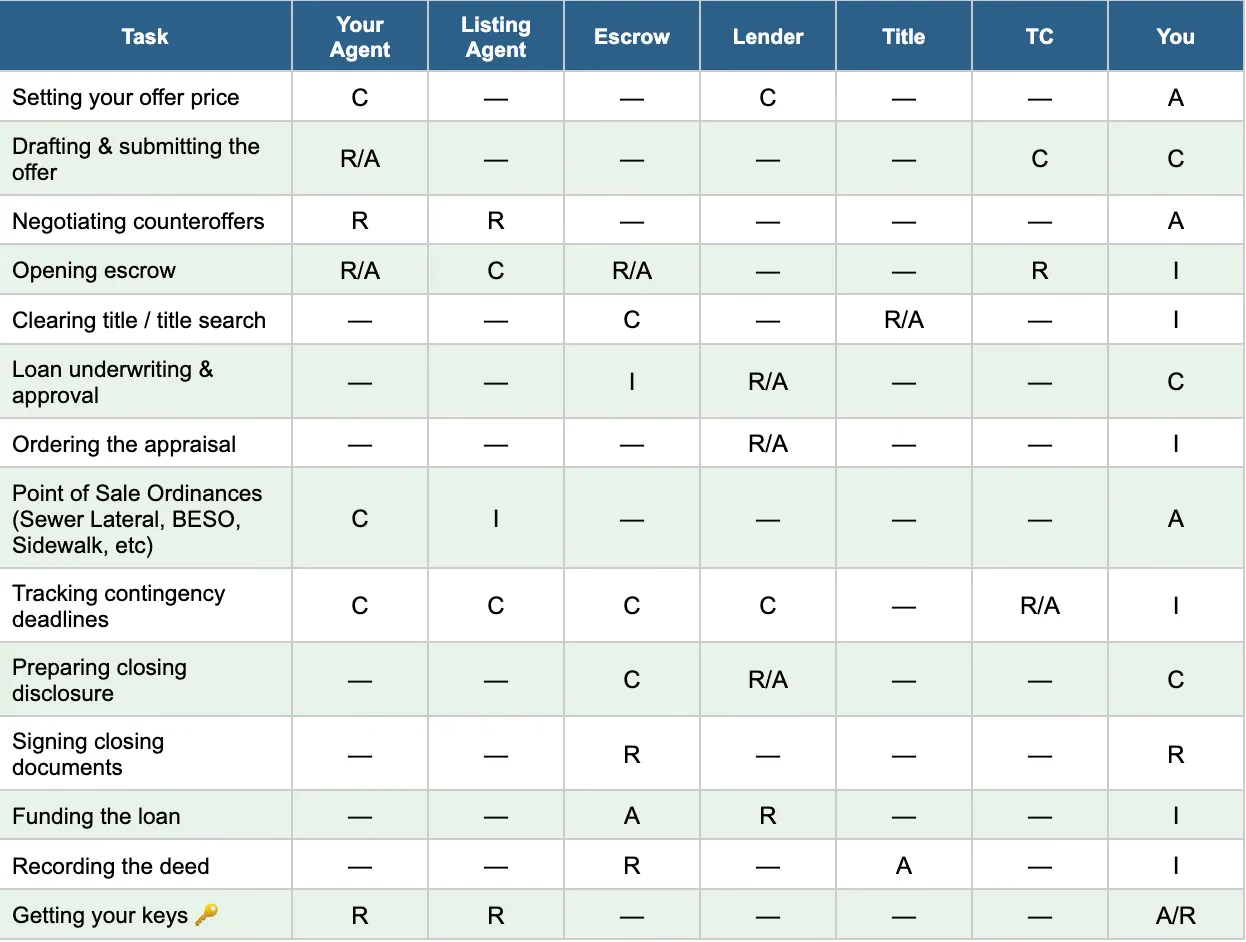
Real estate transactions have a reputation for being confusing — and honestly, a lot of that confusion comes down to one simple thing: people don’t know who’s responsible for what.
In the corporate world, there’s a framework called a RACI chart. It stands for **Responsible, Accountable, Consulted, and Informed** — and it’s basically a map of who owns what in any complex project. After years of sitting in marketing war rooms at companies like Salesforce and Facebook, I lived and died by these things.
Turns out, a real estate transaction is basically a project. A high-stakes, emotionally loaded, very expensive project. So let’s build the RACI.
First, the key: what do R, A, C, and I actually mean?
The Players
Before we get to the chart, let’s meet the cast. These are all the folks involved in the a real estate transaction.
Your Real Estate Agent - The Buyer Agent
Your quarterback. In the East Bay, your agent should also know Berkeley’s BESO requirements, the latest of Oakland’s ordinances, local transfer tax nuances, and who to call to transfer utilities. Though the heavy lifting of their job was done by writing you a winning offer, you can rely on them as a key point person during the transaction to keep things moving.
The Listing Agent
The seller’s quarterback. Their loyalty is to the seller. They are not your friend (even if they seem lovely). Respect the relationship; don’t confuse it.
The Escrow Officer
The neutral third party who holds the money, coordinates the paperwork, and makes sure the transaction closes in the right order. In California, escrow companies (not attorneys) typically handle this role. They work for both parties and follow the escrow instructions to the letter.
The Lender
If you’re financing the purchase, your lender is pulling your credit, ordering the appraisal, underwriting your loan, and ultimately giving the green light that funds can be released. They are often the reason transactions are delayed. They aren’t a scary bank who may or may not lend you money. They are actually on your team. Choose wisely.
The Appraiser
If you’re getting a loan, the lender orders an independent appraisal to confirm the home’s value supports the purchase price. The appraiser works for the lender, not you — but their findings affect you enormously.
The Title Company
They research the property’s ownership history to make sure the seller has the legal right to sell, and that no liens, judgments, or easements will surprise you after close. They issue title insurance to…

One of the most common things I hear from aspiring homebuyers is:
“I’m waiting until I have 20% saved for a down payment.”
For some buyers, putting 20% down may make sense. But here's the part that often surprises first-time buyers:
You generally do not need 20% down to purchase a home.
Depending on your loan program, financial situation, and eligibility, you may be able to purchase with significantly less.
And in an expensive market like the Bay Area, understanding that distinction can completely change your timeline for becoming a homeowner.
Where Did the 20% Down Myth Come From?
Twenty percent isn't a universal requirement. It's more of a financial benchmark.
One major reason you hear about 20% is private mortgage insurance, or PMI.
With many conventional loans, putting less than 20% down means you'll typically pay PMI. This protects the lender if the borrower defaults.
That doesn't necessarily mean putting less than 20% down is a bad financial decision.
The better question is:
Does the cost of buying with less down make sense for your financial situation compared with waiting to save 20%?
Those are two very different conversations.
How Much Could You Actually Need?
There are several financing options that can allow qualified buyers to purchase with considerably less than 20% down.
Conventional Loans
Some conventional loan programs allow qualified buyers to purchase with as little as 3% down.
That means on a $700,000 home, 20% would be $140,000.
Three percent would be $21,000.
That's a $119,000 difference in the amount of money going toward the down payment.
Of course, your down payment isn't the only cash you'll need to consider. There may also be closing costs, prepaid expenses, reserves, inspections, and other costs associated with purchasing a home.
But understanding the difference between 3% and 20% can make homeownership feel significantly more attainable.
FHA Loans
Qualified buyers using an FHA loan may be able to purchase with as little as 3.5% down.
FHA financing can be particularly helpful for buyers whose credit profile or financial circumstances make conventional financing more challenging.
FHA loans have their own mortgage insurance requirements and guidelines, so the lowest down payment isn't automatically the best loan for every buyer.
VA Loans
For eligible Veterans, active-duty service members, and certain surviving spouses, VA financing can offer 0% down.
VA loans also do not require monthly PMI, which can make them an extremely powerful homebuying benefit for eligible borrowers.
There may still be closing costs and a VA funding fee for borrowers who aren't exempt, so 0% down should never be confused with $0 needed to purchase.
Down Payment Assistance
Some buyers may also qualify for down payment or closing-cost assistance through state or local programs.
California has offered programs designed to help eligible first-time buyers overcome one of the biggest barriers to homeownership: accumulating enough cash upfront.
Availability, funding, income limits,…

A 1031 exchange is a tax strategy used to defer capital gains taxes from the sale of investment or business real estate. The most common exchange I see in my marketplace is one rental property for another. Other exchanges I see are a rental property for a commercial property or a rental property for qualifying DSTs.
Plan ahead of time! If you are even thinking of selling a rental property, I recommend talking to a 1031 exchange specialist to see if this is something that could benefit you. You don’t want to be hit with a huge capital gains bill because you did not follow the rules of the exchange properly.
Additionally you have to have a qualified intermediary in place before the sale of your relinquished property closes. You don’t have to choose an intermediary before you come on the market, but you will have less of a headache if you work with a trusted qualified intermediary from start to finish. It’s also worth noting that you cannot receive the funds of a sale directly from escrow. They have to go through the intermediary or you might not be able to defer the capital gains from your sale.
Lastly, if you are selling rental property, I would recommend talking to a real estate agent. We will start searching for your qualified replacement property while your current property is on the market. This increases your chances of meeting the 45-day deadline to identify the exchange property. Additionally, you will feel less pressure to have a property identified within the 45-day deadline. We can even write offers subject to the close of your rental property. It’s always better to have the most options.
Here’s a real-life example of how a 1031 exchange can make sense beyond the tax benefits.
A client of ours inherited a rental property from their parents. The property was located in the East Bay. They completed their parents’ Trust, and they were officially the owners of the rental property. After a year or two, they found that being landlords who lived across the Bay was too much work for them. They were in their 60s and spending 3 hours driving across the San Mateo Bridge every month to collect the quarters from the laundry machine or coordinating an emergency plumber at 12am was too much work for them! They wanted to enjoy life. But they were both retired, and they enjoyed collecting rental income to help fund their love of traveling. They just wanted to own a rental property that was easier to manage. We found them a lovely duplex near Downtown San Mateo that they were able to exchange into well within the 180-day deadline to close. It was about 5 miles from their house in Belmont which made property management much easier for them to manage on their own.
I’m not a professional 1031 Exchange intermediary or a tax preparer. I’m just sharing my personal experience in the hopes that you find it helpful! For additional information, I really like the article from Investopedia giving a basic explanation of what a 1031 Exchange is. I also recommend Ron Richard at IPX…



Talk to a Downtown expert
Get answers from a local agent who actually knows these streets — schools, commute, the works.
 Evangeline Nguyen
 Melissa Buwembo
 Marla Wong
 Tetiana Redko
What should I know as a first-time homebuyer in Oakland?Article
 If you are looking for fine dining in the heart of Oakland, visit this Peruvian restaurant.Video
 Michelle M. Figueroa
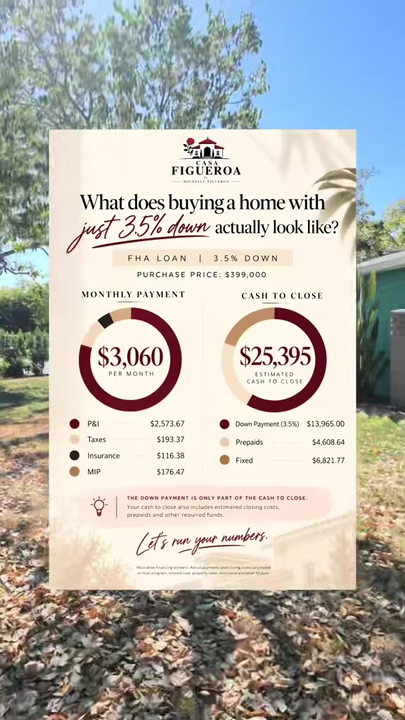 What does buying a home with just 3.5% down actually look like? 🏡
Let’s break down the numbers on this Stockton home!
📍 3389 Juliet Rd, Stockton, CA
🏡 Purchase Price: $399,000
💰 FHA Down Payment (3.5%): $13,965
🔑 Estimated Cash to Close: $25,395
📊 Estimated Monthly Payment: $3,060
That monthly payment includes principal, interest, property taxes, homeowners insurance, and FHA mortgage insurance.
Here’s something buyers often overlook: Your down payment isn’t necessarily the only money you’ll need to purchase a home.
And here’s where having the right team matters. Negotiating seller credits could potentially help reduce your upfront closing costs!
Every buyer’s financial situation is different, and these numbers are estimates, not guaranteed terms.
Curious what buying a home could look like for YOU?
DM me CASA and let’s run your numbers! 🗝️
Estimates are based on an illustrative FHA financing scenario. Actual rates, payments, closing costs, and eligibility vary. HOA fees, if applicable, are not included.
Listing Courtesy of @anapachecoreal estate agentVideo
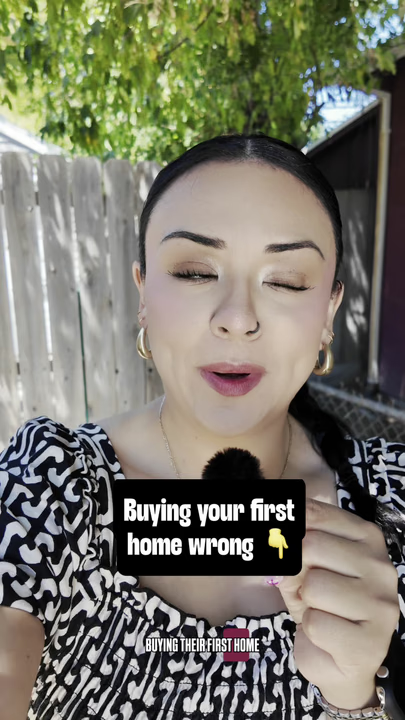 Everyone treats their first home like a finish line. It’s actually your first move. 🏡
That $365K “starter home” can do three jobs at once:
→ House hack it : rent a room (or the other unit) and let a tenant cover most of your mortgage
→ Build equity while you live there instead of paying someone else’s
→ When you move up, keep it and turn it into a rental that pays for the next one
You’re not buying it because it’s cute, well you might be. But You’re also buying it for what it becomes.
One note: most first-time buyer loans need you to live in it first ..so this is “starter home that turns into an investment,” not a pure investment property on day one.
Do it in the right order and the math works. 💡Video
 Jake Gordon
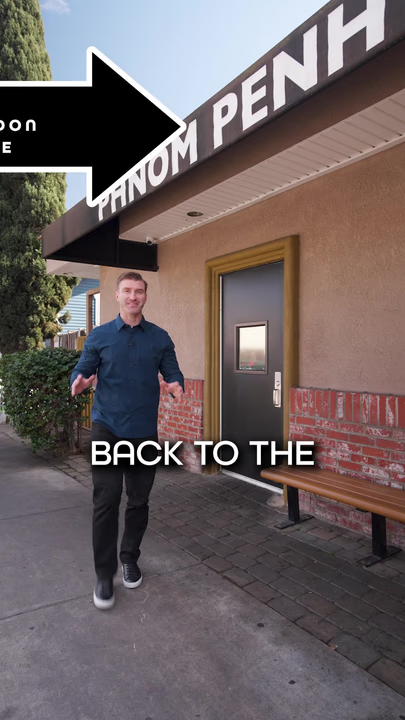 This week the #GordonGuide takes us to @phnompenhnoodleshack. When you're talking iconic Long Beach eats, you HAVE to mention this spot. Family-owned, rooted in the neighborhood, and packed with love.
Cambodian noodles so good they made the @latimesfood Hall of Fame, let's get it!Video