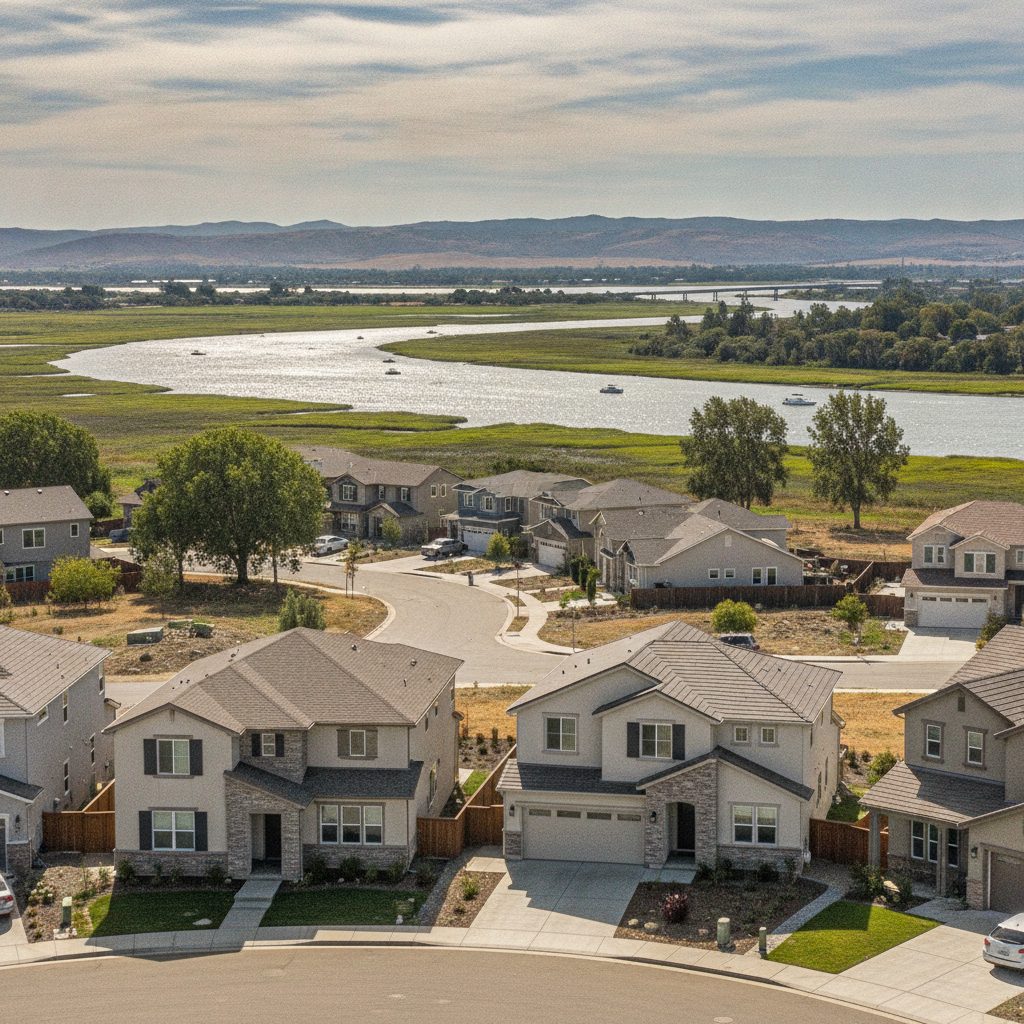
Understanding the Oakley Housing Market and Value Proposition
The core draw of Oakley centers on square footage and lot size relative to cost. During the initial housing boom of the early 2000s, master-planned subdivisions replaced hundreds of acres of vineyards, almond orchards, and row-crop farms. Consequently, much of the housing inventory consists of two-story and single-story houses constructed between 2000 and the present day.Unlike older inner-ring suburbs where buyers must factor in the substantial costs of mid-century plumbing upgrades, foundation settling, and electrical modernizations, Oakley properties generally feature contemporary floor plans. Open kitchens, primary suites with walk-in closets, attached multi-car garages, and built-in energy efficiency standards are standard across subdivisions like Vintage Green, Duarte Ranch, and Summer Lake.- Spacious residential footprints: Typical floor plans range from 1,800 to over 3,400 square feet, accommodating home offices and multi-generational living arrangements.
- Lot utility: Many residential parcels feature wide side yards, providing dedicated storage for boats, recreational vehicles, and utility trailers.
- Modern utility systems: Subdivisions built after 2005 include underground utilities, modern dual-pane windows, and standard central heating and air conditioning designed for inland summer heat.
- Newer construction projects: Active construction continues along the eastern and southern edges of the city, bringing fresh inventory that includes solar power packages and updated smart-home wiring.
Location, Commute Routes, and Regional Connectivity
Oakley sits approximately 55 miles east of downtown San Francisco, 30 miles east of Concord, and roughly 25 miles west of Stockton. Transportation planning has shaped local growth, particularly improvements along State Route 4. The widening of Highway 4 through Contra Costa County reduced bottlenecking for westbound commuters heading toward Interstate 680 and the Highway 24 corridor.Transit options expanded with the opening of the Antioch BART station, located just west of the Oakley city boundary on Hillcrest Avenue. Tri Delta Transit operates bus routes connecting residential neighborhoods in Oakley directly to the Antioch station, giving residents a mass-transit option into employment hubs in Walnut Creek, Oakland, and downtown San Francisco without driving the full distance.Delta Waterways and Outdoor Recreation
Outdoor activity in Oakley is anchored by the California Delta, a massive network of waterways spanning over 1,000 miles of navigable channels. Oakley acts as a major gateway to this freshwater system, drawing boating enthusiasts, wakeboarders, jet skiers, and sport anglers targeting striped bass, largemouth bass, and sturgeon.The city invested in waterfront access with the development of the Oakley Delta Vista Park and Big Break Regional Shoreline. Managed by the East Bay Regional Park District, Big Break includes a visitor center with interactive educational exhibits detailing the ecology of the Sacramento-San Joaquin River Delta. A public fishing pier extends 100 feet into the water, while paved, multi-use trails trace the wetland shoreline, connecting directly to the regional Marsh Creek Trail.For cyclists, joggers, and dog owners, the Marsh Creek Regional Trail provides miles of uninterrupted paths running southward toward Brentwood and the foothills of Mount Diablo. This infrastructure integrates open agricultural views with active outdoor spaces without requiring residents to leave city boundaries.Evaluating Local Amenities and Daily Conveniences
A key factor when assessing any residential destination is the availability of day-to-day shopping, dining, and public infrastructure. Oakley maintains a blend of historic commercial centers and modern retail centers scattered along Main Street and Laurel Road.Downtown Oakley retains a historic small-town aesthetic, anchored by Civic Center Park and the Oakley Recreation Center. This central plaza hosts community gatherings, seasonal farmers markets, and outdoor summer movie nights. Along the primary retail corridors, residents access essential local-amenities including full-service grocery stores, independent auto repair shops, neighborhood bakeries, medical clinics, and family-owned Mexican, Italian, and American dining options.- Retail centers: Shopping nodes along Main Street, Empire Avenue, and Laurel Road feature major supermarket banners, pharmacies, and specialty pet suppliers.
- Community parks: Neighborhood spaces such as Creekside Park, Nunn-Snyder Park, and Freedom High School Community Park offer soccer fields, baseball diamonds, skate areas, and playground complexes.
- Agricultural heritage: The surrounding countryside hosts seasonal u-pick fruit operations, farm stands selling Brentwood corn and cherries, and local wineries across eastern Contra Costa County.
- Civic services: The Oakley City Library and the modern Recreation Center offer enrichment classes, youth sports leagues, and public community rooms for civic groups.