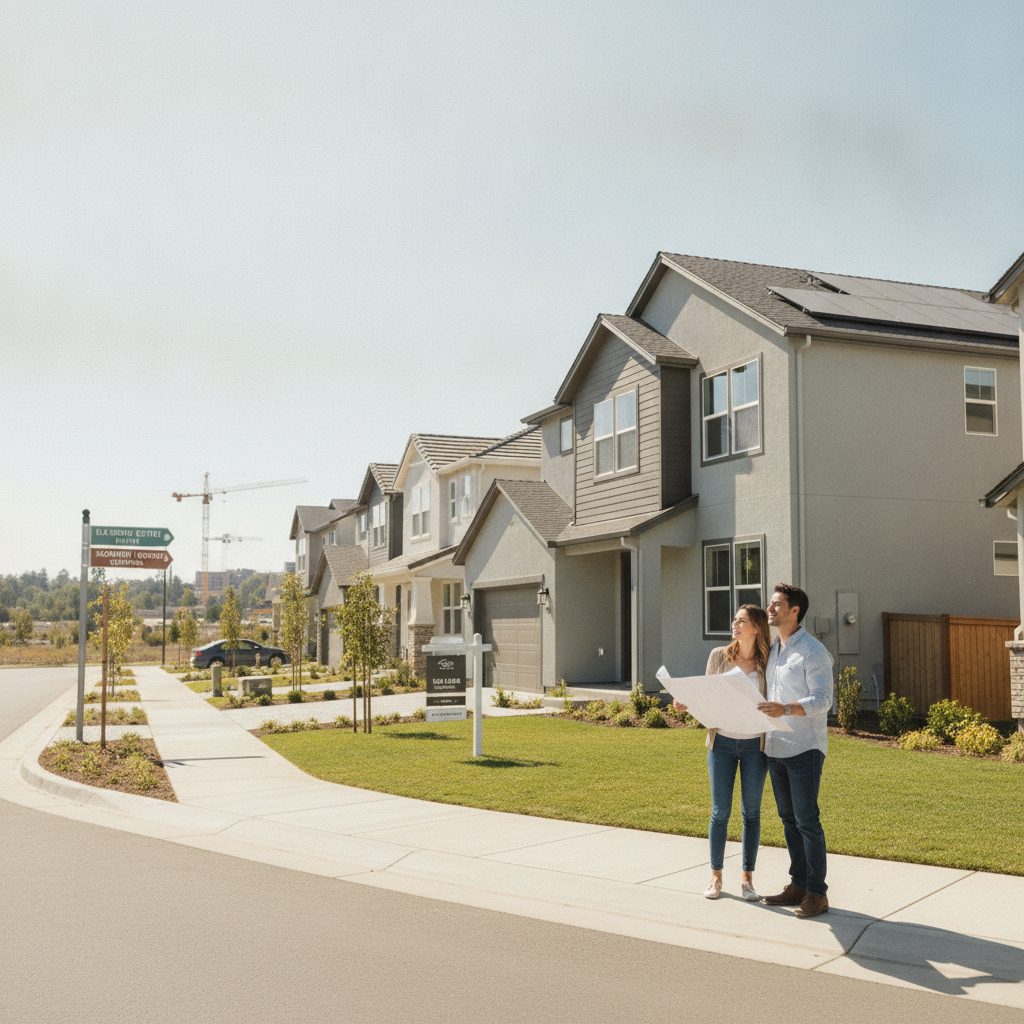
Why Buyers Consider New Construction
New construction attracts many buyers because it can combine a modern floor plan with newer building systems and finishes. Buyers may have opportunities to select certain options, depending on the stage of construction, and some communities offer amenities or layouts designed around contemporary lifestyles.
For a first-time buyer, however, “new” should not be treated as synonymous with “perfect.” A new home still deserves due diligence.
The purchase process can also feel different from buying a resale home. The builder may use its own purchase agreement, financing incentives may be available through affiliated lenders, construction timelines may change, and some features shown in a model home may be upgrades rather than standard inclusions.
Model Homes Are Designed to Inspire
Walking into a model home can create an immediate emotional reaction. The furniture is carefully arranged, lighting is intentional, landscaping is finished, and upgraded features are often showcased.
Before falling in love with a model, ask what is included in the base price and what costs extra.
Create a list of must-have features and nice-to-have upgrades. Then ask for written pricing. A series of small upgrades can significantly change the final price.
Healthcare workers should also consider practical features. A large kitchen may be useful for meal preparation. A quiet bedroom placement may matter for recovery after night shifts. Extra storage can help with uniforms, equipment, and household supplies. A flexible room can become an office, guest room, or future space for changing needs.
Builder Incentives and Financing
Builders sometimes advertise incentives involving closing costs, upgrades, interest-rate options, or other transaction expenses. The details vary widely.
An incentive should be evaluated in the context of the entire transaction. Ask what the incentive requires, whether you must use a particular lender or title provider, whether the offer is subject to qualification, and whether there are deadlines.
Compare the overall financial structure rather than focusing on one headline benefit.
Buyers should also obtain independent advice where appropriate. A lender can explain the financing implications, while a real estate professional can help review property and contract considerations. Buyers should read the builder's documents carefully and seek legal advice for legal questions.
Why an Inspection Can Still Matter
A new home has new materials, but new construction can still have issues. An inspection may identify items that require attention before or after closing, depending on the stage of construction and the contract.
The exact inspection opportunities depend on the property, builder, local practice, and contract. Ask early about what inspections are permitted and when they can occur.
Buyers should not rely solely on the fact that a home passed a required inspection or received a certificate. Those processes serve specific purposes and are not necessarily a substitute for a private inspection designed to identify conditions important to a buyer.
Construction Timelines Can Change
Buyers planning a move around a lease expiration or employment schedule should understand that construction completion dates may change.
Ask the builder how estimated completion dates are communicated, what milestones matter, and what happens if the home is delayed.
This is particularly relevant for healthcare workers who may have already coordinated work schedules, commuting arrangements, or relocation logistics. Build flexibility into the plan when possible rather than assuming the earliest projected date is guaranteed.
HOA and Community Documents
Many new communities have homeowners associations. HOA fees, rules, assessments, and community responsibilities can affect the ongoing cost and experience of ownership.
Review the available HOA documents and understand what the association maintains, what the homeowner maintains, current dues, potential assessments, and restrictions relevant to your lifestyle.
For example, buyers should consider parking, exterior modifications, pets, rentals, landscaping, and other rules that could matter to them.
Do not evaluate an HOA solely by its monthly fee. Consider what the fee covers and how the community is managed.
Comparing New Construction With Resale
A fair comparison should use the total ownership picture.
For new construction, examine the purchase price, upgrades, incentives, HOA costs, expected property taxes, included appliances or features, landscaping needs, and warranty information.
For resale, examine purchase price, condition, expected repairs, inspection findings, HOA costs, property taxes, insurance, and renovation needs.
A lower purchase price does not necessarily mean lower total cost, and a newer home does not necessarily mean lower total cost. The property and transaction need to be evaluated individually.
A Healthcare Worker's New-Home Checklist
Before committing, consider commute time, parking, bedroom location, sound levels, kitchen usability, storage, laundry, neighborhood access, grocery and pharmacy convenience, future household needs, and the amount of maintenance you are comfortable handling.
For night-shift workers, consider daytime noise. For parents, consider school and childcare logistics. For people working multiple facilities, consider the location relative to more than one workplace.
The home should be evaluated against the life you actually live.
Final Questions to Ask the Builder
Ask for a complete list of included features. Ask which items are upgrades. Ask about deadlines for selections. Ask how change orders work. Ask about warranties. Ask about the expected completion timeline. Ask what happens if construction is delayed. Ask about HOA documents. Ask what appliances and landscaping are included. Ask which inspections are allowed.
Write the answers down.
New construction involves many details, and verbal assumptions can be forgotten. Written information gives you something concrete to review before making decisions.
Making a New Construction Purchase a Thoughtful One
New construction can be an important option for first-time buyers in Elk Grove and Sacramento, particularly for people who value modern layouts and newer systems. But the strongest purchase is not simply the newest home.
It is the home whose price, location, features, timeline, community rules, and financing structure fit the buyer's actual needs.
Take the time to understand what you are buying. Compare alternatives. Ask questions. Review documents. Keep a cash reserve. And make sure the excitement of a brand-new home does not replace the due diligence that every real estate purchase deserves.
Frequently Asked Questions About This Topic
Here are concise answers to common questions prospective buyers may ask.
How much home can I afford? Affordability depends on income, debts, cash reserves, interest rate, taxes, insurance, HOA costs, and your own comfort level. A lender can calculate qualification, but your personal budget should determine the payment you actually want.
Should I buy or rent first? It depends on how stable your employment and location are, how long you expect to stay, and whether you are financially prepared for ownership.
Do healthcare workers get special mortgage programs? Some lenders and housing organizations offer programs that may be designed for particular professions or circumstances, while many healthcare workers simply use standard mortgage products. Program availability and eligibility can change, so verify current terms with a qualified lender.
Is new construction better than resale? New construction and resale homes have different characteristics. Compare the total cost, condition, location, timeline, maintenance expectations, and features rather than assuming one category is always preferable.
What should I do before making an offer? Confirm your financing plan, review the property's condition and disclosures, understand the offer terms and contingencies, estimate total monthly costs, and ask questions about anything you do not understand.