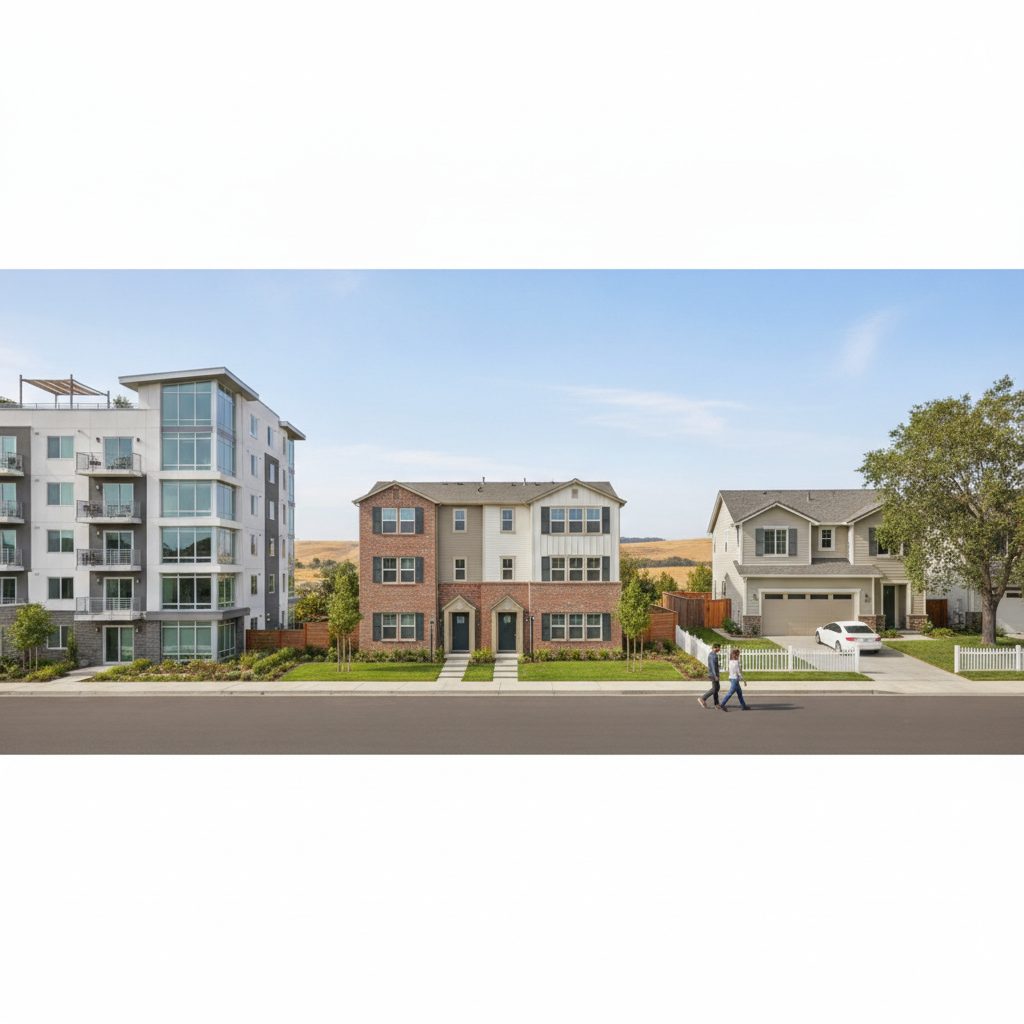
Start With the Lifestyle You Want
Property type affects daily life.
A condo may offer less exterior maintenance. A townhome can provide more space than some condos while still sharing certain community responsibilities. A single-family home may provide more privacy and control over the property, but it can also bring more maintenance responsibilities.
None is automatically right for every buyer. Start by describing how you want to live.
Condos: What to Consider
Condos can appeal to buyers who prioritize location, lower exterior maintenance, amenities, or a smaller footprint.
The HOA is a major part of the ownership equation. Review dues, rules, reserves, insurance responsibilities, assessments, and maintenance obligations.
Also consider parking, storage, noise, shared walls, and policies that affect your lifestyle.
Townhomes: A Middle Ground for Some Buyers
Townhomes can offer multiple levels, private entrances, garages, and more living space while retaining some shared community responsibilities.
The exact ownership structure varies. Read the governing documents carefully to understand which parts of the property are yours to maintain and which are handled by the association.
For healthcare workers, think about stairs, parking, bedroom placement, and how the layout feels after a long shift.
Single-Family Homes: More Control, More Responsibility
A detached home can provide a yard, greater privacy, and more control over exterior decisions. It can also require more maintenance.
Consider landscaping, roof, HVAC, exterior surfaces, fencing, drainage, and other systems.
If you are a first-time buyer, do not underestimate the time and cost involved in maintaining a property. Ask inspection professionals and other qualified experts about specific conditions.
Compare the Total Monthly Cost
Purchase price alone does not tell the whole story.
Compare mortgage costs, taxes, insurance, HOA dues, utilities, maintenance, and expected repairs.
A lower-priced condo can have a meaningful HOA assessment. A single-family home may have no HOA but require more direct maintenance. A townhome may fall somewhere between those experiences.
The correct comparison is property-specific.
Think About Privacy and Noise
Shared walls and community layouts can affect the sound environment.
If you work nights, evaluate whether daytime noise could interfere with sleep. If you value outdoor privacy, compare yards, balconies, patios, and common areas.
Visit the property and neighborhood at different times when practical.
Think About Future Plans
Consider how long you expect the home to work for you.
If you plan to grow your household, work from home, care for family members, or need additional storage, space and flexibility become more important.
If you expect to move within a shorter period, purchasing a larger home than you need may create unnecessary cost and complexity.
Ask About HOA Rules
Important questions can include: What are the current dues? What do they cover? Are there rental restrictions? What are the parking rules? Are there pet restrictions? What exterior changes require approval? How are assessments handled? What does the association's insurance cover?
Review the actual documents rather than relying only on a listing description.
Which Property Type Fits a Healthcare Schedule?
Healthcare workers may value low maintenance, convenient parking, short commutes, quiet bedrooms, and practical storage.
A condo may reduce certain exterior tasks. A townhome may offer a garage and multiple levels. A single-family home may provide more private outdoor space.
The best match depends on which responsibilities and features matter most to you.
Make the Comparison About Ownership
The question is not simply “Which property type is best?”
Instead, ask which ownership structure fits your budget, schedule, desired privacy, maintenance tolerance, and future plans.
That framework helps first-time buyers compare homes based on real life rather than marketing language.
Frequently Asked Questions
What should I know before buying a home in Elk Grove? Start with a realistic budget, financing plan, cash reserves, commute, property condition, HOA information when applicable, and your expected length of ownership.
Should healthcare workers use overtime when planning affordability? Overtime may be part of documented income depending on the lender's guidelines, but buyers should also test whether the home remains comfortable if overtime decreases.
Are there first-time homebuyer programs in Elk Grove? The City of Elk Grove currently lists a Homebuyer Assistance Program with specific income, property, occupancy, credit, education, and other requirements. Verify current terms directly with the City. citeturn0search0turn0search1
Should I buy new construction or resale? Compare the total purchase and ownership picture, including price, upgrades, taxes, HOA costs, maintenance, inspections, location, and timeline.
How can a local real estate professional help? A local agent can help identify properties, organize tours, explain transaction steps, and provide local market and property context. Buyers should still consult qualified lenders, inspectors, attorneys, tax professionals, and insurance professionals for matters within those specialties.