Your Schedule Should Shape Your Search
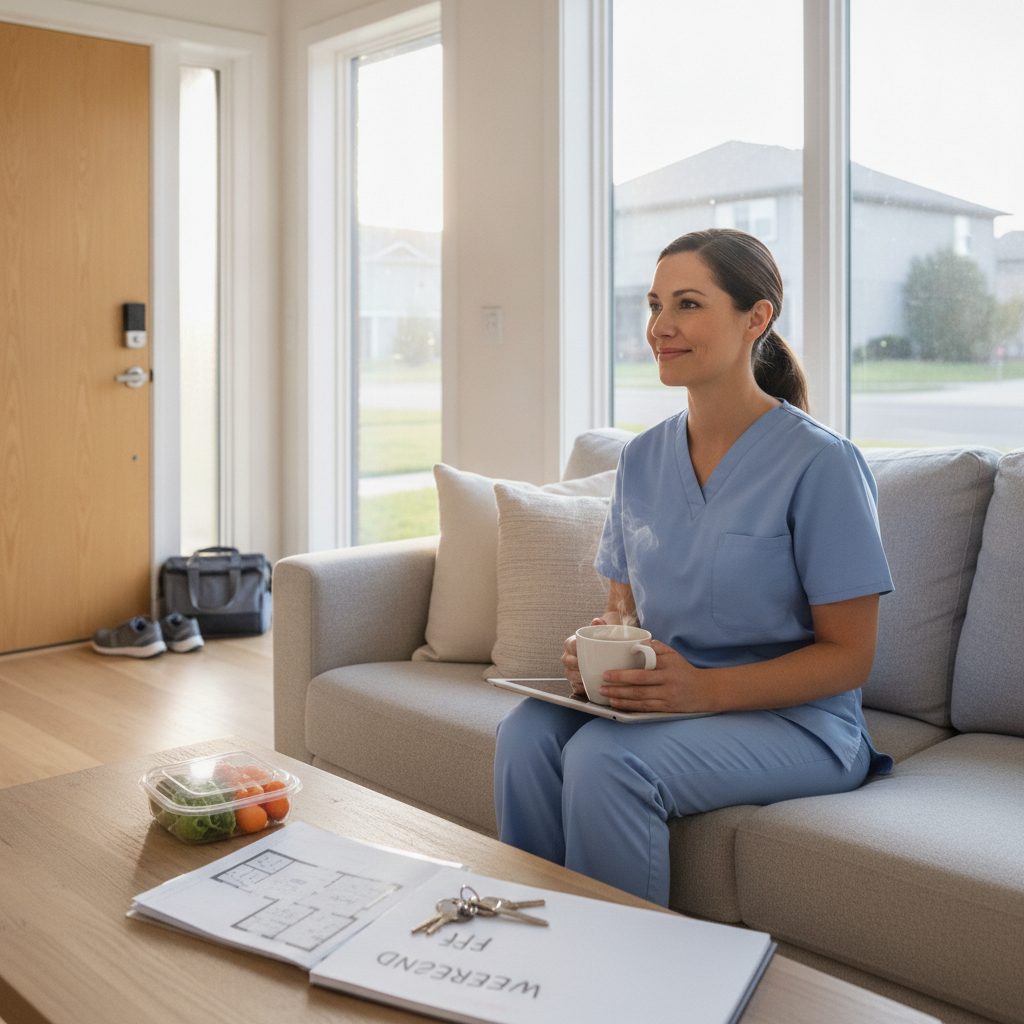
A home search should reflect the life you actually live. If you work twelve-hour shifts, rotating schedules, overnight shifts, or weekends, your priorities can be very different from those of someone who works a standard weekday schedule.
For healthcare professionals, a home is not simply a place to sleep at night. It needs to support recovery, meal preparation, work preparation, errands, and the transition between demanding shifts and personal time.
Think about what your busiest workday looks like. What would make coming home easier? What would make getting ready for work less stressful? Those answers can help determine which features and locations deserve the most attention during your search.
Choose Commute Rules Before You Tour
Decide how much commute time you are realistically willing to accept before you start touring homes. Then apply that rule consistently.
It is easy to make exceptions when you find an attractive house with a great kitchen, larger backyard, or lower price. But if that property adds significant time to your commute every workday, the tradeoff may become frustrating over time.
Consider your maximum preferred commute, not just the distance from the workplace. A few extra miles can represent very different travel times depending on traffic and road conditions.
Having a commute rule before you fall in love with a property can help you evaluate homes more objectively.
Test the Route at Shift Times
Use your actual work hours when evaluating a commute. If your shift begins at 7 a.m., look at travel conditions around that time. If you finish at 7 p.m., evaluate the return route around your actual departure time.
A route that takes 15 minutes in the middle of the afternoon may take considerably longer during peak traffic. Likewise, someone working overnight may have a completely different experience from someone commuting during the traditional morning rush.
If you work rotating shifts, evaluate multiple travel windows. The goal is to understand what the commute will actually feel like as part of your working routine rather than relying only on a distance estimate.
Prioritize Sleep
Sleep should be a major consideration for healthcare professionals, particularly those who work nights or rotating shifts. A home that looks peaceful during a weekend showing may not feel nearly as quiet when you are trying to sleep during the day.
Consider bedroom placement, window exposure, street activity, neighboring units, nearby businesses, construction, and other potential sources of noise. Pay attention to whether the primary bedroom faces a busy road, parking area, community entrance, or other active space.
If possible, visit the property during the daytime when you would normally be sleeping. Listen for traffic, landscaping equipment, nearby construction, children playing, deliveries, and other recurring sounds.
The goal is not complete silence, but a sleeping environment that realistically supports your schedule.
Make Meal Preparation Easy
Long shifts can make convenience especially valuable. After working for many hours, preparing a complicated meal may be the last thing you want to do.
During a showing, evaluate kitchen storage, refrigerator space, counter layout, pantry access, cabinet organization, and the distance between the kitchen and dining areas. Think about how the kitchen would work when you are preparing meals in advance, packing food for work, or quickly making something after a shift.
If you meal-prep regularly, consider whether there is enough counter and refrigerator space for your routine. A kitchen does not need to be enormous to be functional, but its layout should make everyday tasks reasonably easy.
Laundry and Storage Matter
Healthcare work can involve uniforms, shoes, work bags, jackets, and other items that need dedicated storage. These details may not seem important during a short showing, but they can have a significant effect on everyday organization.
Look at the location of the laundry area and consider whether it is convenient for your routine. Check closets, pantry storage, garage space, linen storage, and any mudroom or entryway areas.
Think about where you will put work shoes when you come home, where uniforms will go before washing, and where bags or equipment will be stored.
Adequate storage can help separate work-related items from the rest of your living space and make transitions between work and home easier.
Parking Can Affect Your Routine
After a long shift, convenient parking can matter more than it seems during a daytime property tour.
Look at garage access, driveway space, assigned parking spaces, guest parking, street restrictions, and how easy it is to get from your vehicle to the home's entrance. If you regularly arrive home late at night, consider lighting and how comfortable the parking arrangement feels during those hours.
For condominiums and townhomes, pay particular attention to assigned spaces and guest parking rules. For single-family homes, look at whether the driveway and garage actually accommodate the vehicles you expect to have.
Small inconveniences repeated every day can become meaningful parts of your routine.
Consider Nearby Essentials
A nearby grocery store, pharmacy, coffee shop, gym, childcare provider, restaurant, gas station, or other frequently used service can reduce the amount of time you spend running errands.
Make a list of the places you visit regularly and search around those needs. Healthcare professionals with long shifts may value convenience differently from someone who has plenty of time for errands during the week.
For example, being a few minutes closer to a grocery store may make it easier to pick up food after work rather than making a separate trip on a day off. Similarly, convenient access to a pharmacy or other essential service can be useful when your schedule is unpredictable.
The objective is not to have every service immediately outside your door. It is to understand how the home's location fits into your normal weekly routine.
Think About Your Next Career Move
Healthcare careers can involve transfers, promotions, changes in specialty, schedule adjustments, additional facilities, or opportunities with different employers. Your current workplace may not always be your only workplace several years from now.
That does not mean you should try to predict your entire career when buying a home. Instead, consider whether the property's location provides reasonable access to several employment centers or major transportation routes.
A home that works for your current position while also maintaining reasonable access to other potential workplaces can provide additional flexibility.
This can be particularly useful in a region where healthcare professionals may work across multiple hospitals, clinics, medical offices, and healthcare systems.
Create a Healthcare-Specific Tour Checklist
Before each showing, review the factors that matter most to your work and lifestyle. A simple checklist can include commute, sleep environment, parking, kitchen functionality, laundry, storage, noise, monthly cost, and future flexibility.
You can also add property-specific considerations such as HOA rules, maintenance responsibilities, outdoor space, and proximity to essential services.
Using the same checklist for every property helps prevent the emotional side of house hunting from taking over the decision. A beautiful home can still be a difficult fit if the commute is excessive or the layout does not support your schedule.
The goal is to find a home that works not only during the showing, but also on the ordinary workdays that will make up most of your life there.