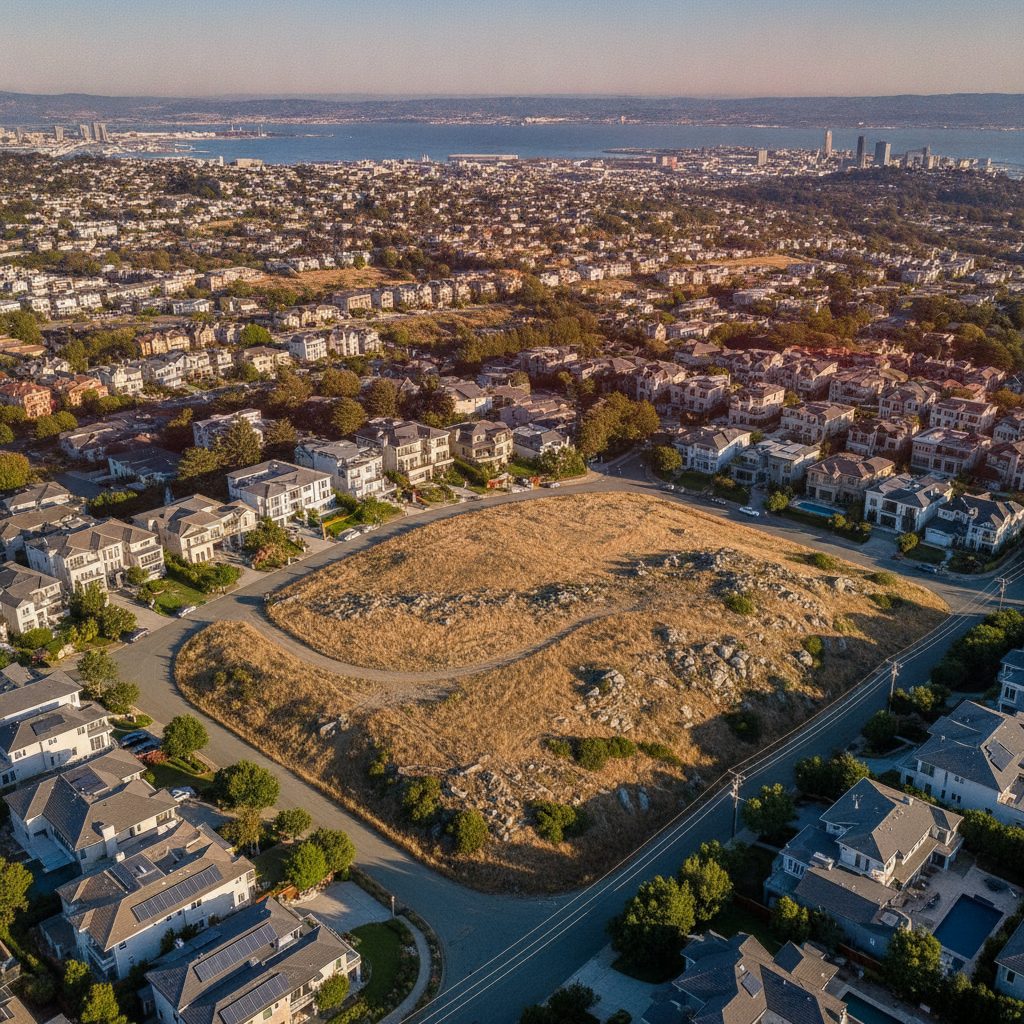
Every once in a while, a buyer sends me a piece of land for sale in the Bay Area and asks the obvious question:“Why is this so cheap? Why wouldn't I just buy the land and build my dream home?”When homes around you sell for $1 million or more, seeing a vacant lot listed for a fraction of that price can feel like you've found a loophole.Usually, you haven't.The land itself may be relatively inexpensive because turning that land into a buildable homesite can be the expensive and complicated part.In the Bay Area, buying land is not the same thing as buying a blank canvas where you can immediately start building whatever you want. Zoning, utilities, site conditions, environmental considerations, engineering, local development standards, permits, fees, and multiple layers of approvals can all stand between purchasing the property and actually breaking ground.California's own Department of Housing and Community Development recognizes that lengthy processing times, layered reviews, permitting procedures, fees, and conditions of approval can increase the cost, uncertainty, and financial risk associated with housing development.
First Question: Can You Actually Build a House There?
Never assume that because a parcel of land is for sale, you can build the home you have in mind.Before purchasing land, you need to understand the property's zoning and what that zoning allows.Questions can include:Is residential development permitted?Can you build a single-family home?What are the required setbacks?How much of the lot can actually be developed?Are there environmental, hillside, fire, access, subdivision, or other restrictions?Will the project require discretionary approvals or additional studies?California has passed several laws intended to streamline certain types of housing development, but those laws don't eliminate every local zoning, building, infrastructure, and development requirement.This is why the price of a vacant lot should never be evaluated independently of its development potential.
Raw Land vs. Improved Land Matters
One of the biggest things I want buyers to understand is the difference between purchasing raw land and purchasing a lot where infrastructure already exists.Does the property already have access to:Water?Sewer or an approved septic solution?Electricity?Gas, if needed?A legal and usable road or driveway?Simply seeing utilities nearby doesn't necessarily mean connecting the property will be simple or inexpensive.California housing planning itself treats access to water, sewer, and other utilities as an important part of determining whether land can realistically support residential development.If you're starting with truly raw land, getting utilities to the future home can become an entire project before construction of the house even begins.
Then Come the Permits and Approvals
This is the part buyers sometimes underestimate.You may need architectural plans, engineering, surveys, grading plans, utility approvals, building permits, planning approvals, environmental review or other documentation depending on the property and jurisdiction.And the process varies dramatically from one Bay Area city or county to another.You could own the land and still spend significant time and money working through the development process before ever pouring a foundation.That's why I don't look at a $300,000 parcel next to $1.5 million homes and automatically think, “What a deal.”My first question is:Why hasn't someone already built on it?There may be a perfectly reasonable answer. But that's a question worth investigating before you become the person responsible for figuring it out.
Why I Often Prefer a Fixer
For someone whose real goal is to create a customized home rather than become a land developer, I often suggest considering a major fixer instead.Buy the ugly house.If there's already a legally established single-family residence on the property, you're starting from a very different position than you would be with raw land. Depending on the project, you may be able to renovate extensively or take portions of the home down to the studs while working within the existing property's established residential use.That does not mean you can automatically demolish or rebuild anything you want without permits. Major renovations, additions, structural changes and demolition can still require substantial approvals.But you're starting with a parcel that already has a residential history, an existing structure, and often existing utility connections rather than trying to turn undeveloped land into a residential property from scratch.For many buyers who tell me, “I just want to build my dream home,” that can be a much more practical conversation.
Why Does Building Seem Easier in Places Like Texas?
This is also why buyers sometimes look at other states and wonder why custom homes seem so much more attainable.Texas is a good comparison, but there is an important distinction: Texas is not completely free of zoning, building permits, or development regulations. Cities have zoning authority, and certain construction in unincorporated areas can still require permits.However, depending on the location, buyers may encounter fewer layers of land-use regulation and a different development environment than they would in many Bay Area communities.So when you see someone purchase acreage and build a beautiful custom home in another state, don't compare the cost of their land directly with the cost of a vacant Bay Area parcel.The real comparison is the total cost and difficulty of getting from dirt to a completed home.
Cheap Land Doesn't Necessarily Mean a Cheap Home
A vacant Bay Area lot can absolutely be an opportunity for the right buyer.But I wouldn't purchase one simply because the asking price looks inexpensive compared with surrounding homes.Before buying, I want to understand:What can actually be built?What approvals will be required?What utilities already exist?What will need to be brought to the property?What site work may be necessary?What could the permitting and development timeline look like?And most importantly:What is your realistic all-in cost to get from purchasing the land to receiving the keys to the finished home?That's the number that matters.Sometimes buying land and building from scratch makes sense. Sometimes buying an existing fixer and creating your dream home from an already established residential property makes significantly more sense.The goal isn't to discourage buyers from purchasing land.It's to make sure that the “cheap” piece of Bay Area land you found doesn't become the most expensive bargain you've ever bought.Evangeline Nguyen, REALTOR®eXp Realty | DRE #02210833Serving buyers and sellers throughout the Bay Area and Northern California