
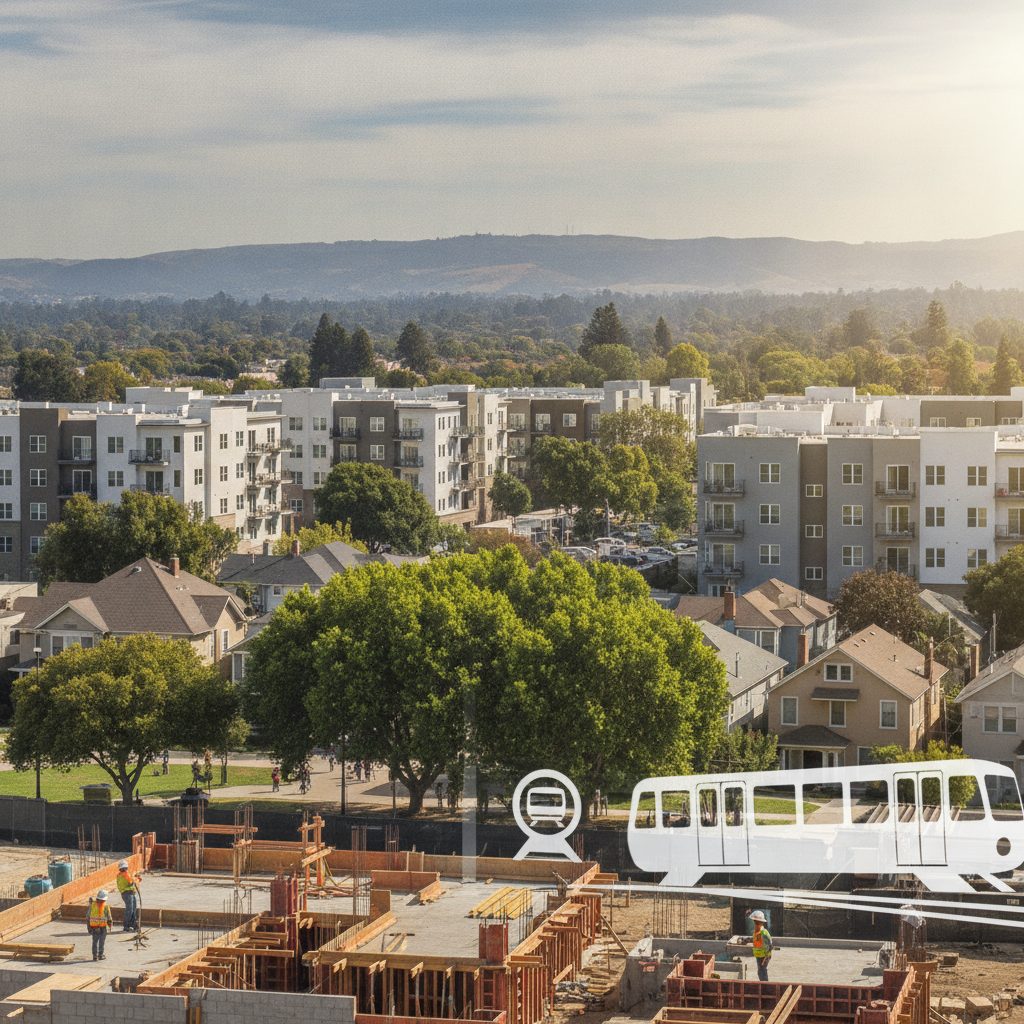
The 12,897-home goal
For the 2023 to 2031 planning period, the State of California has assigned Fremont a target of 12,897 new homes. According to the City's Housing Element, the eight-year plan that responds to this target, about 60% of those homes are meant for households with very low, low and moderate incomes. That is more than 7,000 homes.The target is a planning goal. It requires the City to make room for the homes through its zoning and policies, but it does not mean the City will build them. Builders, nonprofits and landowners decide which projects move forward and when, and affordable homes usually need public funding to be built.That is why the goal matters over years, not months. It sets the direction for how much housing Fremont plans for, without changing the price of any home on the market today.Senate Bill 79 and BART
Senate Bill 79 was signed on October 10, 2025 and generally took effect on July 1, 2026, according to ABAG. It allows qualifying housing near major transit stops, such as BART, to be built taller and denser than local zoning might otherwise allow. KQED reported that buildings closest to the biggest transit hubs can reach nine stories.Fremont has two BART stations, Fremont and Warm Springs/South Fremont, and both are expected to fall inside the areas the law covers. The law applies within a quarter mile or half mile of a qualifying stop, depending on the city and the level of transit service.What the law does not do is just as important:- It does not build anything. It lets developers propose taller, denser projects near transit. Whether anyone does depends on land, financing and demand.
- It does not require affordable homes. Equity groups raised this concern when it passed, so new homes near BART could be market-rate condos or apartments, affordable homes, or a mix.
- It is not the same everywhere. Cities can adopt their own alternative plan or exclude certain sites, with state review, so the exact areas in Fremont can change.
Centerville Plaza Apartments Phase 2
Centerville Plaza is a planned affordable rental community on Fremont Boulevard near the Centerville train station. The first phase is a five-story building at 37358 Fremont Boulevard with 139 rental homes, and the City's affordable housing page lists leasing as expected in spring 2028. Hoodline reported in May 2026 that the developer, USA Properties Fund, plans about 290 homes on the site in total.The next step is financing for Phase 2. According to a meeting summary, the Fremont City Council held a public hearing on October 6, 2026 on the issuance of up to $55 million in tax-exempt bonds for about 150 affordable rental homes in Phase 2. The vote was reported as unanimous. The City does not issue the bonds. A state agency, the California Municipal Finance Authority, would issue them, and a public hearing like this is generally a required step before they can be issued.A few things to keep in mind:- These are rentals, not homes for sale. They help renters, and they do not add homes you can buy.
- A hearing is not a finished building. Phase 1 is still scheduled to open in 2028, so Phase 2 would come later.
- The effect on buyers is indirect. More rental housing can ease overall demand, but it is a small share of what Fremont needs.
What this means if you want to buy
It helps to separate what could change over years from what you can buy today.Possible long-term effects- More homes planned and approved can reduce competition for each home over time, if they are actually built.
- New housing near BART could add condo and apartment choices in the Fremont and Warm Springs areas.
- New affordable rentals, like Centerville Plaza, give renters more options, which can free up other homes. The effect on prices is small and hard to measure.
- Houses (863 sales): median sold price $1,715,000, or $1,045 per square foot. The typical house took 10 days to sell, and about 64% sold above the list price. Only about 1% sold for less than $1 million.
- Condos and townhomes (393 sales): median sold price $835,000, or $661 per square foot. The typical sale took 25 days, and about 31% sold above the list price. About 63% sold for less than $1 million.
What to do now
- Decide whether to wait. Waiting for future housing only makes sense if your plans are flexible and you are comfortable not knowing what prices will do. Rates, jobs and demand across the Bay Area move prices more than any one project.
- Get a clear budget. Talk to a lender about what you qualify for and which loan programs fit. Down payment assistance may help, and I can walk you through local options.
- Look at condos and townhomes. In Fremont, they are the most common route under $1 million. Ask about HOA dues, any special assessments and the building's reserves.
- Consider areas near transit. Homes near BART can offer commute benefits now, and the area may see more building over time. A new project nearby can also bring construction and change the feel of a street, so look at what is planned before you buy.
- Check what is planned near a home. Before you make an offer, ask me to look up nearby approved or proposed projects with the City.
- Plan your offer. With houses selling in about 10 days and most going above the list price, preparation matters: pre-approval, proof of funds and a clear idea of your limits.