
The Anatomy of Post-Closing Property Document Mailings
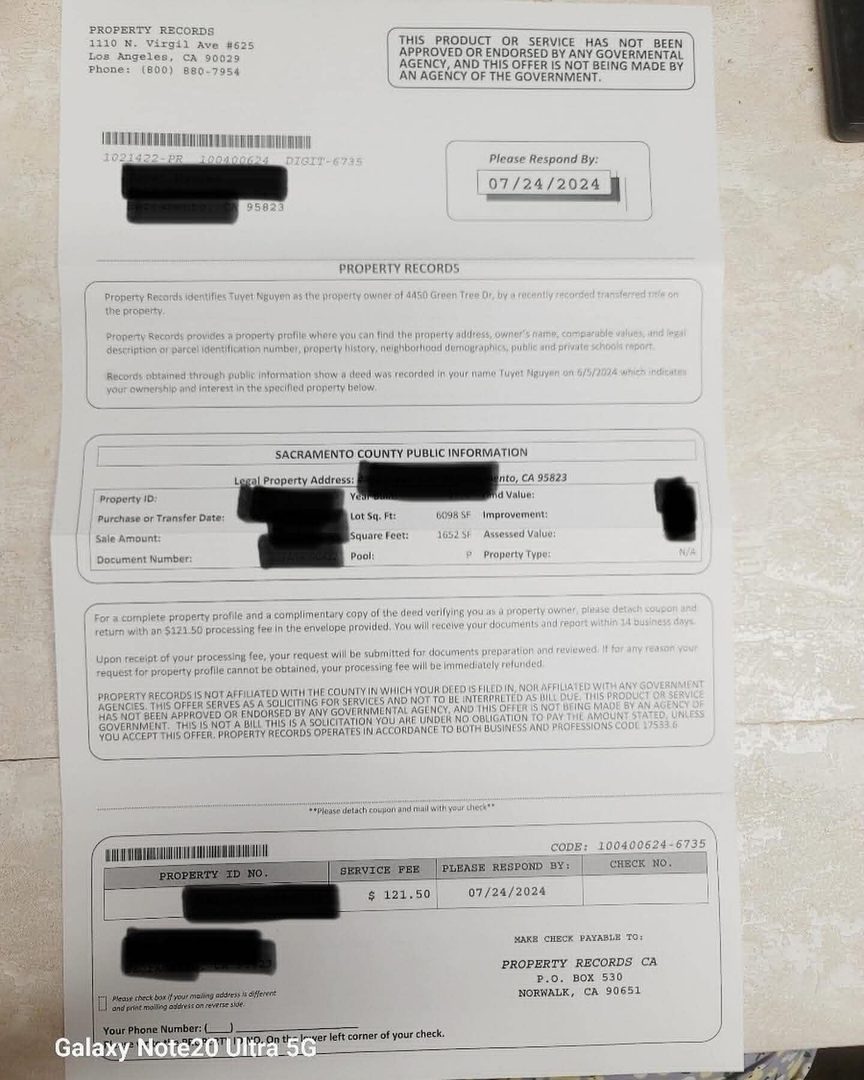
When a property transaction closes, the title company or escrow officer files the transfer deed with the local county clerk-recorder. In California and across the United States, recording acts make these transactions public record. Information such as the buyer name, seller name, lender name, parcel number, loan amount, and recording date becomes accessible to anyone who monitors public filings.Mass-marketing firms scrape county databases daily. Within one to two weeks, automated systems draft personalized letters to every new homeowner in the jurisdiction. These letters often use company names like Record Retrieval Department, Local Records Office, or Property Transfer Services. They format the paperwork to mimic tax statements or county notices, complete with return envelopes, bar codes, payment due dates, and citations of property codes.Tucked at the very bottom or on the back page, in tiny print, sits a mandatory legal disclaimer stating that the company is not affiliated with any government agency and that homeowners are under no obligation to buy the product. Most buyers overlook the disclaimer because the bold typography higher up on the page creates an artificial sense of urgency.Why You Do Not Need to Pay for a Deed Copy
The service these companies provide is forwarding a basic photocopy of your deed or a printout of an automated property profile. In a standard purchase, you receive these documents as part of your standard closing process without paying third-party intermediaries.- Your title or escrow company mails you the original recorded grant deed as soon as the county recorder completes indexing, which typically takes two to eight weeks after closing.
- Your final closing packet already includes digital or printed copies of every document signed during the purchase transaction, including the preliminary title report and deed of trust.
- Your escrow officer retains electronic records of the closing and can email you a copy of the recorded document upon request at no cost.
- If you misplace your paperwork years later, you can order a certified copy directly from your county clerk-recorder in person, by mail, or online .
"Never pay a private vendor for property records until you confirm with your escrow officer or local county clerk whether you already have the document."
Other Common Solicitations New Buyers Encounter
Deed copy solicitations are not the only misleading mailings sent to recent purchasers. The public recording of your mortgage opens the door to several other aggressive marketing campaigns that look like official correspondence.Mortgage Protection Insurance Notices
These letters feature the name of your specific mortgage lender in bold print across the top, leading buyers to believe their bank issued the document. The text warns that your family could lose the home if the primary earner passes away or becomes disabled. In reality, these are sales letters from third-party insurance brokers selling high-premium declining term life insurance. Your mortgage lender does not require you to buy this product.Home Warranty Inquiries and Final Warnings
Another frequent letter arrives marked with phrases such as Notice of Interruption or Expiring Coverage. The mail piece references your lender and property address, asserting that your home warranty has lapsed. If your purchase contract included a one-year home warranty policy paid by the seller, check the specific carrier listed in your escrow closing disclosure rather than responding to anonymous warranty solicitations.Property Tax Assessment Reduction Services
Some companies offer to file an appeal of your property tax assessment for an upfront fee of $100 to $250, plus a percentage of any tax savings. County assessment appeals can be filed by any homeowner directly through the local assessment appeals board, usually for a nominal county filing fee or no fee at all. For new purchases, properties are reassessed at the purchase price under state law, making reassessment appeals immediately after closing ineffective in stable or appreciating markets.A Practical Buyer-Guide to Processing Post-Purchase Mail
Managing post-closing mail requires a deliberate routine so that legitimate property tax bills, supplemental tax notices, and utility statements are paid on time while promotional solicitations are discarded. Keep this checklist by your desk during your first three months of ownership:- Inspect the envelope for government disclaimers: Private mailings are legally required to state that they are not government agencies, often hidden near the bottom perimeter or on the back.
- Check payment methods: County offices rarely ask for credit card payments sent via pre-addressed private postal boxes or third-party web portals that lack a .gov web address.
- Verify your lender communication: If a notice mentions your mortgage, check your loan number against your original closing documents. Solicitations use your lender name from public records, but they do not possess your private account number.
- Consult your closing team: When an unfamiliar bill arrives requesting payment for escrow items, property files, or closing fees, take a photograph of the document and text or email it to your real estate agent or escrow officer.