
Are East Bay Home Prices Actually Dropping?
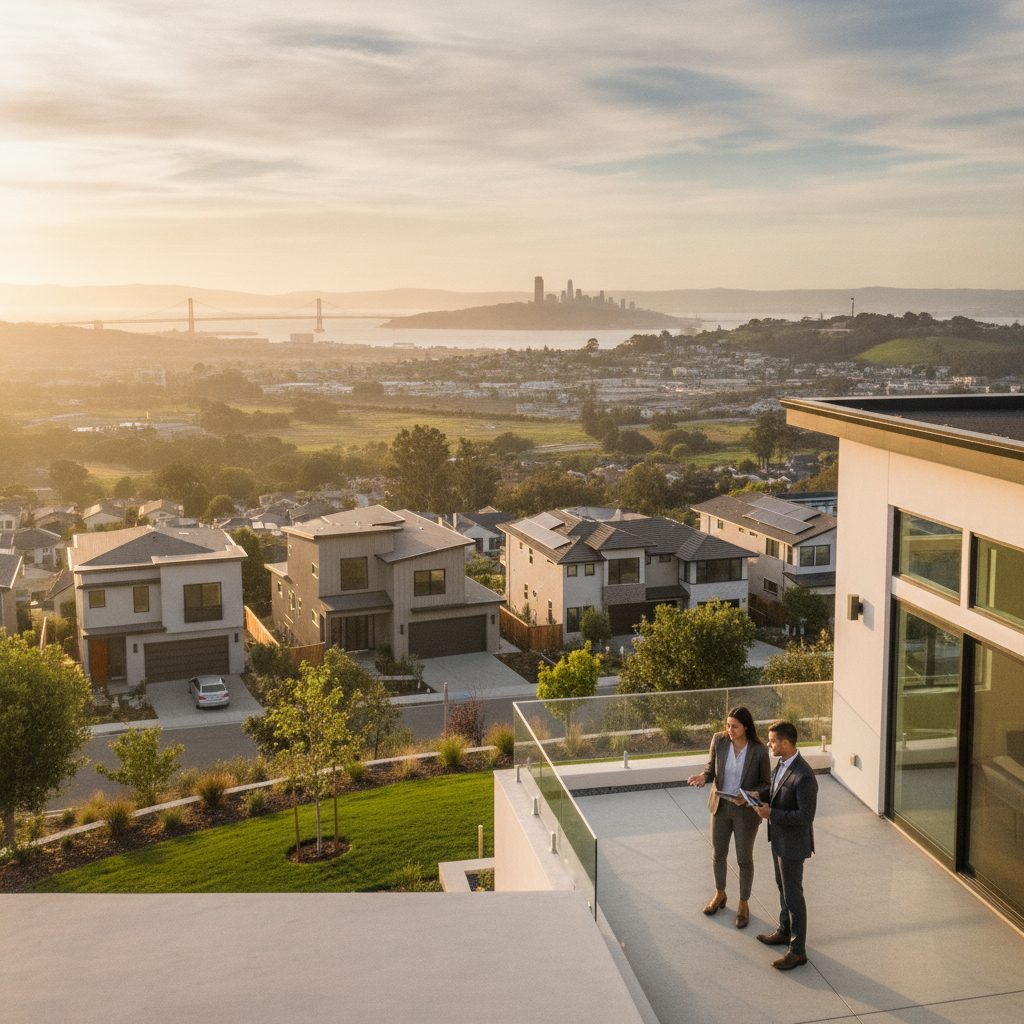
Home prices in the East Bay have not collapsed, but they have bifurcated sharply depending on location, property condition, and city-specific costs. In mature markets along Highway 24 such as Orinda and Lafayette, turn-key inventory still commands firm pricing because supply remains permanently restricted by geography and zoning. Move east past the Interstate 680 interchange into Concord, Pleasant Hill, or parts of Martinez, however, and median sale prices have softened noticeably from their spring 2022 records.Sellers across the Interstate 880 corridor in San Leandro, Hayward, and Fremont have had to adjust expectations. Instead of listing low to trigger a bidding war, homes that require cosmetic updates or systems modernizations are seeing price cuts within thirty days on market. That dynamic simply did not exist three years ago, when buyers routinely waived every protection just to have an offer reviewed.The Real Penalty of Waiting for Lower Rates
The common intuition to wait for 5% mortgage rates ignores basic supply and demand dynamics unique to the Bay Area. California has underbuilt housing for four decades. The East Bay holds thousands of potential buyers who are qualified to purchase today but are paused out of psychological hesitation. The moment mortgage rates drop by even one full percentage point, that pent-up demand will reactivate simultaneously.Consider the arithmetic. On an $950,000 home purchase in Concord with a 20% down payment, a 1% reduction in interest rate saves roughly $500 per month on your mortgage payment. But when lower rates push three or four competing buyers back to that exact same open house, the winning bid easily surges $75,000 to $100,000 above asking price. That price increase wipes out several years of interest savings in a single afternoon. Worse, you take on that extra debt permanently, while the current high-rate environment offers you a discount on the principal balance today.How County Transfer Taxes and Local Costs Shift the Math
Understanding local friction costs is where smart buyers find separation. Alameda County and Contra Costa County operate under entirely different transfer tax systems, which directly influences seller flexibility during negotiations.In Contra Costa County, the transfer tax is typically uniform across most municipalities at $1.10 per $1,000 of purchase value, historically split equally between buyer and seller. That keeps transaction closing overhead predictable whether you buy near Heather Farm Park in Walnut Creek or close to the Lafayette reservoir.Cross through the Caldecott Tunnel into Alameda County, and the landscape changes dramatically. Cities like Oakland and Berkeley impose steep, tiered municipal transfer taxes on top of the base county rate. In Oakland, properties selling over $1.5 million face transfer taxes climbing up to 1.75% or 2.5% depending on the final tier. Because sellers bear part or all of that burden by local custom, sellers of homes sitting past forty days in the Grand Lake, Montclair, or Elmwood districts are far more motivated to grant closing concessions to keep transactions moving than their counterparts in low-tax suburban enclaves.The Permanent Value of a Lower Property Tax Base
One factor California buyers frequently overlook is the long-term impact of Proposition 13. Your annual property tax assessment is pegged directly to the purchase price registered on the deed, capped at an annual increase of no more than 2% unless you execute significant permitted structural changes.If you buy an $850,000 bungalow in Alameda today during a rate-induced lull, your base assessed valuation stays anchored at $850,000. When rates fall in subsequent years and equivalent properties on your block trade for $1,050,000, your annual property tax bill remains tied to your original, lower purchase number. Even after you refinance into a lower mortgage rate, your property tax assessment never resets upward to reflect market gains. Buying at an elevated price during a low-rate frenzy guarantees higher property taxes for the entire duration of your ownership.Tactical Moves for Today's East Bay Buyers
To exploit current market conditions, buyers should change how they structure offers. The goal right now is not merely winning the property; it is utilizing current inventory leverage to ease immediate cash flow.- Request a seller-paid temporary rate buydown: Asking for a 2-1 buydown credit drops your effective interest rate by 2% in year one and 1% in year two, giving you affordable payments during the initial transition period without inflating the purchase price.
- Preserve property inspection and appraisal contingencies: In contrast to 2021, sellers will accept contracts that give you 14 to 17 days to inspect foundations, roofs, and sewer laterals, providing legitimate room to renegotiate price or walk away if major repair deficits appear.
- Target listings crossing the 30-day threshold: Look specifically for properties along transit routes near Rockridge, MacArthur, or Pleasant Hill BART stations that missed their initial offer date, where sellers are most amenable to financing concessions.