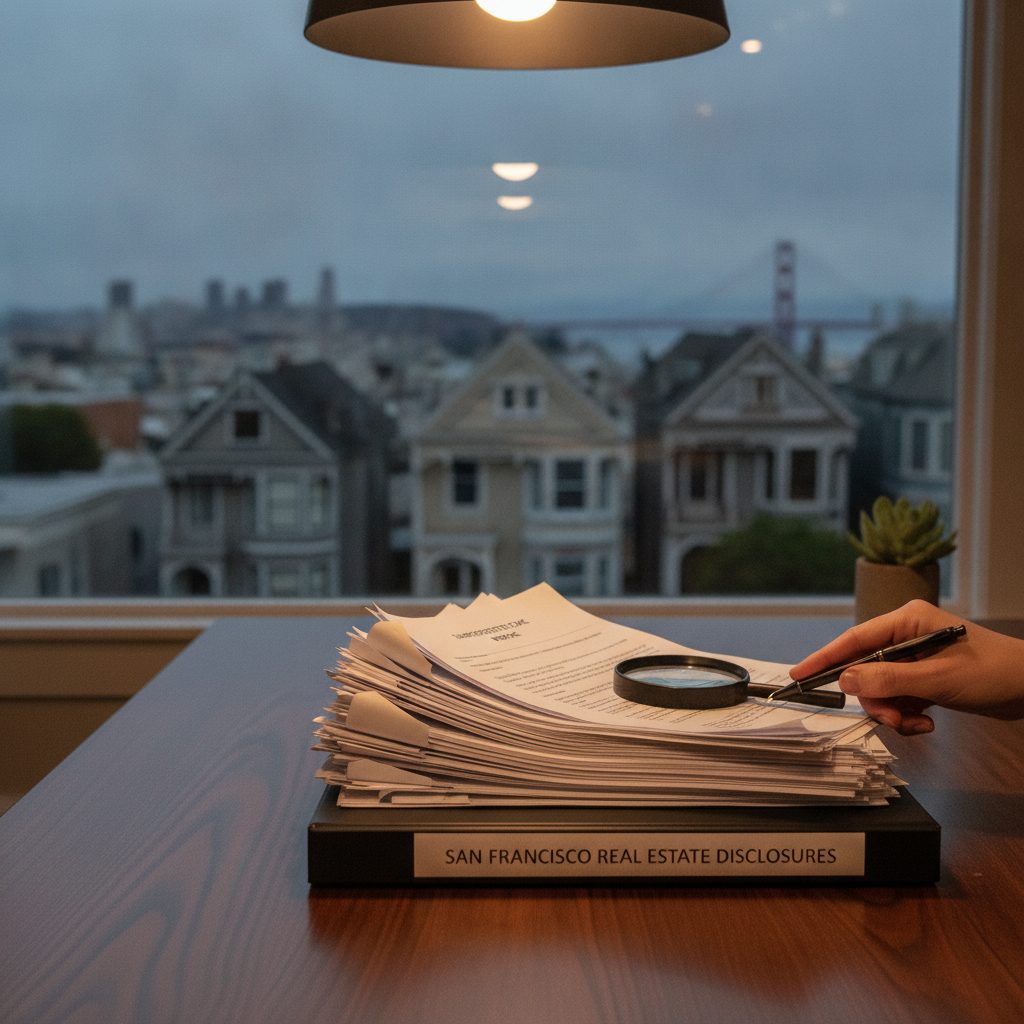
Buying or selling in San Francisco comes with a thick stack of disclosures. Most of it is routine, and a few items deserve extra time because they tend to cause problems after closing. Here are ten worth a closer look, whether you're buying or selling.
1. Unpermitted work
A converted garage, an extra bathroom, or an in-law unit may never have been permitted, and sellers who inherited the work may not know. Compare the authorized use on the 3R report with how the home is used today. A mismatch can affect financing, insurance, and resale.
2. Death on the property
California sellers must disclose a death on the property if the person was an occupant and it happened within the past three years. Older deaths don't have to be volunteered, and sellers and agents still can't misrepresent the facts if a buyer asks directly. The law does not require anyone to disclose that an occupant was living with HIV or died from AIDS-related causes.
3. Neighborhood noise and nuisances
The Seller Property Questionnaire (SPQ) asks about things like nearby bars, construction, and flight paths. Specific answers help everyone. A quick visit at night or on a weekend also lets buyers hear the block for themselves.
4. HOA documents
For a condo or any building with an HOA, read the whole package. Look for pending special assessments, active litigation, and how well the reserves are funded, and ask about anything that isn't clear.
5. Water damage history
A leak that was "fixed" can still show up later as mold. About 45% of San Francisco homes were built before 1940, according to U.S. Census data, so it's worth asking what caused any past leak, who repaired it, and whether there are receipts or permits.
6. Rent control status
If a unit is or was rented, find out whether it's covered by the SF Rent Ordinance, whether a tenant is in place, and what the legal rent is. These details can change a property's value a lot, especially for investors.
7. Soft-story retrofit
San Francisco's mandatory program covers wood-frame buildings with five or more units and two or more stories over a "soft" or "weak" story. The compliance deadlines have passed, so check whether the retrofit was permitted and signed off, or whether the city issued a violation. The city's soft-story property list is a good place to start.
8. 3R report details
The 3R report (Report of Residential Building Record) shows the city's record of a home's authorized use and building permit history. Sellers must deliver it to the buyer before the sale. It doesn't include plumbing or electrical permits, and the city doesn't inspect the home to prepare it, so compare it with what you see in person.
9. TIC agreement terms
Tenancy-in-common ownership comes with its own agreement covering financing, occupancy, and what happens when one owner wants to sell. Read it closely, and consider having a real estate attorney review it before you commit.
10. Natural hazard zones
The Natural Hazard Disclosure (NHD) report shows whether a property sits in a mapped zone. Depending on the address, that can include a seismic hazard zone for liquefaction, a flood zone, a fire hazard zone, or an earthquake fault zone. Ask what a zone could mean for your insurance and for any future renovation plans.
The takeaway
Most disclosure problems come from rushing. Sellers who walk through each section with their agent, and disclose anything that feels gray, give buyers a clearer picture. Buyers who ask about every "no" answer and check the 3R against the home itself tend to have fewer surprises later. When something is unclear, a real estate attorney can help.Questions about disclosures on a San Francisco home? Reach me at @ichi.sf.REALTOR® or goldengate365.com/ichihalvorson, in English or Korean.**Sangmi Ichi Halvorson***Born in Korea. Built in SF.*Sangmi Ichi Halvorson · REALTOR® · Korean & EnglishLicensee: Sangmi Halvorson · CA DRE #01973163Golden Gate Realty and Finance Inc. · CA DRE #02361979 · Equal Housing OpportunityFor general education only. Not legal or tax advice. Consult a licensed professional.