
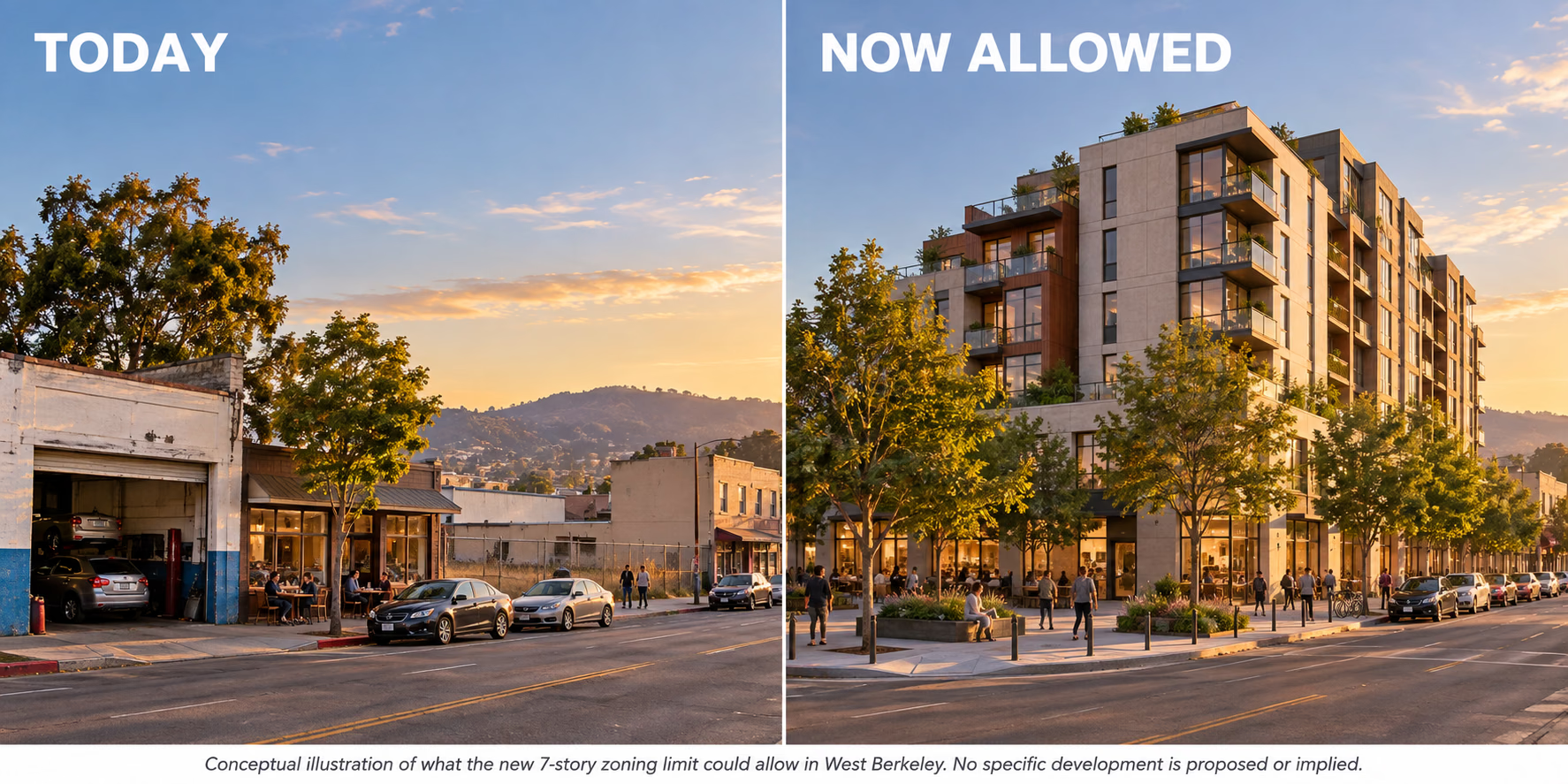
What changed
- Height limit: went from 3 stories to 7, for both residential and commercial buildings.
- Five-story alternative: Councilmember Brent Blackaby proposed a 5-story cap. It failed 7–2.
- Density bonus: California's density bonus law lets projects with affordable units go taller. City planners expect most projects to top out around 8 stories, because buildings taller than that face building code requirements that make construction much more expensive.
- Five commercial nodes: the areas around Gilman Street, Cedar Street, University Avenue, Dwight Way and Ashby Avenue must keep ground floors commercial. Outside those nodes, ground-floor apartments are allowed.
- Up to 6,750 homes: that's how many new apartments Berkeley's Planning Department estimated the plan could allow.
- Affordable housing: developers can build affordable units on site or pay a fee into Berkeley's Housing Trust Fund.
- Coming next: the council is expected to consider similar height increases for parts of College, Solano and northern Shattuck avenues later this year.
If you own a home near San Pablo, have you asked yourself these questions?
When you heard "seven stories," what was your first thought? Excitement? Worry? A little of both?Here's what most people miss: a zoning change isn't a project. Nothing gets built just because the rules changed. A site still has to be sold, designed, financed, approved and built, and that takes years.So before you assume anything, it's worth asking:- Is your home inside the plan area, or just near it? How would you know for sure?
- Which lots on your block are vacant, used as auto shops, or large enough to redevelop? Have you looked at them that way before?
- If a taller building did go up nearby, how would that change things for you: traffic, parking, sunlight, or having more shops within walking distance?
- Has anyone actually filed plans near you, or is it just talk? The City of Berkeley's planning and permit records will tell you.
If you're a small investor or flipper, what are you really buying?
It's tempting to see "7 stories" and think every property on San Pablo just got more valuable. But is that true for the property you're looking at?Ask yourself:- Are you buying the building for its rent or a flip, or are you paying extra for what the land might allow someday? Those are two very different strategies with very different holding costs.
- Is the lot inside one of the five commercial nodes, where the ground floor has to stay commercial?
- Is the lot big enough on its own, or would a developer need to combine it with neighboring parcels?
- Do the numbers work with today's construction costs and interest rates? High rates have slowed housing construction in recent years.
- Are there tenants? Berkeley's rent control and tenant protections can affect what you can do with an occupied property.