
Berkeley Empty Nesters: Should You Adapt Your Home or Make a Move?

Berkeley Empty Nesters: Should You Adapt Your Home or Make a Move?
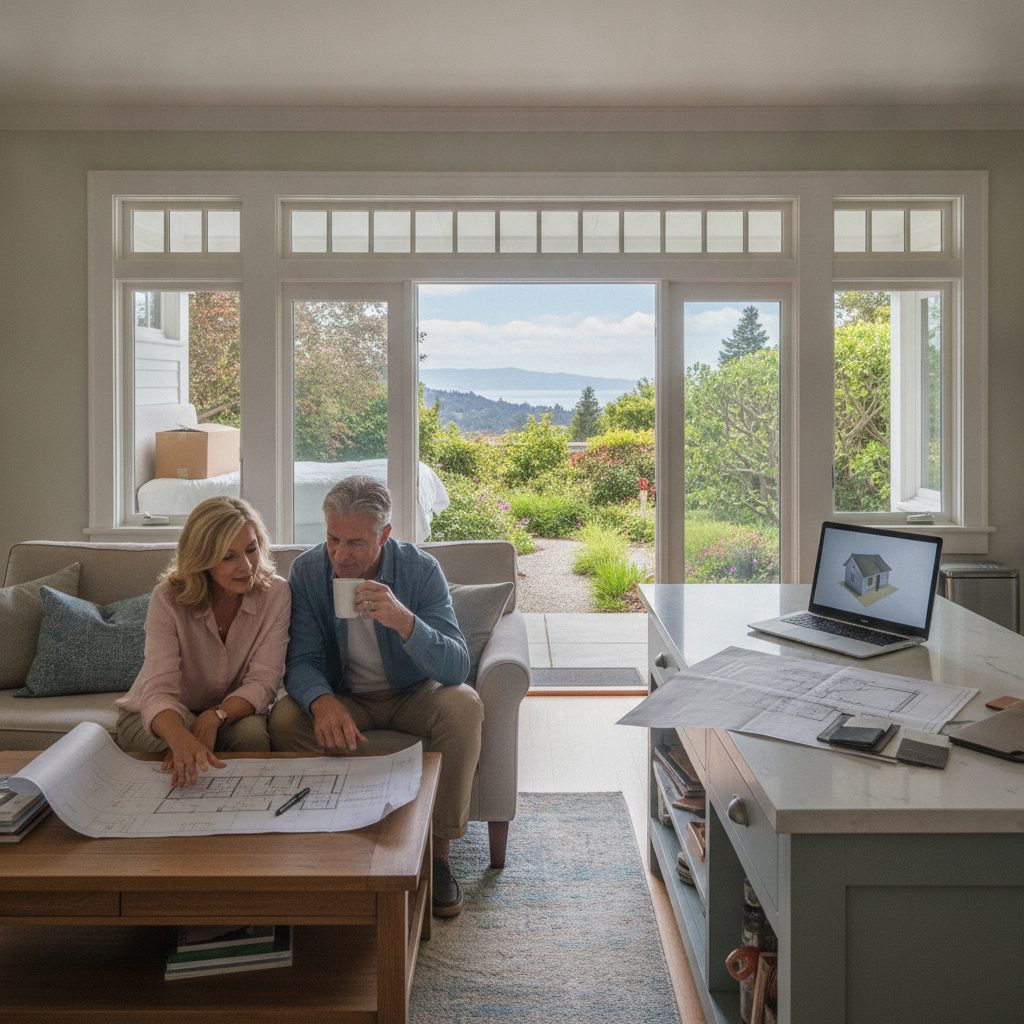
The kids have moved out. Their rooms are still there. So are the stairs, the garden chores and the Saturday you just spent arranging another repair.For Berkeley empty nesters, the next housing decision does not have to begin with a For Sale sign. It can begin with a better question: would a few thoughtful changes make this home work for your next chapter—or are you asking the house to become something it cannot realistically be?My view: investigate while you have time to choose. Starting the conversation does not commit you to selling. It gives you room to compare staying, adapting and moving without a deadline making the decision for you.Audit the friction, not the bedroomsFor one week, write down the moments when your home makes an ordinary day harder. Carrying laundry downstairs. Bringing groceries in from the car. Maintaining rooms you rarely use. Getting a contractor to inspect a difficult-to-reach part of the house.Then write down what still makes living there worthwhile: neighbors, a garden, a familiar walking route, room for visiting family or a place for your hobbies. Empty bedrooms are not automatically wasted space. A home can be larger than necessary and still be exactly right for its owners.The useful distinction is between space you enjoy and responsibilities you would gladly hand back.Test whether adaptation solves the actual problemAARP’s HomeFit materials offer room-by-room worksheets for evaluating how a home fits its occupants. Use them as a starting point for questions about lighting, entries, circulation and everyday tasks. They are planning tools, not a substitute for an assessment of your own needs. [1]Some improvements may be relatively contained: reorganizing storage, improving lighting or changing how a room is used. Others—moving laundry, reworking a bathroom or creating a bedroom and bathroom on the main living level—can become substantial projects.Before choosing a remodel, get a realistic scope, professional advice and written estimates. Ask what remains difficult after the work is done. A lovely new bathroom will not change a steep route from the street to the front door.Berkeley’s permit guidance says construction and most repairs require permits unless specifically exempted. Exempt work must still meet applicable codes, and zoning review can be separate. Confirm the requirements with the City before treating an alteration as a simple weekend project. [2]Compare two complete plansI would compare a stay-and-adapt plan with a move plan over the same period, such as five years. That is a decision framework, not a forecast.For staying, include the proposed work, design and permit costs, a contingency, financing if needed, ongoing upkeep and projects that will still be waiting afterward. Include the disruption of living through construction or paying for temporary accommodation.For moving, include sale preparation and transaction costs, purchase costs, moving, any temporary housing, repairs at the replacement home, insurance and ongoing ownership expenses. If considering a condominium, review the HOA’s finances, documents, insurance, maintenance responsibilities and potential assessments. Less private yard work can come with shared obligations.Use property-specific figures. A smaller home does not automatically produce lower total costs. Get tax advice for the actual transaction rather than treating property-tax relief and capital-gains treatment as the same calculation.My construction background makes me attentive to what a project truly solves. I would rather see an owner make a purposeful improvement than spend heavily on a renovation that leaves the original frustration intact.Could an ADU help you stay?An accessory dwelling unit may be worth investigating if your goal is to remain on the property in a different configuration. But a backyard unit is still a construction project and another building to maintain.Check access from the street, privacy, outdoor space, design feasibility and the complete budget before assuming it is the easy answer. Berkeley requires building permits for ADUs and junior ADUs and reviews applicable development standards through that process. The City’s guidance is a useful first stop; feasibility remains specific to the parcel and project. [3]If your plan depends on renting either dwelling, separately review the applicable rental rules, taxes, insurance and management responsibilities. Building an ADU should support the life you want, not quietly create a second job.Try the next routine before buying the next houseIf you want to stay in Berkeley, test actual destinations rather than choosing by neighborhood name. Around Ocean View, Westbrae or North Berkeley, walk the specific route you expect to use for coffee, groceries or transit. Check crossings, surfaces, noise and the trip home carrying a bag. Being near a destination is different from having a route you enjoy.Inside any prospective home, follow a complete day: arrive from the car, put groceries away, do laundry, use the bathroom and host a visitor. Check steps and changes in level even when the listing describes the home as single-story.You can also rehearse staying. For a week, use the rooms you would rely on after the proposed adaptation. Notice what works and what still sends you up or down the stairs.A calm first monthWeek one: document the friction and the things you want to preserve.Week two: get an initial professional view of the changes that could meaningfully help. Separate necessary work from cosmetic wishes.Week three: tour a few realistic alternatives, with a budget and daily routine in mind.Week four: compare the two plans with your household. Choose a next research step, not necessarily a listing date.My recommendation for Berkeley empty nesters is simple: give yourself permission to investigate before you feel ready to move. You may discover that staying is the right choice. You may discover that a different home offers the freedom you have been trying to renovate into this one.I’m Oliver Davis, a French-American real estate agent with Fast Real Estate / eXp Realty and a background in construction engineering. I help Berkeley homeowners compare preparation, property options and the practical sequence of a move in English or French. If you are weighing adaptation against a move, let’s start with what you want your home to make easier.Oliver Davis | DRE #01996487628-259-8398 | oliver@soldbyod.comSources and further reading[1] AARP HomeFit Guide Worksheets: https://www.aarp.org/livable-communities/housing/info-2020/homefit-worksheets/[2] City of Berkeley, Work Exempt from Building Permits: https://berkeleyca.gov/construction-development/permits-design-parameters/permit-types/work-exempt-building-permits[3] City of Berkeley, Residential Additions and Accessory Dwelling Units: https://berkeleyca.gov/construction-development/permits-design-parameters/permit-process/residential-additions-andReviewed November 3, 2026. This is a general planning discussion. Project feasibility, costs and requirements depend on the property and scope.
Oliver Davis Real Estate Agent Area served: Berkeley, Alameda County, CA, Piedmont, Alameda County, CA, Albany, Alameda County, CA, Kensington, Contra Costa County, CA, El Cerrito, CA, Oakland, CA Expertise: Empty Nester, Downsizing, Fix-and-Flip Investor, Rental Income, International Buyers
#BerkeleyEmptyNesters#Berkeley#Adapt#SellerTips#HomeSelling#HomeBuying