
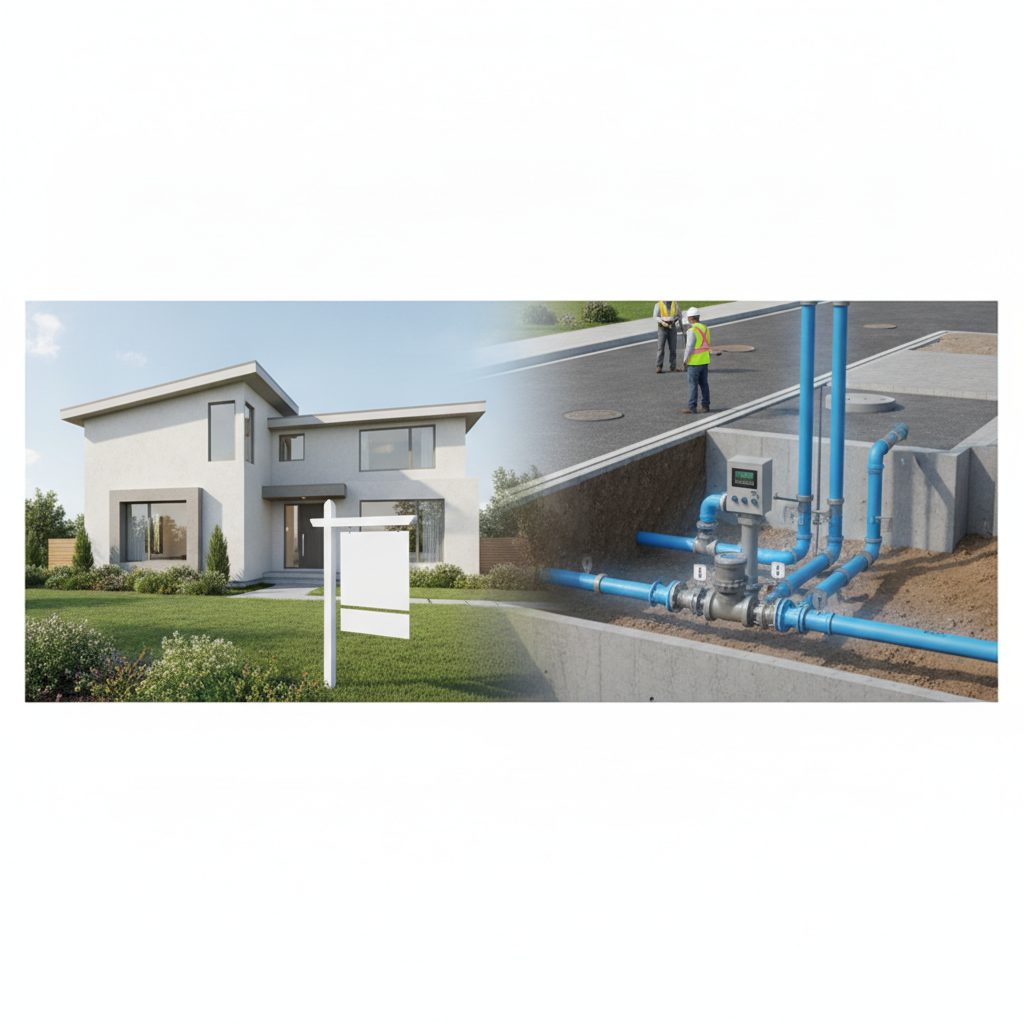
How the shift from flat fees to metered usage changes monthly carrying costs
Historically, water suppliers serving unincorporated Arden billed residential accounts on an unmetered, flat-rate schedule. Under that old structure, a half-acre parcel along Eastern Avenue paid the exact same monthly water charge as a compact home with drought-tolerant plantings near Marconi Avenue. That billing structure is ending. State conservation mandates required urban suppliers to eliminate flat-rate connections, prompting district contractors to install automated meter reading systems across the community.This operational change directly ties monthly utility expenses to actual gallons used. If your property features extensive turf, mature valley oaks requiring deep soaking, or an aging irrigation network, your summer water bills will rise noticeably compared to the previous fixed baseline. Conversely, properties with drip irrigation or low-water yards often see utility charges drop during winter months when irrigation controllers remain off.The change alters standard due diligence during property purchases. In nearby cities like Roseville or Folsom, buyers have examined multi-year metered billing records as a standard purchase condition for decades. In Arden, buyers historically accepted a flat-rate line item on disclosure documents without understanding the home's true volumetric footprint. When evaluating an Arden parcel today, you must calculate yard water requirements based on lot dimensions rather than past bills. Unlike other fixed monthly overhead costs, summer irrigation under tiered volumetric rates can add hundreds of dollars per month on a generous lot near Fair Oaks Boulevard if valves, sprinkler heads, and control clocks remain uncalibrated.Fire hydrant pressure improvements and insurance considerations in Sacramento County
Beyond monthly billing changes, the pipeline overhaul targets the physical capacity of the distribution grid. Many neighborhood water lines installed in the 1940s and 1950s consisted of undersized 4-inch or 6-inch pipes. Decades of internal mineral accumulation and pipe corrosion reduced interior diameter, creating severe friction loss and restricting available volume whenever local fire hydrants were engaged.Sacramento Metropolitan Fire District crews depend on specific static and residual water pressures to operate pumpers and ladder trucks effectively. Replacing brittle, narrow mains with new 8-inch and 12-inch ductile iron piping ensures that hydrants along corridors like Arden Way and Watt Avenue deliver standardized fire flow. In older residential pockets, low street-level pressure previously compromised firefighting capacity during high-demand summer months when lawn sprinklers ran simultaneously across the neighborhood.Underwriters evaluate fire-suppression infrastructure using frameworks such as the Insurance Services Office (ISO) Public Protection Classification program, which measures hydrant distribution and water pressure under load. While actual policy terms, eligibility, and premiums vary by insurance carrier, verified water volume addresses a common municipal deficiency that can influence property coverage reviews in unincorporated districts.Real-time leak monitoring protects older slab foundations
Digital water meters monitor continuous flow to flag internal plumbing failures before they cause extensive structural damage. In subdivisions like Arden Manor, homes built between 1950 and 1965 sit on unreinforced concrete slab foundations with copper or galvanized distribution lines embedded beneath the pour. In foothill markets with raised foundations, a supply leak produces visible puddling in crawlspaces. On an Arden slab home, an underground pipe break can run for months undetected, eroding foundation soil and cracking concrete footings before moisture ever dampens interior flooring.The digital meters deployed across the Arden network measure consumption in hourly intervals and notify the utility when water moves through the meter for 24 consecutive hours. Property owners can connect to web portals to check usage spikes and receive automatic notifications. Catching an underground break within forty-eight hours rather than after an entire billing cycle significantly reduces the risk of sub-slab soil displacement, potentially sparing you substantial foundation repair expenses.Inspecting private laterals and utility responsibility before closing
In most municipal utility frameworks across California, the lateral pipe extending from the meter box to your structure, along with interior plumbing, falls to the property owner. Check your specific utility service agreement, local water district code, or consult a licensed plumbing contractor to confirm the exact boundary of maintenance responsibility for your parcel. The water supplier installs the new distribution main in the street easement and runs a modern service line to the meter box at the property line.Connecting an upgraded, high-volume municipal supply line to a seventy-year-old corroded private line creates immediate vulnerability. When the utility raises line pressure to standard operating levels, weakened private galvanized pipes can burst at joints or threaded fittings. If you are purchasing an older home on Cresta Way or La Sierra Drive, do not assume that new utility work in the street means the home's water supply is secure.Take direct control of your inspection process before removing property contingencies on an Arden transaction:- Attach an oil-filled pressure gauge to an exterior hose bib to confirm incoming static pressure remains between 50 and 70 PSI, and inspect the main shutoff for an operable pressure-reducing valve.
- Locate the customer-side shutoff valve inside the new meter pit or on your exterior riser so you can isolate the house without waiting for utility service dispatch.
- Hire a licensed plumbing contractor to perform an isolation pressure test on the underground private lateral between the street meter and the house foundation.
- Compare anticipated metered consumption against other operational costs in your annual budget to prepare for seasonal yard maintenance expenses.