
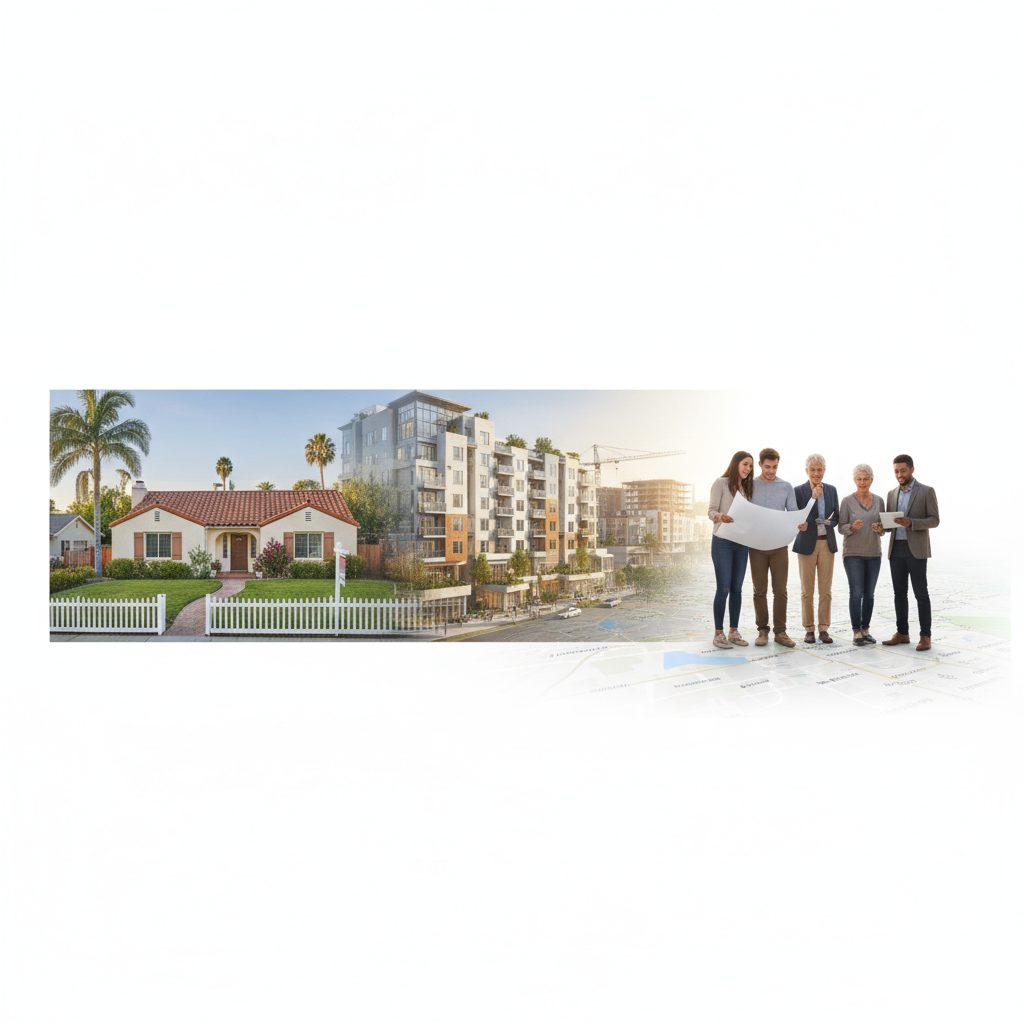
San Jose Is Studying More Homes in Single-Family Neighborhoods. Here's What It Means if You're Buying or Own a Home.
If you live in San Jose or you're shopping here, you may have heard the city is "upzoning" neighborhoods. That's not quite where things stand yet. Here's what actually happened, what could change, and how to think about it for your own plans.What the Council Decided
On Aug. 18, the San Jose City Council voted 8-3 to study several density options instead of locking in one number. Staff will now look at 16, 24 and 32 homes per acre in Residential Neighborhood areas that currently allow about eight per acre.City planners and the Planning Commission both wanted to go straight to 32 homes per acre. After strong pushback from residents, the council held off and asked for more study. A finished proposal is expected back for a final decision late in 2027.What This Could Look Like on Your Street
The goal is "missing middle" housing: duplexes, fourplexes, townhomes and small apartment buildings that fall between a single house and a big complex.At 32 homes per acre, planners said a typical parcel could fit about four homes in buildings up to three stories. Larger parcels could hold as many as 10. Housing under the program could go up to 35 feet, or three stories, with 45 feet and four stories allowed in certain Downtown areas near transit.The lower options matter too. The city's planning director said 16 per acre likely wouldn't be enough to meet what San Jose committed to under state guidance.Why the City Is Pushing This
San Jose has to plan for more than 62,000 additional homes between 2023 and 2031, and production has fallen behind. City housing officials told the council that smaller buildings can pencil out without heavy public subsidy and give middle-income households more options.Other areas are in the package too. The council supported raising mixed-use neighborhood density to a range of 20 to 50 homes per acre and allowing five stories instead of four.If You're a First-Time Buyer
Nothing changes for you today. But over the next several years, this could mean more townhomes and small condos in neighborhoods that have only offered detached houses. Because these homes tend to be smaller than single-family houses, for-sale versions can open up ownership for households priced out of a detached home.Don't wait on it, though. Final rules are more than a year away, and new construction takes time after that. Buy based on what's available and affordable now.If You Already Own a Home
This is where it gets interesting. Depending on which density the city picks, some lots could eventually allow more units than they do today. That could matter if you're thinking about building on your property, or if you plan to sell and your buyer pool includes small builders.Just be careful not to price your home as if the rules have already changed. Nothing is final, parking and design standards are still being worked out, and the result could land anywhere from 16 to 32 per acre.How to Follow This
The study period includes more community outreach, environmental review and work on design standards. The city's Planning Division posts updates on the General Plan Four Year Review, and public comment periods are your chance to weigh in either way.I'm keeping an eye on how this plays out across San Jose neighborhoods, since it could shape what buyers find and what homeowners can do with their land. If you want to talk through how it might affect your plans, reach out anytime.Linh Tran
REALTOR®
Area served: San Jose, Santa Clara County, CA, Milpitas, Santa Clara County, CA, Fremont, Alameda County, CA, Newark, Alameda County, CA, Santa Clara, CA, Cupertino, Santa Clara County, CA
Expertise: FHA Financing, First-Generation, Fix-and-Flip Investor, First-Time Buyer, Tech Relocation