
The Market Is Still Moving, but Sellers Have Less Room to Get the Launch Wrong. Price, Presentation and the First Two Weeks Now Matter More Than Ever.
If you are thinking about selling your home this fall, there is one mistake I would avoid:Do not treat the first two weeks like a test run.A lot of sellers still think this way:“We’ll list a little high, see what happens, and adjust later if we need to.”That strategy sounds safe because you can always reduce the price.But what you cannot get back is the moment when your home is brand-new to the market.That matters because today’s buyers are paying attention, but they are also cautious.Mortgage rates remain elevated. Affordability is still a challenge. Buyers are comparing more carefully and taking longer to commit when the value is not obvious.As of early August, U.S. pending home sales were still down 1.6% from a year earlier, while the average mortgage rate used in Redfin’s analysis was 6.69%, its highest level in more than a year.This does not mean homes are not selling.It means sellers have to earn the buyer’s decision.Sacramento Is Not the National Market
This is where national headlines can become misleading.Sacramento is behaving differently from much of the country.In July, active listings across the Sacramento metro were actually down 6.6% from a year earlier, while national inventory was up 2.1%.The median list price was approximately $625,000, homes spent about 46 days on market, and roughly 23% of listings had experienced a price reduction.So this is not a market where sellers automatically have no leverage.But it is also not a market where you can assume any price will work simply because inventory is relatively tight.The opportunity is there.The question is whether your home enters the market positioned to capture it.
Your Home Gets One True Launch
When a listing first hits the market, several things happen almost immediately.Buyers with saved searches receive alerts.Agents send the property to clients.People who have been waiting for your neighborhood see it.Your listing appears as “new.”That first wave contains some of the most motivated buyers currently searching in your price range.This is why I think of the first 7 to 14 days as your launch window.You can still sell after that window.Homes sell after 30, 45 or 60 days all the time.But the psychology changes.During the first week, buyers ask:“Should we go see this before somebody else buys it?”A few weeks later, they may ask:“Why hasn’t anyone bought it?”Those are two very different conversations.The Four Numbers I Would Watch Immediately
Most sellers focus almost entirely on offers.Offers matter, obviously.But before an offer arrives, the market leaves clues.I would watch four numbers closely.1. Views
Are buyers seeing the property online?If your listing is receiving very little attention, you may have a marketing, pricing or positioning issue.But views alone do not mean much.A home can receive thousands of views because people are curious.The next number matters more.2. Saves
Are people interested enough to save the property?A strong number of saves tells you buyers are considering the home seriously enough to keep watching it.If you have high views but very few saves, something may be stopping buyers from moving to the next level.It could be price.It could be condition.It could be the property itself.3. Showings
This is where interest becomes behavior.A buyer willing to schedule a private showing is giving you a much stronger signal than someone scrolling online.If your listing gets strong online activity but very few showings, there may be a gap between curiosity and perceived value.4. Offers
This is where the market finally tells you what buyers are willing to do.And sellers need to look beyond whether an offer simply exists.Look at:- Offer price
- Seller credits requested
- Contingencies
- Financing
- Closing timeline
- Repair expectations
- Strength of the buyer
Lots of Views, No Showings?
This is one of the most useful seller signals.Imagine your home has:3,000 online views.120 saves.But only four private showings.Something is happening between the screen and the front door.Buyers may like what they see, but not enough to invest the time to visit.That often points to the relationship between the home and its price.Maybe the photography is doing its job.Maybe the house itself looks attractive.But when buyers compare your property with every other option around the same price, another home wins.That does not automatically mean you need a huge price reduction.It means you should investigate.Showings But No Offers?
This tells a different story.Buyers liked the home enough online to visit.Then they walked through it and decided not to act.Now I would examine:- Condition
- Layout
- Odors
- Lighting
- Deferred maintenance
- Noise
- Backyard condition
- Room sizes
- Roof or HVAC concerns
- Buyer perception of renovation costs
- Price compared with competing properties
The Mistake of Waiting 30 Days to React
Some sellers believe changing strategy quickly makes them look desperate.I disagree.Changing strategy without evidence can be emotional.Changing strategy because the market is giving you consistent information is professional.The longer an incorrectly positioned listing remains active, the more leverage can shift toward the buyer.Nationally, the share of listings with price reductions moved back up to roughly 20% in July, according to [real estate agent.com](http://real estate agent.com).That is significant because it tells us sellers are increasingly having to adjust when their original expectations and buyer demand do not align.You do not want to automatically become part of that group.The better strategy is to launch as close to market reality as possible from day one.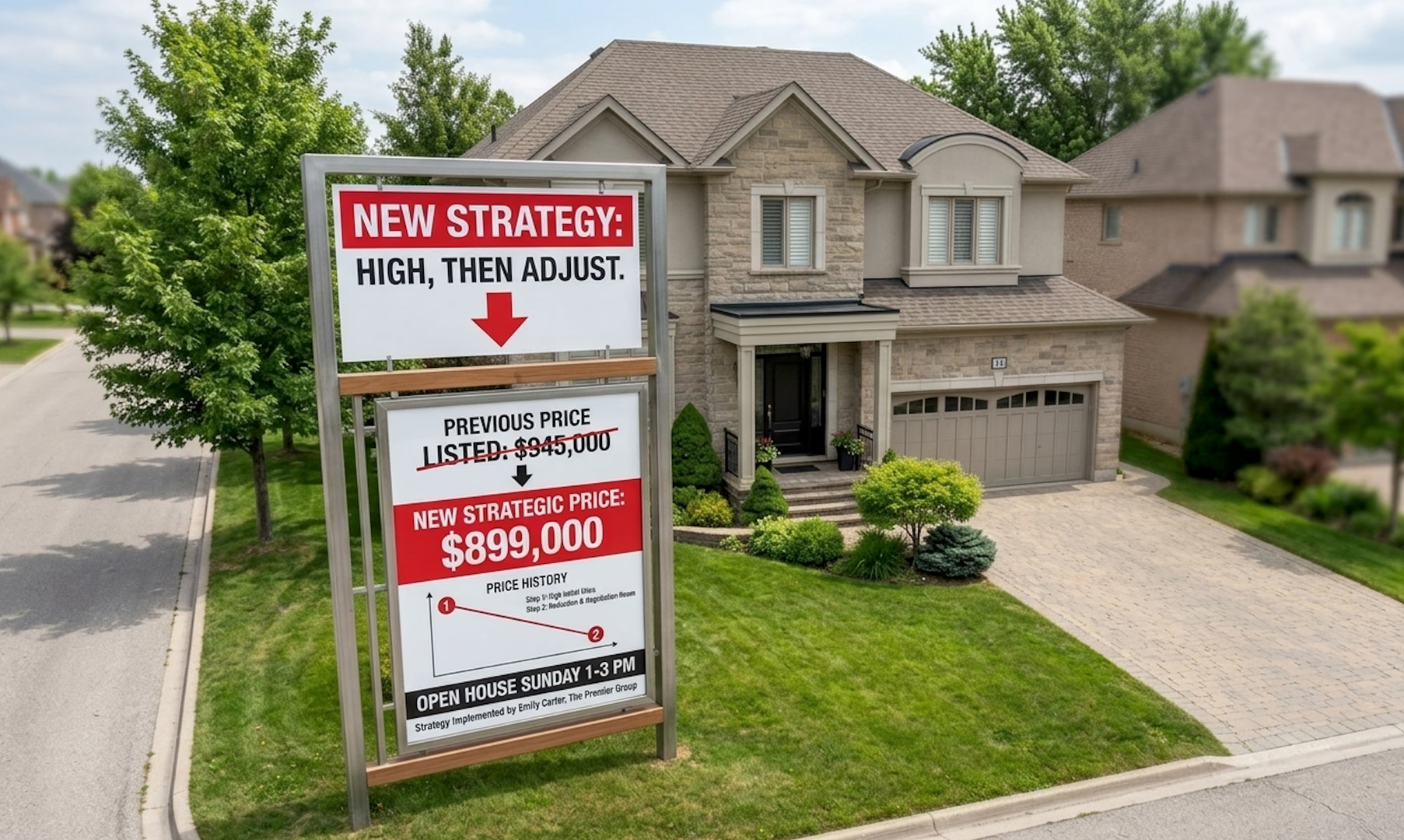
Price High and Reduce Later?
There are situations where testing a higher price can work.Maybe the home is extremely unique.Maybe comparable inventory is almost nonexistent.Maybe your timeline is flexible and you are willing to wait.But most normal sellers are not operating in that situation.If your home competes with several similar properties, buyers will establish the value quickly.They have more information than ever.Within minutes they can compare:- Price per square foot
- Lot size
- Remodel quality
- Days on market
- Previous sales
- Property taxes
- HOA dues
- School boundaries
- Nearby listings
Your Neighbor’s Sale May No Longer Be Your Value
One of the hardest seller conversations sounds like this:“My neighbor sold for $900,000.”That may be true.But when?Three months ago?Six months ago?Last year?What was the condition?Was the kitchen remodeled?Was the lot better?Did the seller offer concessions?What were mortgage rates at the time?How much competition existed that week?Comparable sales matter.But comparable competition matters too.A buyer today does not choose between your home and the house that sold six months ago.They choose between your home and what they can purchase right now.That is why active and pending listings deserve almost as much attention as closed sales.Price Reduction or Seller Credit?
This is where strategy becomes more interesting.Suppose buyers like your home but are struggling with the monthly payment.You could reduce the price.Or you could offer a seller credit that helps the buyer reduce closing costs or buy down the mortgage rate, subject to their financing rules.Those two choices can create very different financial outcomes.A $15,000 reduction in purchase price may produce only a modest monthly payment change for a financed buyer.A properly structured $15,000 credit toward allowable costs or a rate buydown could have a much larger short-term impact.That does not mean credits are always better.The correct answer depends on:- Loan type
- Buyer qualification
- Appraisal
- Seller net
- Current interest rates
- How much credit the buyer can actually use
What Should You Fix Before Listing?
Not everything.This is where sellers can waste a tremendous amount of money.You do not need to turn your home into a model home.You need to eliminate the objections that prevent buyers from feeling confident.I would prioritize:- Deep cleaning
- Decluttering
- Improving lighting
- Landscaping
- Touch-up paint
- Obvious repairs
- Broken fixtures
- Damaged flooring
- Strong odors
- Deferred maintenance buyers will immediately notice

The Fall Market Creates a Different Buyer
Fall buyers tend to be more intentional.Some need to move because of work.Some have already sold another property.Some want to settle before the holidays.Some have been searching all summer and are finally ready to act.That can benefit sellers.The tradeoff is that there may also be fewer casual buyers than during spring.This makes positioning even more important.Your home does not need 100 buyers.It needs one strong buyer who believes your home is the best option available.Should You Sell This Fall or Wait Until Spring?
Spring is often considered the strongest selling season.But waiting is not automatically better.Ask yourself:- Will your home show better in spring?
- Are you likely to face more competing listings?
- Could mortgage rates improve?
- Could they move higher?
- Does waiting delay another purchase?
- Will carrying costs erase any additional sale price?
- Does your personal timeline matter more than seasonal timing?
My 14-Day Seller Rule
I would break the launch into three checkpoints.Days 1–4: Exposure
Do not panic.Let buyers see the listing.Watch views, saves and initial showing requests.Days 5–7: Pattern Recognition
Now feedback begins to matter.Are buyers consistently saying the same thing?Are competing homes receiving offers?Is your showing activity where it should be?Days 8–14: Decision
If qualified buyers are seeing the home and repeatedly deciding not to act, it is time for an honest strategy discussion.Not necessarily a price reduction.A discussion.Maybe the marketing needs adjustment.Maybe presentation needs improvement.Maybe the seller credit needs to change.Maybe the price is wrong.The key is that you are responding to evidence.What Sellers Should Ask Their Agent Every Week
Do not settle for:“We had good traffic.”Ask:- How many online views did we receive?
- How many buyers saved the property?
- How many private showings occurred?
- What objections are repeating?
- Which competing homes went pending?
- What price changes occurred nearby?
- How does our activity compare with similar listings?
- What should we change based on the data?