
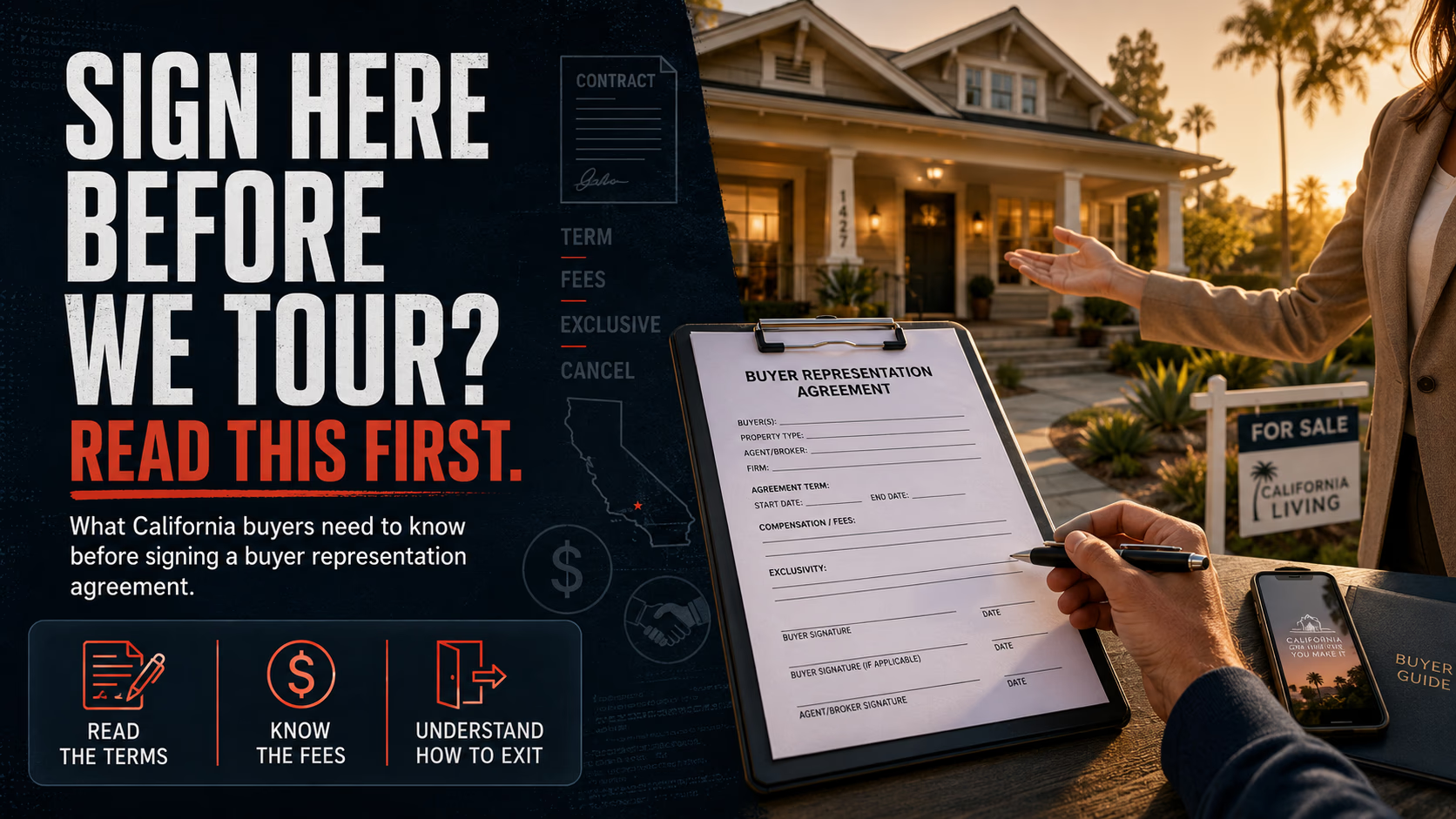
California buyers are now expected to sign representation agreements when working with an agent. That does not mean you should accept unclear fees, a long commitment or a contract you do not understand.
You find a home online and request a showing.A real estate agent meets you outside the property and says:"“Before we go inside, I need you to sign this.”"The agent may explain that the form is now required.That part may be true.But the document is not simply a permission slip to enter the house.It may establish:
- Who represents you
- What services the agent must provide
- How the agent will be compensated
- Whether the relationship is exclusive
- How long the agreement lasts
- What happens if you buy through another agent
- Whether you can cancel the relationship
- Whether you could owe money after the relationship ends
Why This Conversation Is Happening Now
Written buyer representation agreements became a much more visible part of the homebuying process following nationwide real estate practice changes that took effect in August 2024.For real estate professionals covered by the National Association of real estate agents settlement-related rules, a written agreement is generally required before the agent tours a home with a buyer, whether the tour is conducted in person or virtually. The agreement must address the agent’s compensation.California added its own requirements beginning January 1, 2025.California buyer agents must enter into a written buyer-broker representation agreement with their clients as soon as practicable, but no later than the buyer’s execution of an offer. State guidance creates a presumption that it is practical to obtain the agreement before the agent shows the buyer a property.This means the form itself should not surprise buyers.What should concern buyers is signing without understanding the terms.A Buyer Reportedly Discovered the Problem Too Late
A recent report described a couple who said they signed paperwork before touring a home and later discovered that the agreement exclusively tied them to the brokerage for one year.According to the report, the agreement included a 4% commission and an additional $995 fee. When the buyers attempted to leave the relationship, they were reportedly told that an early termination or referral payment might be required. The agent disputed parts of the buyers’ account and maintained that the terms had been explained.That situation occurred outside California, and the specific laws and agreement terms vary by state.But the lesson applies everywhere:The time to understand how you can leave an agreement is before you sign it—not after the relationship breaks down.Buyer Agreements Are Not Inherently Bad
Let me be clear.A written buyer agreement can benefit both the buyer and the agent.Buying a home can involve months of work:- Evaluating neighborhoods
- Identifying properties
- Scheduling private showings
- Reviewing comparable sales
- Writing and negotiating offers
- Evaluating disclosures
- Coordinating inspections
- Communicating with lenders and escrow
- Managing deadlines
- Solving problems before closing
California Agreements Must Address Key Terms
California guidance says a buyer-broker representation agreement must include the agent’s compensation, the services to be provided, when compensation becomes due and when the agreement expires.For individual buyers, the agreement’s initial term generally cannot exceed three months. Agreements also cannot simply renew automatically; a renewal requires a new written agreement or amendment signed by the parties.That three-month limit is important.A California buyer should question any agreement that appears to lock an individual consumer into an initial term substantially longer than the state permits.However, a short duration does not automatically make an agreement favorable.A 30-day agreement with unclear compensation or a difficult cancellation process can still create problems.You must read the entire document.The Eight Questions Buyers Should Ask Before Signing
1. Is This Agreement Exclusive?
An exclusive agreement may require you to work only with the named brokerage during the agreement period.Depending on the contract, you could still owe compensation if you:- Purchase through another agent
- Contact the listing agent directly
- Find the property yourself
- Purchase a home introduced to you during the agreement
- Complete a purchase shortly after the agreement ends
"“Under what circumstances could I owe this brokerage money?”"The agent should be able to answer that question clearly.
2. How Long Does the Agreement Last?
Do not sign a term simply because a blank has already been completed.The duration is a negotiable business term, subject to applicable law.A buyer who is still evaluating an agent may consider starting with:- A short trial period
- A limited number of properties
- A specific geographic area
- A specific property
- A clearly defined service period
3. How Is the Agent Being Paid?
The agreement should state the agent’s compensation clearly.Compensation may be expressed as:- A percentage of the purchase price
- A flat fee
- An hourly amount
- A combination of fees
- Another objectively ascertainable structure
- Administrative fees
- Transaction coordination fees
- Retainer fees
- Cancellation fees
- Minimum compensation
- Fees due even if no purchase closes
4. Will the Seller Pay My Agent?
Possibly, but not automatically.A buyer can request that the seller contribute toward the buyer agent’s compensation as part of the offer. The seller can accept, reject or negotiate that request.When the seller’s contribution does not cover the amount promised in the buyer agreement, the buyer may be responsible for the difference.Before writing an offer, ask your agent and lender to explain:- The total compensation owed
- Any seller contribution available
- The remaining buyer responsibility
- Whether the requested concession affects the offer
- Whether the payment is permitted under the loan program
5. What Services Am I Receiving?
The agreement should not only describe what you owe.It should explain what the brokerage is agreeing to do.Ask whether the services include:- A buyer consultation
- Lender coordination
- Property searches
- Private showings
- Pricing analysis
- Offer strategy
- Contract preparation
- Disclosure review
- Inspection coordination
- Appraisal support
- Final walkthrough
- Closing support
6. How Can I Cancel?
This may be the most important provision in the agreement.Ask:- Can either party cancel?
- Is cancellation unilateral or mutual?
- Must cancellation be in writing?
- Does the broker need to approve the release?
- Is there an early termination fee?
- Are any properties protected after cancellation?
- Could I owe compensation if I buy later?
- How long does any protection period last?
7. Does This Apply to One Home or Every Home?
An agreement can potentially be limited by:- Property
- City
- County
- Price range
- Property type
- Time period
- Specific services
8. What Happens if the Agent’s Brokerage Also Represents the Seller?
This is known as dual agency.In California, dual agency can occur when the same brokerage represents both sides of the transaction, even when different salespeople within that brokerage work with the buyer and seller.Dual agency must be disclosed and agreed to by the parties. California’s consumer guidance identifies undisclosed dual agency as a red flag because it can affect how representation is provided.Ask your agent to explain:- Whether the brokerage represents the seller
- What duties change under dual agency
- What confidential information cannot be shared
- What choices you have
- Whether the agreement contains advance consent
Do You Need an Agreement to Attend an Open House?
Not necessarily.When you attend an open house on your own and the hosting agent is acting for the seller, you generally do not need to sign a buyer representation agreement simply to walk through the property.You also do not need to sign one merely to ask an agent about their services.The requirement generally becomes relevant when an agent begins working with you as a buyer and tours properties on your behalf.Be careful, however, not to confuse the open-house host with your own representative.The listing agent’s responsibility is generally to the seller unless a separate agency relationship is established and properly disclosed.The friendly person greeting you at the door may be helpful, professional and knowledgeable.That does not automatically mean the person represents your interests.Red Flags That Should Make You Slow Down
The California Department of Real Estate tells consumers to watch for warning signs including unexplained fees, pressure to sign quickly, claims of standard commission rates, verbal promises that do not appear in writing and undisclosed dual agency.I would add several practical red flags:- The agent refuses to send the agreement before the showing
- The agent will not explain how termination works
- Compensation blanks are incomplete
- The agreement covers a much larger area than your search
- The agent says the seller “always pays everything”
- The agent cannot explain what happens if the seller pays less
- The agent discourages you from reading the agreement
- The agent becomes defensive when you ask questions
- The services promised are vague
- The relationship begins with pressure instead of consultation
What a Professional Buyer Consultation Should Look Like
Ideally, your first serious conversation with an agent should happen before you are standing outside a home.A proper buyer consultation should cover:- Your goals and timeline
- Your financing and comfortable payment
- Your preferred locations
- The services the agent will provide
- How the agent is compensated
- Potential seller contributions
- The agreement’s duration and scope
- How either party can end the relationship
- Agency and dual-agency possibilities
- The next steps in the buying process
What to Do if You Already Signed and Want Out
Start by reading the agreement carefully.Locate the sections covering:- Termination
- Exclusivity
- Compensation
- Protected properties
- Dispute resolution
- Broker contact information
- The agreement’s expiration date
- Why the relationship is not working
- Whether you want a different agent within the brokerage
- Whether you are requesting a complete release
- Which properties you have already toured
- Whether the brokerage claims continuing compensation rights
The Bottom Line
Written buyer agreements are now a normal part of buying real estate in California.They can create clarity, establish expectations and protect both sides.But they are real contracts with real financial consequences.Before signing, understand:- Who you are hiring
- What the agent will do
- What you may owe
- Whether the relationship is exclusive
- How long it lasts
- How you can leave
- What happens after termination