What Does the Phone-Free Policy Mean for Students?
A phone-free policy does not mean children are prohibited from bringing devices to campus. Students may carry cell phones, smartwatches, and connected electronics in their bags when traveling to and from campus. The restriction focuses strictly on how and when those devices operate once students step onto school grounds.The primary goal stated by the district is to minimize classroom disruptions, support mental health, encourage real face-to-face peer interactions, and foster focused academic settings. Because maturity levels and instructional schedules vary, the district created grade-banded standards instead of a single sweeping rule.- Preschool through Grade 5: Devices must remain completely silenced or powered off and stored out of sight through the entire instructional day, including lunch, recess, and transitions.
- Grades 6 through 8: Devices must stay powered off or silenced and put away inside backpacks throughout the entire school day, including lunch breaks and passing periods.
- Grades 9 through 12: Devices must stay turned off or silenced and stored during class time, library visits, lab sessions, and restroom breaks, but students retain limited access during passing periods and lunch.
How May Students Use Phones During the School Day?
Daily usage allowances depend on the age of the student. In elementary and middle school settings, students cannot pull out phones during recess, between classes, or while eating lunch in the cafeteria. Smartwatches fall under the exact same standard. A child wearing an active smartwatch that pings notifications or accepts incoming calls violates the rule. Smartwatches must be placed in airplane mode, turned off, or left inside a backpack.Middle school students can access devices before the morning bell in designated supervised areas and after the final dismissal bell. When school-sponsored extracurriculars, sports practices, or club meetings take place outside standard instructional hours, staff members determine whether device use is permitted for that specific gathering.High school students at Castro Valley High School face a hybrid schedule. During active instructional blocks, phones must remain out of sight. A student stepping into the hallway with a hall pass to visit the restroom or front office cannot use their phone during that time. However, high schoolers may check text messages, check schedules, or communicate during designated passing periods and lunch breaks, provided specific school events do not post temporary restrictions.What Exceptions or Accommodations Are Allowed?
California state legislation and CVUSD policies provide clear exemptions for specific student needs. School staff and administrators coordinate these accommodations prior to regular daily enforcement.- Medical monitoring: Students managing conditions such as type 1 diabetes who rely on continuous glucose monitors or connected health apps maintain authorized access to their devices as outlined in their medical care plans.
- Individualized Education Programs (IEPs) and 504 Plans: If a student requires assistive communication technology or specialized accommodations documented by their educational team, those tools remain permitted.
- Direct teacher instruction: Teachers may grant temporary, explicit permission if an academic lesson requires students to use personal mobile devices for research, polling, or interactive digital coursework.
- Campus emergencies: In genuine crisis events or situations involving immediate threats to student safety, standard restrictions lift so students can follow emergency protocols.
How Does the District Enforce the Policy?
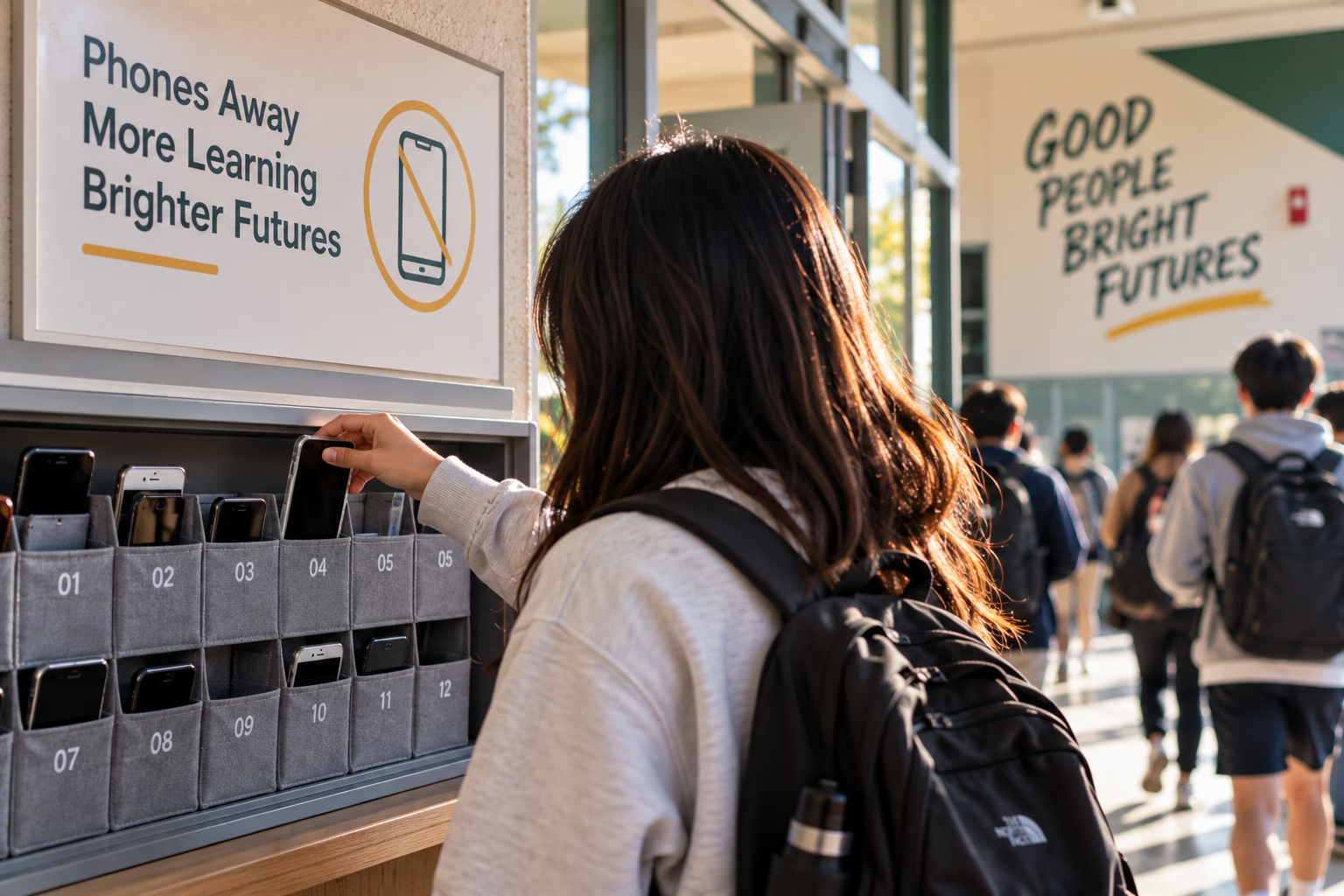
Enforcement focuses on consistency across classrooms to ensure clear expectations for both students and staff. When a student takes out an unauthorized phone or smartwatch during restricted hours, staff members generally follow progressive discipline steps established by individual school handbooks.Initial minor violations typically result in a direct verbal reminder and an instruction to put the device back in a locker or backpack. Repeated non-compliance leads to temporary confiscation, where the phone is stored securely in the front administrative office until the end of the school day. Chronic issues may require a parent or guardian to come to campus to retrieve the device in person, alongside a meeting with a grade-level counselor or assistant principal.What Communication Options Are Available for Parents?
Families relocating from districts without strict device rules often worry about how to reach their children for routine logistics, such as carpool changes or doctor appointments. Castro Valley schools maintain traditional front office channels for daytime communication.If you need to deliver an urgent message or coordinate a schedule change during classroom hours, calling the main school office remains the fastest method. Office staff relay messages directly to classrooms or call students down between periods. For non-urgent updates, parents of high schoolers can send text messages knowing their teen will see the note during lunch or passing periods. Elementary and middle school parents should plan morning drop-off logistics before campus begins, relying on the administrative desk for mid-day schedule adjustments.What Should Relocating Families Ask the School?
When you tour potential schools or complete enrollment paperwork after buying a home in town, asking targeted questions about daily operational rules helps your student transition smoothly. Clear expectations reduce stress during the first week of classes.- Where do students store bags and valuables during physical education classes and after-school sports?
- What is the exact process for logging a medical device accommodation with the school nurse?
- How do after-school care programs or on-campus clubs handle electronics once the regular school bell rings?
- What specific notification channels does the administration use for urgent campus alerts or weather emergencies?