
1. Incorporation could change who makes land-use decisions
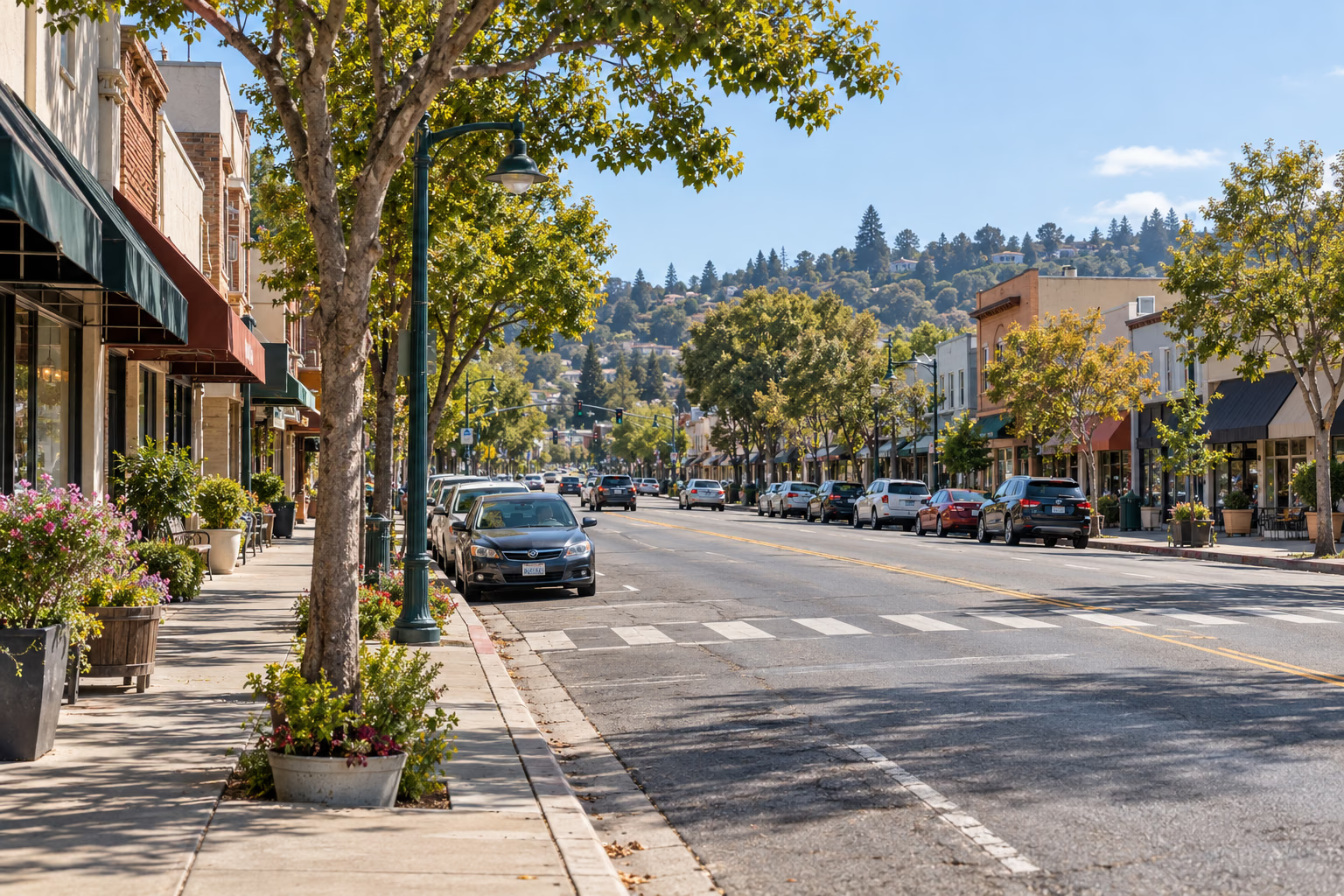
Castro Valley remains an unincorporated community governed through Alameda County. Incorporation would create a city government and shift local land-use planning and approvals to a locally elected city council, as described in Alameda LAFCO’s feasibility analysis. [1]The grassroots Town of Castro Valley organization said in its September 18, 2026 update that its incorporation application proposes a charter city, a mayor and five-person council, and contracts for many existing services. It also advocates improvements along Castro Valley Boulevard and neighborhood streets. These are the proponents’ proposals—not guarantees of approved services, funding, or construction. [2]Alameda LAFCO is the agency responsible for reviewing proposed incorporation. Its role is separate from the group advocating cityhood. [3]But I would not buy a home assuming incorporation will happen by a particular date, make permits easier, lower costs, or increase property values. None of those outcomes is established by the sources reviewed for this article.My take: local control matters, but the budget and implementation matter just as much. Ask how services would be funded, what boundaries are proposed, and what official approvals remain.2. What the Municipal Advisory Council does today
The Castro Valley Municipal Advisory Council—usually called the MAC—gives the community a voice in County decisions.The County’s published FAQ explains that the MAC advises the Board of Supervisors and reviews land-use matters such as variances, site development reviews, and conditional use permits. Its recommendations go to the applicable County decision-maker. The MAC has no fiscal authority. [4]If you hear, “The MAC approved apartments down the street,” ask to see the project record. Was it a recommendation? Has the responsible County body acted? What conditions apply?For buyers and homeowners, MAC agendas can help identify proposals early. Follow the application through the actual decision and permit stages.3. The General Plan work is not all new
The County’s implementation website describes work tied to the 2012 Castro Valley General Plan, including zoning revisions and an update to the Central Business District Specific Plan.It identifies two phases:- Phase 1: community wide zoning and map update. Completed in December 2020, with final zoning amendments adopted by the Board of Supervisors on December 15, 2020.
- Phase 2: Central Business District Specific Plan update. Began in December 2021 and is still described on the project website as in progress. [5]
4. Why the Central Business District deserves attention
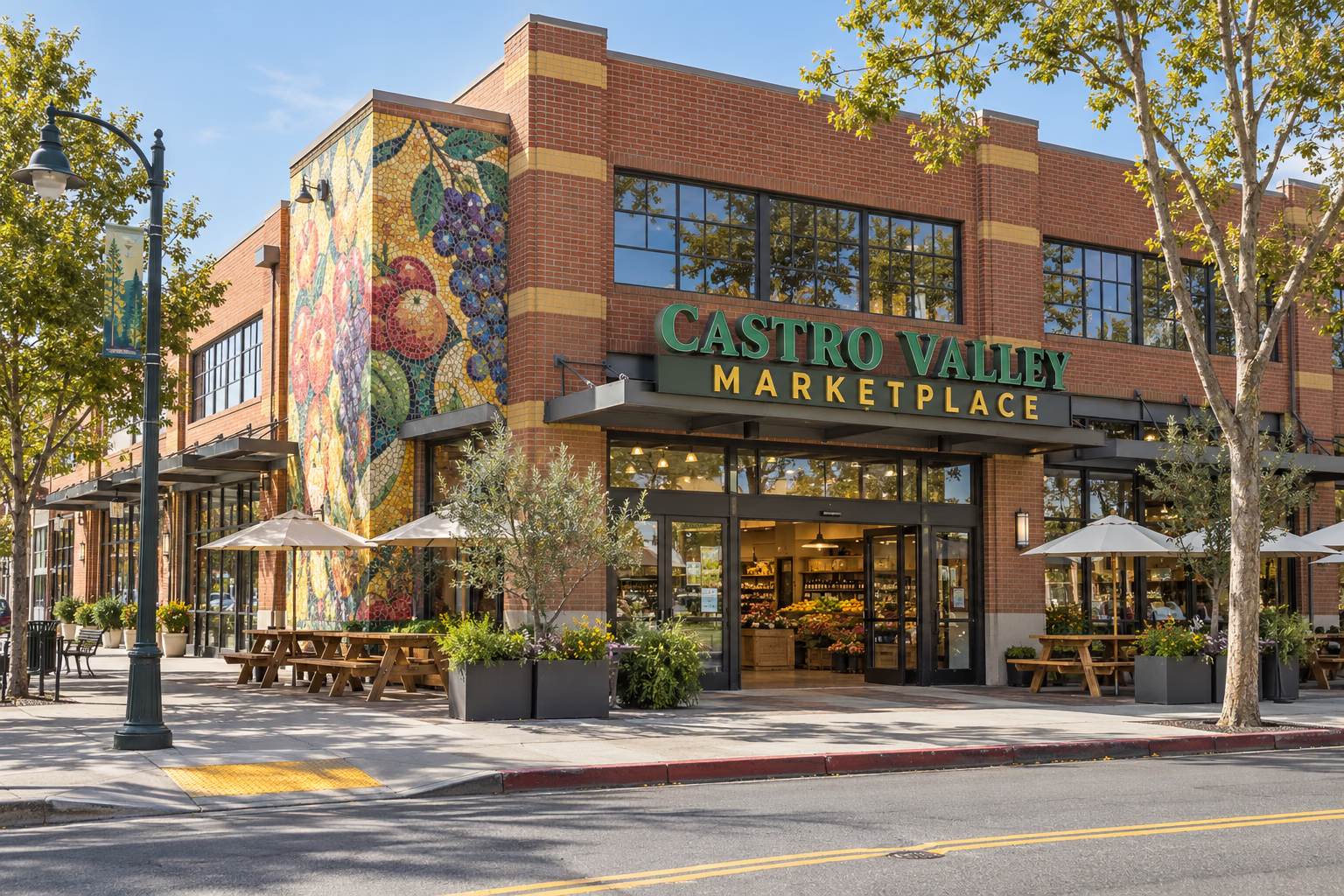
The downtown planning area covers approximately 288 acres and 763 parcels, forming Castro Valley’s commercial and mixed-use center near BART.The update is intended to revise the 1996 Business District Specific Plan through research, an updated plan, development regulations, and environmental review. [7]The implementation project also identifies attracting infill housing and improving community character as objectives. [5]Here is the practical implication: buyers near downtown should investigate both the home and nearby sites that could change.A vacant parcel, older commercial property, or parking lot may warrant a closer look. Depending on the applicable rules and any project approvals, future development could affect the surroundings.As a buyer, I would evaluate possible changes to:- Building height, privacy, and sunlight.
- Street activity, deliveries, and parking.
- Walking routes and access to businesses.
- Construction noise and access during development.
5. A separate housing-policy effort is also worth watching
A January 26, 2026 County staff report describes work on an inclusionary zoning ordinance and a ministerial approval ordinance for housing.Inclusionary zoning concerns affordable housing requirements within new residential development. Ministerial approval generally relies on compliance with applicable standards rather than discretionary review.The report distinguishes transit-area work on density, parking, and access around Castro Valley and Bay Fair BART from affordable housing policies intended for all unincorporated areas. It projects completion of the ordinance-development effort before July 1, 2027. That is a staff-report target, not confirmation that final ordinances have been adopted. [8]Why does this matter? Changes to requirements and review procedures could affect which projects are feasible and how they move through approvals.Before drawing conclusions about a nearby property, check the latest adopted ordinance and its applicability to that specific site.6. Permission to build and timing to build are different questions
Even when a housing use is allowed, I would investigate the remaining steps before assuming construction is imminent.Ask about project approvals, building permits, utility requirements, financing, and any conditions that must be satisfied.I spent 25+ years in technology and telecommunications. That background taught me to look beyond the presentation and ask what it takes to deliver: infrastructure, dependencies, cost, and execution.7. My checklist before buying or planning improvements
1. What jurisdiction governs this exact parcel?Confirm using the assessor’s parcel number. A mailing address alone is not enough for evaluating jurisdiction or a proposed incorporation boundary.2. What rules apply today?Request the current zoning designation, General Plan designation, applicable specific plan, and any overlays.3. Is the change adopted, proposed, or simply discussed?Ask for the ordinance number, adoption date, effective date, or current application status.4. What nearby projects are in the pipeline?Review immediately adjoining parcels and relevant sites along your everyday routes—not just the property you are buying.5. What can I build on my own lot?If an ADU, addition, or other improvement matters to your decision, obtain a parcel-specific planning assessment before assigning value to it.6. What could limit the project or increase costs?Ask the appropriate professionals about setbacks, easements, slope, drainage, access, utilities, and applicable safety requirements.7. How far along is nearby development?Distinguish a concept, submitted application, approved project, issued permit, and construction underway.8. What would daily life look like during and after construction?Visit at different times. Consider privacy, street access, parking, activity, and your tolerance for disruption.9. If incorporation proceeds, what happens to pending applications?Ask LAFCO and the responsible planning agency about any approved transition arrangements. Do not assume the answer.10. Does the purchase work without the promised upside?If the numbers only make sense because someone says “cityhood will raise prices” or “you can definitely build another unit,” you need stronger evidence.My advice: buy with clarity
Incorporation could change local governance. Zoning and specific-plan work could shape future homebuilding and downtown activity. The effect on your decision depends on the actual parcel, adopted rules, nearby projects, and your plans.Buy a home that works for your family today. Evaluate future potential with documents, realistic costs, and a clear understanding of what remains uncertain.Thinking about buying, selling, or improving a Castro Valley property? Message me “CASTRO VALLEY” on Instagram with the address and what you want to accomplish. Let’s identify the property questions that need answers before your next move.Joseph LeeChief Growth Officer & real estate agentDream Real Estate Group | Real Broker Pro TeamDRE #01178873Bay Area native with 25+ years in technology and telecommunications. My real estate focus includes Castro Valley and East Bay buyers and sellers, Bay Area-to-Elk Grove and Sacramento relocation, new construction, and helping healthcare and tech professionals evaluate homes around their work and family needs.Contact: Instagram @the.josephleeYouTube: The Joseph LeePutting the Heart Back into Real Estate — With Performance That Matters.Sources / Resources
- Alameda LAFCO: Initial Feasibility Analysis, revised July 19, 2024 — governance implications and incorporation process. This is a feasibility study, not incorporation approval.
- Town of Castro Valley: “Clearing the Air on Incorporation News,” September 18, 2026 — proponents’ description of their proposal; an advocacy source.
- Alameda LAFCO: Frequently Asked Questions — agency authority and proposal review.
- Castro Valley MAC: County-published FAQ — advisory role and County decision-making. The document is dated January 2015; use current agendas for meeting details.
- Castro Valley General Plan Implementation: Project Overview — completed zoning phase and described downtown update status.
- Alameda County Planning: General / Specific Plans — General Plan purpose and structure.
- Central Business District Specific Plan Update — downtown planning area and scope.
- Alameda County: January 26, 2026 housing-policy staff report — ordinance-development work and projected schedule.
Joseph Lee
Real Estate Agent
Area served: Elk Grove, Sacramento
Expertise: Transit-Oriented Buyers, Tech Relocation, Suburban Relocation, New Construction, First-Time Buyer, Neighborhood Micro-Trends