
July 20–26, 2026 | Northern California Real Estate
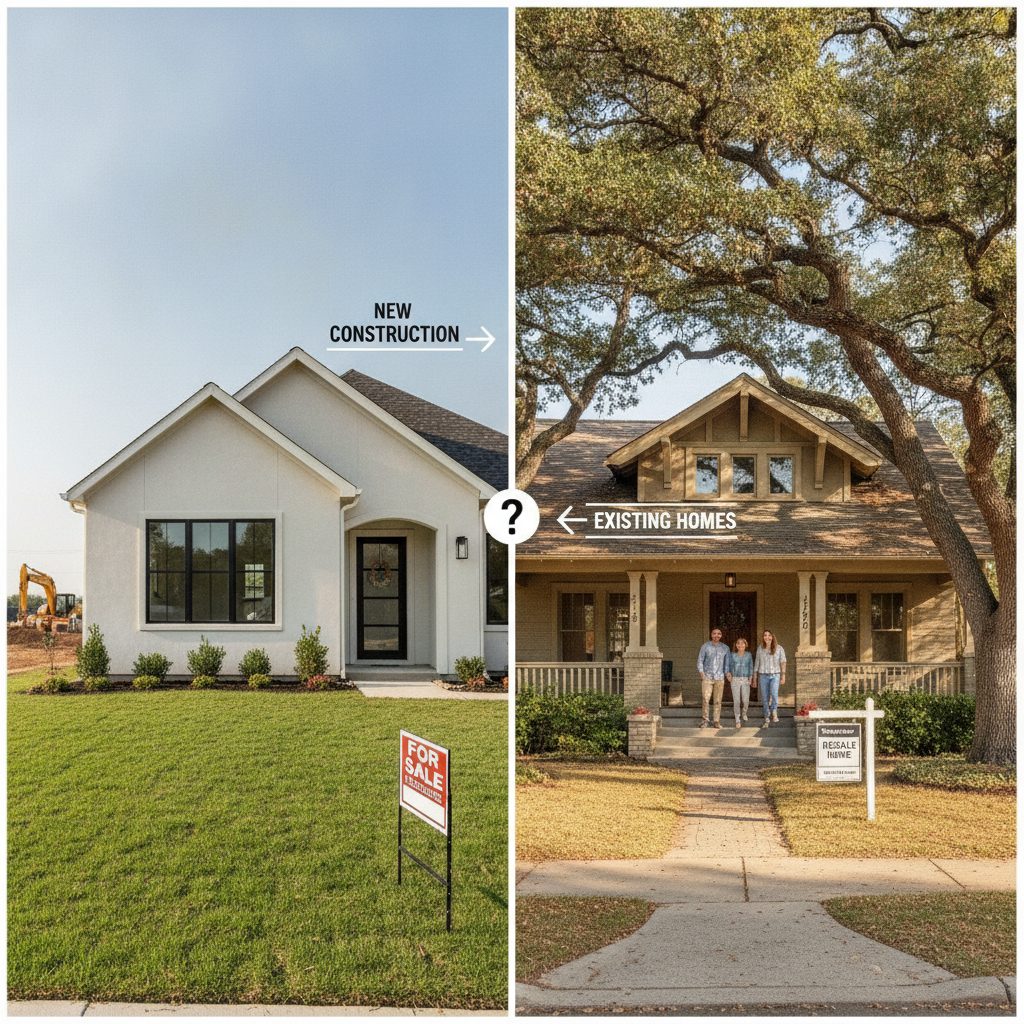
If you are shopping for a home in Elk Grove, Sacramento, or another growing Northern California community, you may be seeing builder advertisements that sound almost impossible to ignore:- Below-market mortgage rates
- Tens of thousands of dollars toward closing costs
- Paid upgrades
- Reduced prices on move-in-ready homes
- Temporary or permanent interest-rate buydowns
Why Builders Are Becoming More Aggressive
Builders are competing against high mortgage rates, affordability pressure, and buyers who are increasingly willing to wait.In July, 37% of builders reported cutting prices, up from 35% in June and 32% in May. The average reduction was approximately 6%. Meanwhile, 63% of builders were using sales incentives, marking the 16th consecutive month in which incentive use remained at or above 60%, according to the National Association of Home Builders.That creates a potential opportunity for buyers, especially on homes that are already completed or approaching completion.Builders have carrying costs. A finished home sitting empty affects their sales numbers and ties up capital. Instead of waiting indefinitely for another buyer, a builder may offer a financing incentive, closing-cost credit, upgrade package, or price adjustment to get the home sold.But buyers need to look beyond the headline offer.Where New Construction Can Win
1. Builder financing may substantially lower the payment
Large builders sometimes use their affiliated mortgage companies to offer financing below the prevailing market rate.A lower rate can be more valuable than a modest reduction in the purchase price because it affects every monthly payment.But you need to determine whether the advertised rate is:- A permanent rate for the full loan term
- A temporary buydown that rises after one or two years
- Available only with a specific loan program
- Tied to a particular credit score, down payment, or closing date
- Offset by a higher purchase price or additional lender fees
2. Closing-cost incentives preserve cash
A builder credit could reduce the cash required for closing costs, a rate buydown, or approved upgrades.That can be particularly valuable for buyers who want to retain cash after closing for:- Furniture
- Window coverings
- Appliances
- Landscaping
- Moving expenses
- Emergency reserves
3. Maintenance should be lower during the early years
A new home generally comes with new roofing, plumbing, electrical systems, HVAC equipment, appliances, and current energy-efficiency standards.That does not make it maintenance-free, but it can reduce the likelihood of major replacement costs immediately after the purchase.New homes in California also include solar under the state’s building requirements, although buyers still need to understand whether the system is owned, financed, leased, or included in the purchase price.4. The home may better match the way buyers live today
Newer floor plans often include:- Larger kitchens and islands
- Open living areas
- Home-office or flex space
- More storage
- Energy-efficient equipment
- EV-ready features
- Additional bedrooms or multigenerational layouts
Where Resale Can Win
1. The lot and location may be better
Resale homes often sit in established neighborhoods with mature landscaping, larger lots, developed community amenities, and easier access to existing shopping and services.With new construction, buyers may have to accept:- Smaller yards
- Ongoing construction
- Limited street parking
- Undeveloped nearby commercial areas
- Longer drives until planned amenities are completed
2. Resale sellers may also be negotiable
Builders are not the only sellers offering concessions.In Sacramento, the median sale price over the three months ending in May 2026 was approximately $500,000, down 2.1% from the same period a year earlier, according to Redfin’s Sacramento market data.That does not mean every resale seller will reduce the price. Well-presented homes in desirable locations can still attract strong competition. But listings that have been sitting, need updating, or were priced too aggressively may offer buyers room to negotiate:- A price reduction
- Closing-cost assistance
- Repair credits
- A rate buydown
- Included appliances
- A more favorable closing timeline
3. Some resale homes include improvements a new build does not
A resale home may already have:- Finished landscaping
- Window treatments
- A patio or outdoor kitchen
- Upgraded lighting
- Built-in storage
- A pool or spa
- Mature trees
- Refrigerator, washer, and dryer
- Solar that has already been paid off
4. Resale pricing may be easier to evaluate
In an established neighborhood, recent comparable sales can provide a clearer picture of market value.New developments can be more difficult to evaluate because builders may change prices, offer different incentives, or release future phases at different price points. Builder credits also do not always appear clearly in public sales data.That matters when the home is appraised, refinanced, or eventually resold.The Costs Buyers Commonly Miss
The most dangerous comparison is a builder’s base price against a resale home’s asking price.A serious comparison should include the full cost of ownership: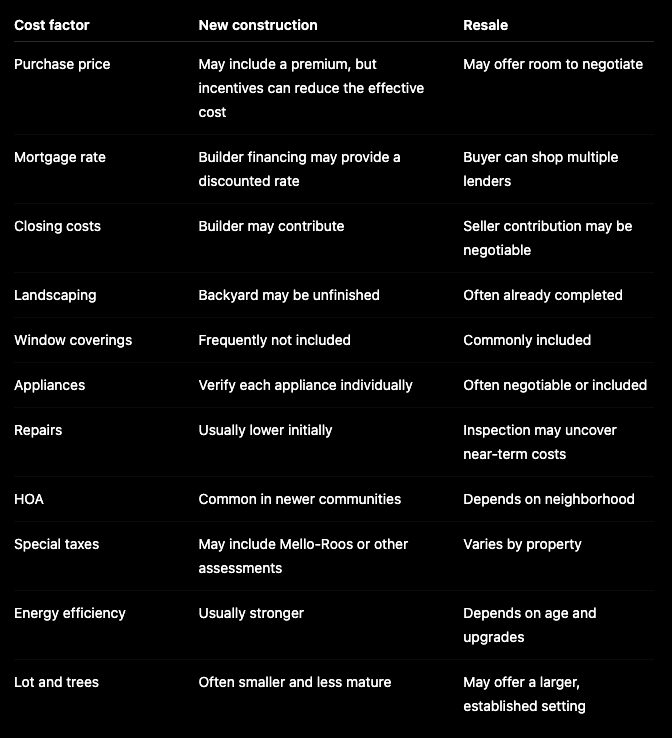
A Better Way to Compare the Two
Before choosing, ask your agent and lender to build a side-by-side comparison using the same assumptions.For each home, calculate:- Total cash needed to close
- Monthly principal and interest
- Property taxes and special assessments
- HOA dues
- Homeowners insurance
- Solar payment or agreement, if applicable
- Immediate improvements and repairs
- Estimated five-year ownership cost
- Likely resale competition
- The value of the location, lot, and lifestyle