
Current Real Estate Market Trends
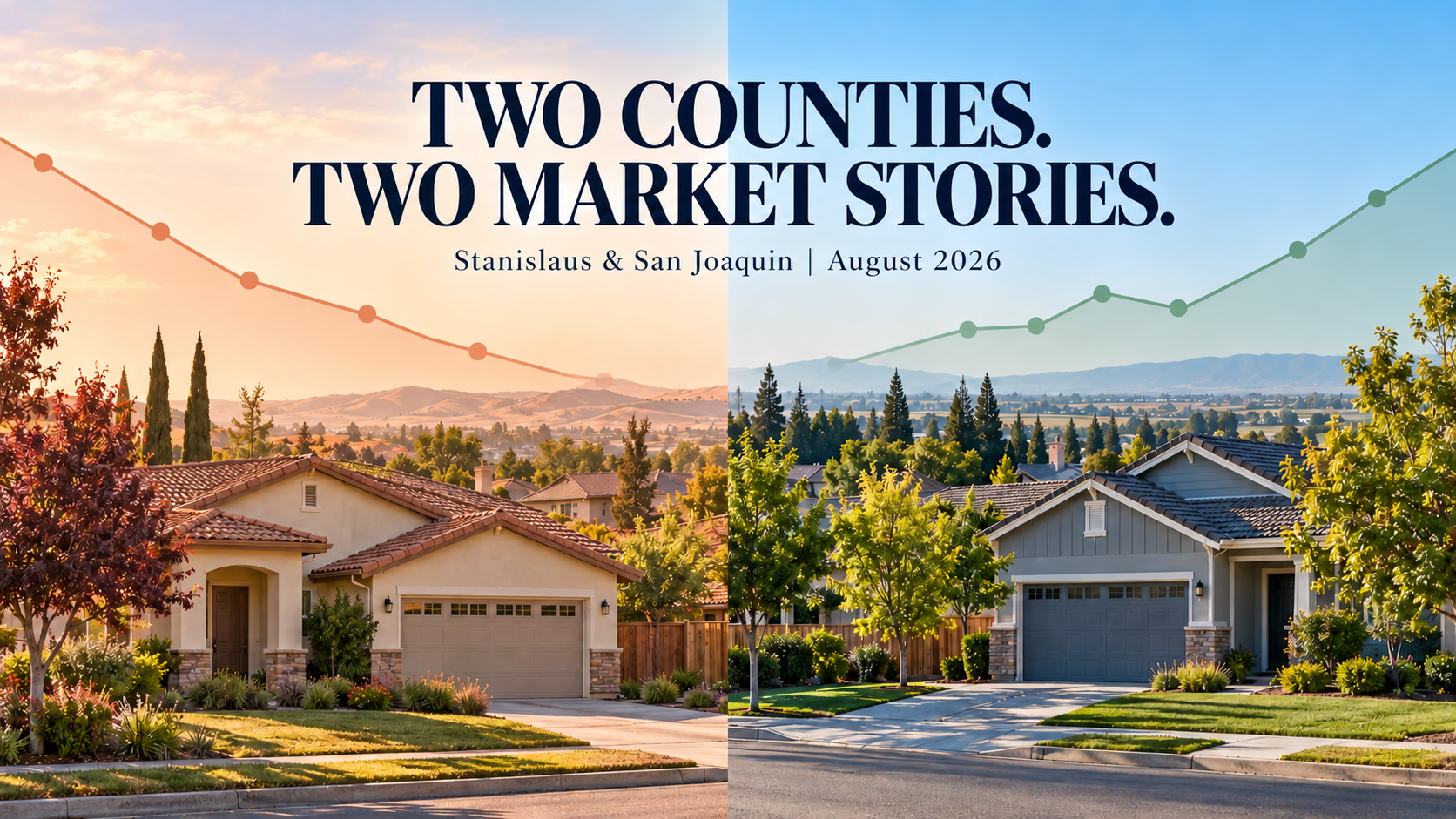
The latest monthly figures highlight clear divergence between Stanislaus and San Joaquin counties. In Stanislaus County, the median sale price for existing detached single-family homes reached $475,000 in August 2026, marking a 4.9 percent decrease compared to August 2025. Total closed sales in the county edged down 1.4 percent year over year. Properties moved quickly despite the softer pricing, posting a median time on market of 22.5 days with an unsold inventory index of 3.6 months.San Joaquin County charted the opposite trajectory across top-line metrics. The countywide median sale price climbed to $560,000, representing a 4.7 percent increase over the prior year. Closed sales surged 14.8 percent compared to August 2025. Listings took slightly longer to enter contract, recording a median of 31 days on market and an unsold inventory level of 3.7 months.- Stanislaus County median sale price: $475,000 (down 4.9% year over year)
- Stanislaus County closed sales volume: Down 1.4% year over year
- Stanislaus County median time on market: 22.5 days with 3.6 months of inventory
- San Joaquin County median sale price: $560,000 (up 4.7% year over year)
- San Joaquin County closed sales volume: Up 14.8% year over year
- San Joaquin County median time on market: 31 days with 3.7 months of inventory
Key Factors Affecting Property Values
Median sale prices reflect the composition of homes sold during a specific month rather than a uniform increase or decrease in individual property values. If entry-level starter homes represent a larger share of total closings in Stanislaus County, the county median falls even if individual home values remain steady. When higher-tier subdivisions or newer construction dominate transaction volume in San Joaquin County, the calculated median price naturally climbs.Local economic developments and land use decisions also play a direct role in neighborhood appeal. In Stanislaus County, municipal discussions regarding industrial land allocation have drawn significant community focus. Controversy emerged surrounding plans for a potential data center in Modesto, prompting pushback from nearby residents over resource usage, traffic, and neighborhood character.Public hearings have intensified, featuring Modesto residents demanding city leaders stop data centers from coming to the city due to worries about utility strain, environmental impacts, and proximity to established residential zones. Infrastructure projects, zoning amendments, and industrial proposals directly shape long-term buyer sentiment in surrounding neighborhoods.Regional Market Differences
It is critical to distinguish countywide figures from individual city numbers. County metrics aggregate transactions across unincorporated rural acreage, agricultural parcels, suburban tracts, and dense urban centers. C.A.R. figures for Stanislaus County represent the entire county and should not be cited as Modesto-only statistics. The same distinction applies to San Joaquin County, where countywide trends blend Stockton, Tracy, Manteca, Lodi, and unincorporated farmland.San Joaquin County benefits substantially from its geographic proximity to the San Francisco Bay Area and the Tri-Valley employment corridors. Commuters looking for relatively accessible housing options frequently focus on cities such as Tracy and Manteca, maintaining consistent demand for single-family homes along major transit corridors. This commuter flow helps explain why San Joaquin County recorded a 14.8 percent annual jump in transaction volume.Stanislaus County functions under a distinct economic rhythm centered around regional agricultural production, local manufacturing, food processing, and healthcare. Its housing stock generally offers lower purchase price barriers, making it attractive for budget-conscious buyers even as higher borrowing costs temper annual price appreciation.What Buyers and Sellers Should Know
Sellers in Stanislaus County must price properties against hyper-local comparable sales rather than assuming regional appreciation trends. The 4.9 percent year-over-year dip in the county median signals that buyers remain price sensitive. However, the median time on market of 22.5 days proves that correctly priced homes sell rapidly. Overpricing in this environment risks extended market exposure and subsequent price reductions.Sellers in San Joaquin County operate in a market with growing transaction activity, but listing preparation remains essential. While the county median rose 4.7 percent to $560,000, the median time on market expanded to 31 days. Buyers are willing to pay current market valuations, yet they conduct thorough inspections and negotiate terms carefully.- Base listing prices on sales within the immediate neighborhood from the past 60 to 90 days rather than county medians.
- Account for property condition, school districts, and specific zoning designations nearby.
- Recognize that a shifting county median reflects the distribution of home sizes and price tiers sold, not automatic equity changes.
- Monitor local municipal council agendas for infrastructure and commercial development proposals that could affect residential traffic and utility rates.