
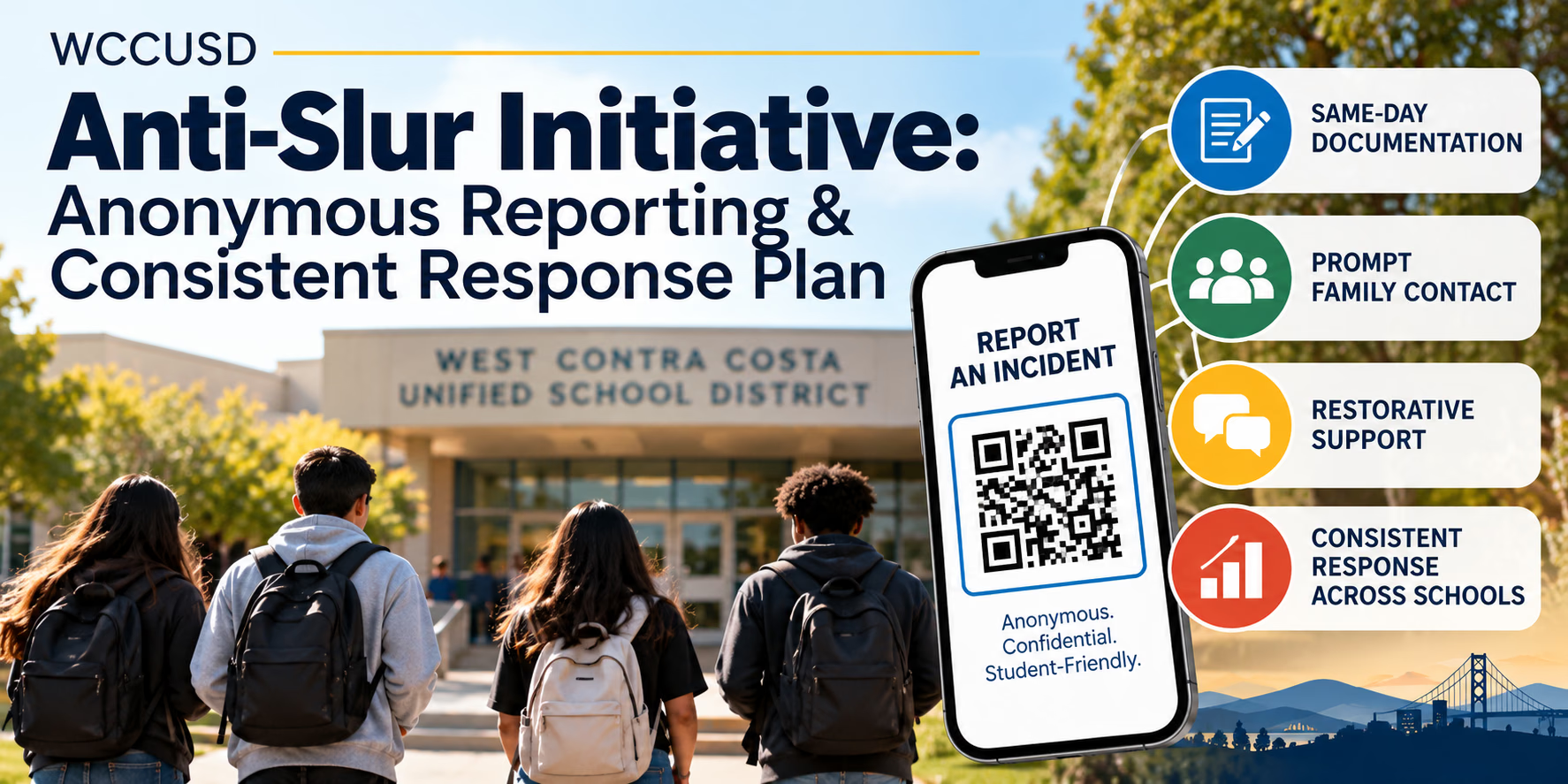
What the Strengthened Plan Covers
Understanding local district protocols helps prospective residents gauge how school administrators handle student conflict and campus climate. The West Contra Costa Unified School District (WCCUSD) introduced structured guidelines to address prohibited language, harassment, and discrimination. Rather than issuing blanket suspensions for every infraction, the framework establishes a clear, tiered structure that balances discipline with restorative education.Under the published district guidelines detailed in WCCUSD anti-slur plan updates, campus incidents require same-day documentation, prompt family notification, and immediate support for affected students. The response model functions across three clear stages:- First Incident: A restorative conversation, same-day parent contact, and direct instruction addressing the harm of the prohibited language.
- Repeated or Targeted Conduct: Interventions such as Saturday school, counseling referrals, detention, an alternative-to-suspension program, and a formal behavior contract.
- Severe or Persistent Conduct: Suspension and potential referral to outside specialized support services when a student refuses restorative repair.
Questions First-Time Buyers Should Ask About District Policies
When moving into a new jurisdiction, buyers need to explain what the strengthened plan covers, what first-time buyers should ask about district policies, and how these rules translate into classroom stability. High-level policy language sounds reassuring on paper, but administrative follow-through determines actual school performance.Before submitting an offer on a home in a specific school attendance zone, buyers should consider asking district liaisons or campus administrators several targeted questions:- What specific documentation workflows ensure parent contact occurs on the day of an incident?
- How does the school handle repeat behavioral incidents when restorative measures fail to produce improvement?
- What ratio of school counselors and mental health specialists to students exists at the assigned neighborhood campus?
- How is aggregate safety and disciplinary data reported to parents and the general public each school year?
- What formal steps must a family take to escalate an unresolved issue past the site principal to the district level?
School-Community Resources to Investigate
A district policy does not function in isolation; it depends on supporting civic and district-wide resources. In West Contra Costa, families have access to existing reporting channels, including the 24/7 WeTip hotline for anonymous safety alerts. For disputes that cannot be resolved at the campus administration level, the WCCUSD Ombudsperson office serves as an independent channel to investigate parent and student grievances.Beyond district offices, buyers should assess the surrounding community infrastructure that supports young residents outside school hours. Examine city recreation departments, public libraries, after-school youth centers, and non-profit tutoring organizations in neighborhoods like Richmond's Marina Bay, El Cerrito's Hillside zone, or Pinole Valley. Municipal partnerships often provide structured environments that reinforce positive peer behavior and enrich neighborhood cohesion.How to Evaluate Neighborhood Fit
Evaluating neighborhood fit requires direct observation across different times of the week. Online real estate portals summarize test scores and property tax rates, but they cannot convey the rhythm of daily life on a residential block. Visit the target street on a Tuesday morning during school drop-off hours, a Thursday late afternoon, and a Saturday evening.Observe street parking density, foot traffic, pedestrian safety around crosswalks, park usage, and general property upkeep. Speak with nearby residents who are out gardening or walking pets. Ask them how long they have lived in the area, how they perceive neighborhood safety, and what changes they have observed in local municipal services over recent years.Why One Policy Announcement Is Not Enough
A single school board resolution or administrative overhaul is not a guarantee of institutional transformation. Program rollouts often encounter logistical bottlenecks. For example, during initial presentations of the WCCUSD plan, specific implementation details regarding the QR-code reporting interface were still being refined, demonstrating that policy announcements often precede operational readiness.Relying strictly on high-profile policy updates can create an inaccurate picture of a neighborhood. Real estate values and neighborhood stability rest on long-term execution, including steady municipal budgeting, consistent principal leadership, active parent-teacher associations, and neighborhood watch engagement. A newly adopted policy is merely an intent; track record and institutional capacity determine the real outcome.A Broader Due-Diligence Checklist
Prospective buyers can protect their investment and ensure long-term satisfaction by following a structured, comprehensive due-diligence process before removing purchase contingencies:- Review School Accountability Report Cards (SARC): Examine published state data covering teacher qualifications, student suspension rates, facility inspection results, and academic performance indexes.
- Attend Public School Board Meetings: Watch live or archived WCCUSD board sessions to observe community debates, budgetary allocations, and administrative accountability.
- Examine Municipal Capital Improvement Plans: Check city planning portals in Richmond, San Pablo, or El Cerrito for upcoming road repairs, park renovations, or commercial zoning changes near the property.
- Check Transit and Commute Corridors: Test morning commutes to regional employment centers using Interstate 80, Richmond Parkway, or nearby BART stations (El Cerrito del Norte, Richmond) to assess actual travel times.
- Review Local Crime and Call Logs: Consult municipal police department transparency dashboards to identify call patterns on specific blocks rather than relying on county-wide generalizations.